Showing posts with label authors. Show all posts

Friday, July 24, 2009

Joining Forces: A Dialogue on Forging Military and Community Bonds w/Tyler Boudreau


Very excited to pass on this news!

We've secured what I think is a stellar venue for Iraq vet and author Tyler Boudreau's "The Other Side: Cross-Country Cycling Tour Summer 2009" stop in the Rockford area. Great thanks to the board members and Executive Director Kip Kirkland of Poplar Grove Airport Vintage Wings & Wheels Museum for agreeing to host this gathering on Monday, August 10, 2009, at 6:00 p.m.

The details we have so far are in extended.


Friday, July 17, 2009

Neuroscience and the Military: The Push to Unleash the Powers of the Mind

Nineteen years ago today, on July 17, 1990, as scientists embarked on the mapping of the human genome, Congress and former President George H.W. Bush proclaimed the 1990's to be the 'Decade of the Brain,' stating:

The human brain, a 3-pound mass of interwoven nerve cells that controls our activity, is one of the most magnificent--and mysterious--wonders of creation.

The seat of human intelligence, interpreter of senses, and controller of movement, this incredible organ continues to intrigue scientists and layman alike.

Over the years, our understanding of the brain--how it works, what goes wrong when it is injured or diseased--has increased dramatically. However, we still have much more to learn. ...

While the learning continues, the effort embedded the field of neuroscience into the nation's consciousness, and we witnessed a remarkable evolution regarding our study and knowledge of the master gland in the '90s. Some top examples included:
  1. The advent of modern brain scan imaging technology, which today is an indispensable tool used to detect both traumatic brain injury and even post-traumatic stress in injured troops.
  2. Scientists succeeding in using primate (monkey) brain impulses to physically move robotic arms, a sort of mind-machine melding in line with a special Navy helicopter flight suit that allows pilots hands-free, precision control of their craft.
  3. The discovery that new human brain cells can, indeed, be created, shattering the previous notion that we are born with a finite number.
But all of this has to do with the brain. What of the mind?
And what of the military?


Friday, September 12, 2008

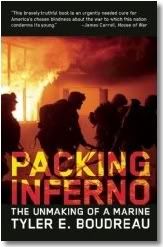
The Unmaking of a Marine: ePluribus Media Reviews Packing Inferno

The always fabulous Cho of ePluribus Media reviews Iraq veteran Tyler Boudreau's upcoming book, Packing Inferno: The Unmaking of a Marine:

Packing Inferno is a thoughtful meditation on the warrior class, combat stress and where real hell lies, which as Boudreau will tell you, isn’t in the war theatre.

The battleground is merely the foyer.

The real hell is here and now
, in the aftermath, daily, hour-by-hour, minute-by-minute, confronting the wounds -- physical and psychological -- that are the inevitable outcomes of war.

In 2004, Boudreau served as a Marine corps captain in Iraq.

Since then, his 12-years of active duty service and wartime lessons have inspired him to attempt to stir the nation's consciousness and conscience on war-related humanitarian subjects like the Iraqi refugee crisis.

To get to know the man behind the Marine a bit better, let's look beyond the book via recently published pieces into Boudreau's efforts to do right by the people he was sent to liberate.


Tuesday, October 09, 2007

Minnesota Holds Its First-Ever Combat Stress Conference; Warrior to Citizen Campaign Editorial

Over the past two years, I've been following Minnesota's top notch efforts on behalf of its military families and returning troops (see related posts below). The state and its communities have been proactive to the nth degree in offering these important members of society the support that they need to deal with deployments -- and the readjustment period that follows.

With all the good work coming out of Minnesota, it's not surprising to see their latest move. On October 17th they will be convening a conference featuring Lt. Col. Dave Grossman, author of the indispensable book, On Killing: The Psychological Costs of Learning to Kill in War and Society.

Details:

To address the behavioral health care needs of the thousands of Minnesota National Guard members throughout the state, Blue Cross and Blue Shield of Minnesota (Blue Cross), along with TriWest Healthcare Alliance and the Minneapolis VA Medical Center (VAMC), is hosting the first-ever Combat Stress Conference.

The Minnesota National Guard consists of more than 13,000 members who live in nearly every corner of the state. Since 2001, more than 80 percent of the members have been mobilized for active duty, serving in 33 different countries. In addition, nearly 2,600 Minnesota National Guard members completed their deployments to Iraq and returned home in August.

Nearly 350 community-based physicians, nurses, psychiatrists and other health care professionals that care for the troops have been invited to attend the conference on Oct. 17, 2007 at the Earle Brown Heritage Center from 7:30 a.m. to 5 p.m. It is intended to help providers identify deployment-related symptoms such as combat stress, anxiety, depression, post-traumatic stress disorder (PTSD) and traumatic brain injury, as well as providing treatment methods.


Tuesday, September 25, 2007

Combat PTSD Author, Vets' Counselor Jonathan Shay Awarded 'Genius Grant'

Wonderful news from the Boston Globe:

Today, the John D. and Catherine T. MacArthur Foundation will announce that [Jonathan] Shay, 65, has been selected as a 2007 MacArthur fellow "for his work in using literary parallels from Homer's 'Iliad' and 'Odyssey' to treat combat trauma suffered by Vietnam veterans."

"His work is important for delivering healthcare to all those who put their lives on the line in the service of our country," said Mark D. Fitzsimmons, associate director of the MacArthur Fellows Program. "It's fair to describe it as pertinent."

Click on 'Article Link' below tags for more...

In the interest of education, article quoted from extensively.

Continuing:

Shay grew up in the suburbs of Philadelphia, attended Harvard College and the University of Pennsylvania, and ran a laboratory at Massachusetts General Hospital, studying the biochemistry of brain cells and why they die so fast after a stroke.

Then, at the age of 40, Shay had a stroke. He went into a coma for several days and emerged temporarily paralyzed on the left side of his body. It took him a year to recover fully. While he was convalescing, Shay "decided to plug up the holes in my education" and read the English translations of the "Iliad" and the "Odyssey."

In 1987 Shay went to work for the Department of Veterans Affairs Outpatient Clinic in Boston, hoping to open a lab and restart his research career. In return, Shay, a psychiatrist, agreed to work as a counselor "at a very grimy, dilapidated day hospital on the top floor of a garage building on the edge of Chinatown here in Boston."

Almost immediately, psychiatry became the main focus of his work, and he soon found that the veterans he treated trusted him and responded to his counseling in ways he had not expected.

"The veterans simply kidnapped me," he said. "They saw something in me that I didn't see in myself, and they utterly redirected my life."

As he listened to the veterans during his sessions, he realized that the psychological trauma that haunted the veterans of the Vietnam War had also tormented the heroes of the Greek epics.

Springing from that realization are two unique volumes:

Soon, Shay began to work on his first book, "Achilles in Vietnam: Combat Trauma and the Undoing of Character." In the book, he interspersed the story of Achilles with examples of his patients' losses and contentious relationships with their commanders in Vietnam to illustrate some of the causes of the troops' psychological wounds.

In "Odysseus in America: Combat Trauma and the Trials of Homecoming," published in 2002, Shay draws parallels between the perilous, 10-year journey home of Odysseus from the Trojan War and the psychological odyssey of veterans returning to civilian life.

Like the hero of the "Odyssey," whom Shay depicts as conniving and explosively violent as he travels the world battling monsters, veterans of contemporary wars are often danger-seekers.

As I did my research for "Moving a Nation to Care," I was moved by both of Shay's books (especially found "Achilles" to be influential, along with one of his lectures, "Ethics, Leadership, Policy -- Not Separate Spheres.") I'm not alone in saying that his works are essential reading for anyone attempting to better understand combat PTSD.

Shay's books are "a wonderful resource for both clinicians and vets and their loved ones," said Keith Armstrong, a San Francisco psychiatrist and one of the authors of "Courage After Fire," a guide book on coping with trauma for troops who are returning from Iraq and Afghanistan and for their families.

Shay wants to study how to improve the way the military treats the troops and their needs at a center he hopes to open at the John F. Kennedy School of Government at Harvard.

Much deserved congratulations, Dr. Shay!


Monday, September 10, 2007

Combat PTSD Workshop Comes to Chicago Area

In January, I attended a combat PTSD workshop given by Dr. Edward Tick, author of "War and the Soul: Healing Our Nation's Veterans from Post-traumatic Stress Disorder" and executive director of Soldier's Heart, a national network of community members banding together to help returning troops and their families cope with the after effects of war.

Since that chilly winter's day workshop, it's fair to say that I'm an energetic fan of Dr. Tick's work. And so, it's a great pleasure to see that he will be out in the Midwest again this week, at the helm of a 3-day Healing Veterans from PTSD Workshop kicking off this Thursday, September 13.

Click on 'Article Link' below tags for more details...

From the Daily Herald:

Thousands of veterans are returning from Iraq with little help readjusting to life after combat. It's a situation American veterans have faced upon return from war for more than 200 years. "We give them a little bit of counseling, lots of medication and say, 'OK, there you go,' " said Edward Tick, an author and psychotherapist who will lead a retreat for veterans, families, professionals and community members on healing veterans suffering post-traumatic stress disorder.

The retreat, hosted by the Theosophical Society of America in Wheaton, begins Thursday and ends Sunday at noon. The cost is $395; vegetarian meals will be served at an additional cost throughout the retreat. Some lodging is available at the Theosophical Society, but most participants will be staying at area hotels, said Ruthann Fowler, program coordinator for the society.

Scholarships are available for those needing financial assistance, and no veteran will be turned away because of an inability to pay, Fowler and Tick both said.

Read more to learn of Dr. Tick's work (or click on links below).

Introduction to Dr. Tick's work, produced by the Theosophical Society in America:


For those unable to attend the full 3-day event, an opening session called 'The Warrior's Journey Home' is rather appropriately open to everyone. Tickets are $9 at the door, and the talk begins at 7:30 p.m.

The Herald sums things up nicely for those wishing to attend.

If you go

What: Edward Tick, author of War and the Soul: Healing Our Nation's Veterans from Post-Traumatic Stress Disorder, will speak during a three-day workshop, Healing Veterans from PTSD.
When: Registration is at 3 p.m. Thursday, with the workshop beginning at 7 p.m. Thursday and concluding at noon Sunday
Where: The Theosophical Society, 1926 N. Main St., Wheaton [Google Map]
Cost: $395; some scholarships are available
Call to register/for info: Christine Pomeroy, (800) 669-9425, ext. 350


Related Posts


Tuesday, September 04, 2007

Women and the War in Iraq: A Seattle Public Forum

Received news of an awesome gathering from a former Viet Nam vet who today runs a state program getting peers involved in environmental projects. (You may remember Gordy Graham from my Seattle 'Moving a Nation to Care' book tour stop notes this summer). In October, some of the area's best and brightest are coming together to discuss the wars' effect on the women soldiers who are fighting it. This looks like a must-not-miss event.

Details:

King County Washington Women Lawyers presents

Women and the War in Iraq
A Public Forum at The Seattle Art Museum
1300 First Avenue, Seattle WA 98101

Tuesday, October 2, 2007 - 6-9 p.m.
Free admission

Panelists include:

  • Dr. Bridget Cantrell, author of "Down Range to Iraq and Back"
  • Sara Rich, M.S.W. and mother of soldier Suzanne Swift
  • Stacy Bannerman, author of “When the War Came Home,” founder/director of ‘The Sanctuary for Veterans and Families’
  • Dr. Tracy Simpson, co-director of Seattle VA's Women's Clinic
  • Lourdes E. Alvarado-Ramos, Deputy Director of Washington State’s Department of Veterans Affairs
  • Julia Villalobos, Port Security Specialist 2, Coast Guard (served in Iraq and Kuwait Feb-Aug. 2003)
  • Special appearance by video, Senator Patty Murray (member of the Senate Veterans’ Affairs Committee)
Event includes debut of short documentary film.

For more information
Moni T. Law, 206-915-8138, moniesq@aol.com (questions)
Tracy Sarich: tsarich@tousley.com (sponsorship)

Other events across the country.


Monday, September 03, 2007

'Moving a Nation to Care' at the AJC Decatur Book Festival

ajcdecatur2007_49Happy Labor Day to you and yours.

Two posts tonight on the Atlanta Journal Constitution. The AJC reports on a Fort Benning stress study that's been shut down by the Army; and, after arriving home last night and uploading my photos of the AJC Decatur Book Festival, a few reflections on my southernmost reading and signing of 'Moving a Nation to Care' to date. (on the table to the right, below Karen Abbott's "Sin in the Second City.")

As you can see from the photos, the weather was wonderful, the smiles top notch. I had the pleasure of meeting Da Chen (originally from China) and Man Martin (a whimsical local author); our Saturday book signing sessions were slated for the same time and place, giving us a chance to share bits and pieces of our stories with one another. Fascinating gentlemen!

ajcdecatur2007_14 ajcdecatur2007_04 ajcdecatur2007_09 ajcdecatur2007_27 ajcdecatur2007_26

The highlight for me, of course, was yesterday's 'Moving a Nation to Care' reading and signing at Decatur City Hall. It's a tough subject any time it's broached, but even tougher on a sunny holiday weekend's Sunday morning. But mothers and sisters and brothers of troops who are currently serving (and one sweet lady who knew many who served in WWII), caregivers and vets and simply concerned citizens came together to focus energy on the needs of our troops and their families.

ajcdecatur2007_42 ajcdecatur2007_39 ajcdecatur2007_25 ajcdecatur2007_48 ajcdecatur2007_56
ajcdecatur2007_37 ajcdecatur2007_50 ajcdecatur2007_53 ajcdecatur2007_51

Great job by the organizers and volunteers; thank you for creating a beautiful space for these discussions and experiences.


Monday, August 20, 2007

Stand Downs and Stops In the Valley of Elah, and the Atlanta Journal Constitution Decatur Book Festival

Lots of interesting things I'll be attending, and I wanted to be sure to share them with you. Hope to see you out and about!

Coming events...

* August 23, 2007 - Chicago, IL: In the Valley of Elah screening followed by combat PTSD Q&A. Location: River East, 322 E. Illinois Ave. Show time: 7:00 p.m. Ilona appears on the combat PTSD discussion panel and will have a limited number of Moving a Nation to Care copies avlb for $15; bring your own copy, and have her sign it for free (a $60 value)!

* September 1, 2007 - Decatur, GA: Atlanta Journal Constitution Decatur Book Festival Moving a Nation to Care signing, 3pm.

* September 2, 2007 - Decatur, GA: Atlanta Journal Constitution Decatur Book Festival Moving a Nation to Care reading and signing, 12:00 pm.

* September 6, 2007 - Chicago, IL: In the Valley of Elah screening followed by combat PTSD Q&A. Location: River East, 322 E. Illinois Ave. Show time: 7:00 p.m. Ilona appears on the combat PTSD discussion panel and will have a limited number of Moving a Nation to Care copies avlb for $15; bring your own copy, and have her sign it for free (a $60 value)!

* September 13, 2007 - Chicago, IL: In the Valley of Elah screening. Location: Kerasotes Webster Place, 1471 W. Webster, Chicago. Show time: 7:30 p.m. [Show will go on; post-screening Q&A has been canceled.]

*October 5, 2007 - Cedar Rapids, IA: 2-Day Stand Down. TBA.

*October 16, 2007 - Amherst, MA: Food for Thought Books, 7pm.

*October 8, 2007 - Algonquin, IL: 2-Day Stand Down. TBA.

Check full appearance schedule and latest news for more.


Saturday, July 07, 2007

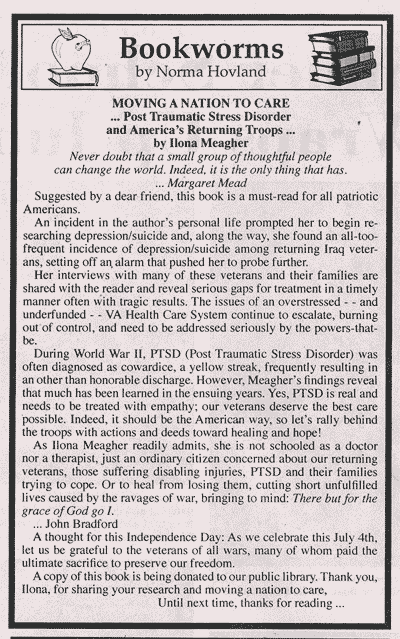
Bookworms Review of Moving a Nation to Care

From the Bloomer [WI] Advance, July 4, 2007:


Click on 'Article Link' below tags for text of review...

Since the Advance, which has served the northwestern Wisconsin farm community of Bloomer for over 120 years, has not made the text of their Bookworms column available online, I do hope they will allow me to share this kind review with you.

(Thank you, Shirley, for your guiding hand in this one.)

Bloomer Advance, Inc. Wednesday, July 4, 2007
~Bookworms~
By Norma Hovland

MOVING A NATION TO CARE
... Post Traumatic Stress Disorder and America's Returning Troops ...
by Ilona Meagher

Never doubt that a small group of thoughtful people can change the world. Indeed, it is the only thing that has.... Margaret Mead


Suggested by a dear-friend, this book is a must-read for all patriotic Americans.

An incident in the author's personal life prompted her to begin researching depression/suicide and, along the way, she found an all-too-frequent incidence of depression/suicide among returning Iraq veterans, setting off an alarm that pushed her to probe further.

Her interviews with many of these veterans and their families are shared with the reader and reveal serious gaps for treatment in a timely manner often with tragic results. The issues of an overstressed - - and underfunded - - VA Health Care System continue to escalate, burning out of control, and need to be addressed seriously by the powers-that-be.

During World War II, PTSD (Post Traumatic Stress Disorder) was often diagnosed as cowardice, a yellow streak, frequently resulting in an other than honorable discharge. However, Meagher's findings reveal that much has been learned in the ensuing years. Yes, PTSD is real and needs to be treated with empathy; our veterans deserve the best care possible. Indeed, it should be the American way, so let's rally behind the troops with actions and deeds toward healing and hope!

As Ilona Meagher readily admits, she is not schooled as a doctor nor a therapist, just an ordinary citizen concerned about our returning veterans, those suffering disabling injuries, PTSD and their families trying to cope. Or to heal from losing them, cutting short unfulfilled lives caused by the ravages of war, bringing to mind: There but for the grace of God go I....John Bradford

A thought for this Independence Day: As we celebrate this July 4th, let us be grateful to the veterans of all wars, many of whom paid the ultimate sacrifice to preserve our freedom.

A copy of this book is being donated to our public library. Thank you, Ilona, for sharing your research and moving a nation to care.

Until next time, thanks for reading ...

Thank you, Ms. Hovland, for writing so kindly.


Saturday, June 16, 2007

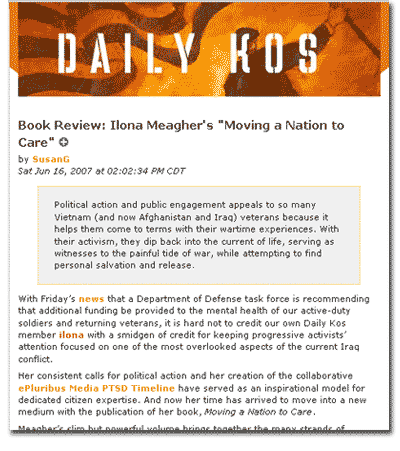
Daily Kos Reviews 'Moving a Nation to Care'


Blushing as I read the rest.

Thank you, Susan and my friends at Daily Kos, for making this project richer and much more meaningful. I've been telling folks I meet on my book tour that many hands have dipped into the mix as I worked on Moving a Nation to Care. We can accomplish a lot when we work together; this is certainly one example of that.

Click on 'Article Link' below tags for a few snippets...

With Friday’s news that a Department of Defense task force is recommending that additional funding be provided to the mental health of our active-duty soldiers and returning veterans, it is hard not to credit our own Daily Kos member ilona with a smidgen of credit for keeping progressive activists’ attention focused on one of the most overlooked aspects of the current Iraq conflict.

Her consistent calls for political action and her creation of the collaborative ePluribus Media PTSD Timeline have served as an inspirational model for dedicated citizen expertise. And now her time has arrived to move into a new medium with the publication of her book, Moving a Nation to Care.

Meagher’s slim but powerful volume brings together the many strands of information about PTSD she has tirelessly pursued for the past several years in a comprehensive and readable fashion.

A bit more:

One of the most thought-provoking sections of the book considers how the speed of modern transport from battlefield to home has put extra pressure on those returning to adjust more quickly to the jolting transition to domestic life than ever before in history. ...

Moving a Nation to Care is a serious, reverent look at a difficult and nationally ignored problem. As lawmakers and VA staff struggle to deal with the life and death traumas of war on sufferers and family alike, it would be easy for citizens to feel powerless in a situation over which they perceive themselves as having little control. Meagher has spotted this possible paralysis and offered a wealth of contact information for organizations formed to help citizen activists find ways they can contribute to solving the problem. And despite the starkly depressing nature of the subject and the formidable challenge it presents, she has also offered up signs of hope. ...

Ok, and now I'm just going to have to close on this last graf:

As a resource for anyone concerned with veterans or mental health issues in general, Moving a Nation to Care is unequalled in its simplicity and scope.

Please read it in full (additional reviews here).


Sunday, May 20, 2007

Please Join Me at Firedoglake.com @ 5pm ET Today


I'll update this post through the day, so please check back later this afternoon for additional information on my appearance at Firedoglake.com's Sunday Book Salon. No need to register to leave a comment, so please join us at 5pm ET/2pm PT for an online discussion led by a good soul and friend Taylor Marsh:

[Moving a Nation to Care] is an amazing journey through stories of veterans and what ...war does to their lives and the lives of their families. I'm proud to host this event on Sunday. Please make some time in your schedule to spend time with Ilona. It will be an extraordinary discussion on PTSD, which I've talked about many times before.

It used to be called "battle fatigue." In fact, my uncle, who flew planes in WWII, ended up in a hospital a broken man. Flying mission after mission simply destroyed him. I'll never forget seeing him there with my mother when I was a very little girl. The once vibrant dandy of a man was no longer anywhere to be seen.

Ilona Meagher has captured the story of "battle fatigue," now called PTSD in her new book.

Firedoglake Book Salon
Sunday, May 20th
2:00 p.m. pacific - 5:00 p.m. eastern

Thanks to Jane Hamsher for having us in so we all could talk about Ilona's book and the important issues of PTSD, which some of us know so well. It's long past time that we brought this soldier's disease out into the light. It could help save some lives and the heartbreak of family members who are blindsided by what the Iraq war, with its continual redeployments, as well as the lack of planning and even equipment, has wrought.

Post coming on my PHL and NYC events.

For now, I'd like to share a few images with you. A great time all around; looking forward to others as I meet more of you.


Sunday, April 29, 2007

Details on Moving a Nation to Care's May Launch

Much writing going on over here every day (none I can share with you right now, but will at a later date) while (im)patiently waiting for Moving a Nation to Care's May 1 publication date!

We are steady approaching it now.

My publisher tells me that the books have been printed. They are shipping as we speak from the distribution warehouse to stores that have ordered copies. Unfortunately, Amazon.com and brick and mortar stores will get their stock about a week late (a ship date scheduling error), but everything will be in place by mid-May.

Interestingly, a few upcoming events have moved around independent of the shipping error. So the fates have stepped in to create a mid-May book launch it seems (see below). So, we will come in like kittens this month, but plan to go out roaring like lions by the end of May. That's the plan. Everyone on board!?

A few of the events to watch for next month. More coming...

May 10, 2007: Back Pages Books - 7:30 p.m.
Waltham, MA
My first bookstore appearance takes place three days after my NIU finals. It's going to be a thrill to be able to visit with you guys out in the great state of Massachusetts!

May 14, 2007: Clark Community Network - published in morning
Online
Second installment of the CCN Troops & Vets PTSD series is slated to publish. Register with General Wesley Clark's blog so you can interact and leave a comment.

May 16, 2007: Robin's Bookstore - 6 p.m.
Philadelphia, PA
My second appearance in the New England area will be at Robin's Bookstore, the oldest independent bookseller in a city steeped in a long tradition of fine print and press.

May 18, 2007: Barnes & Noble - Greenwich Village - Evening
New York, NY
Planning to have some interesting guests at this event, which Iraq and Afghanistan Veterans of America (IAVA) has offered to sponsor. Stay tuned.

May 20, 2007: Firedoglake - 5 p.m. ET :: 4 p.m. CT :: 2 p.m. PT
Online
Featured author on Firedoglake's Sunday Book Salon -- what a nice treat. I'll be available online to answer your questions. Register your username and leave a comment.

Check out the full book tour schedule.

I'll appear on Air America Radio's About Face program, hosted by Dennis Stout, Mark Fleming, and John Henry and broadcasting Sunday mornings from balmy Phoenix, Ariz., on June 3, 2007. Later that week, June 6, I've got a book signing in Tempe, Arizona. (Thanks, Mark!)

Latest addition to the book tour?

Another California stop, a special bookstore event hosted by the Barnes & Noble in Oceanside, CA -- near Camp Pendleton. I've been invited to appear from noon to 3 p.m. on Saturday, June 9, 2007. Still getting more event details, and will pass them on when I have them. I know some have asked for a stop out in Oceanside, so I'm really glad we were able to add this to the list.

Updates will be more frequent after early next week (May 7).

Hang in there with me, guys!


Sunday, March 18, 2007

West Coast Vet Reintegration Events with War and the Soul Author Edward Tick

A list of West Coast events featuring Dr. Edward Tick, author of War and the Soul and The Practice of Dream Healing, whose War and the Soul workshop I was fortunate to attend this past January. Highly recommend his programs:

March 28, 2007
Inside Edge Foundation for Education, Irvine, CA

March 28, 2007
Unity of Tustin, Tustin, CA

March 30-31, 2007
C.G. Jung Institute of Los Angeles

Click on 'Article Link' below tags for details...

March 28, 2007
Inside Edge Foundation for Education, Irvine, CA

Wednesday morning program featuring Ed Tick. For more information visit www.insideedge.org.

###

March 28, 2007
Unity of Tustin, Tustin, CA

The Practice of Dream Healing: Ancient Greek Mysteries, Modern Medicine - Edward Tick, PhD

Time: 07:00 PM - 09:00 PM
Department: School of Light
Contact: Ruthanne Ali, 714-730-3486, school@unitytustin.org
Room(s): Sanctuary
Description: Ancient traditions teach that dreaming is our gateway to the sacred and an arena for healing encounters with divinity. In this intensive workshop, through lecture, discussion, slide presentation and guided experiences we will immerse in the myth, medicine, history and healing practices of Asklepios, the ancient Greek god of healing, whose path constitutes the origins of holstic medicine and psychology in the Western world.
More Info: http://www.unitytustin.org
Ticket Info: Admission: $15

###

March 30-31, 2007
C.G. Jung Institute of Los Angeles

Time: Fri. Mar. 30, 7:30-10:00pm
Description: "War and the Soul" lecture and book signing
We measure war's impact by the number of dead and wounded and its financial costs. But what does war do to the human soul? This lecture will address the universal dimensions of veterans’ wounding as revealed through history, mythology, archetypal psychology, and cross-cultural perspectives. We will also examine Post-Traumatic Stress Disorder as an identity disorder and soul wound and discuss how veterans and our nation begin to heal from war.
Ticket Info: $25 Pre-registered, $30 At door

Time: Sat. Mar. 31, 10:30am-4pm (Lunch provided)
Description: Asklepian Healing: Exploring the Great Mysteries
In this workshop we will consider many traumatic occurrences that wound the souls of adults. This workshop will also provide opportunities to experience healing strategies. Asklepian healing is the original holistic medical tradition of the West. Under the guidance of Asklepios, the ancient Greek god of healing, this tradition teaches us how to accept our trials and our sufferings as the workings of the universe in our lives. Through the ‘Great Mysteries,’ we can find the guidance that enables us to transmute adult traumas as varied as the survival of war, cancer, heart attack, abuse, rape, or divorce.
Ticket Info: $60 Pre-registered, $75 At door

For more information contact Chris Miller (310) 556-1193, publicprograms@junginla.org


 Related Posts


Thursday, January 25, 2007

Moving a Nation to Care: Reviews

Book reviews list for Ilona Meagher's Moving a Nation to Care: Post-Traumatic Stress Disorder and America's Returning Troops.


Friday, December 29, 2006

Moving a Nation to Care: Author Bio

A brief look at Ilona Meagher, author of Moving a Nation to Care: Post-Traumatic Stress Disorder and America's Returning Troops and editor of PTSD Combat: Winning the War Within.


Friday, November 10, 2006

Chicago Council on Global Affairs Hosts Author Trish Wood [UPDATED]

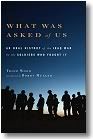
What Was Asked of Us:
An Oral History of the Iraq War by the Soldiers Who Fought It

By Trish Wood, Bobby Muller (Introduction)
Reviewed by ePluribus Media

[ order | excerpt | interactive website | video intro/trailor]


Visit my Flicker account to view photos from Wednesday evening's public program featuring author Trish Wood and vets Bobby Muller and Garett Reppenhagen (more details).

Click on 'Article Link' below tags for much more...


“The Iraq War: A True Account by the Soldiers Who Were There”


View entire program online courtesy of C-Span BookTV


Introductory remarks by
Marilyn Diamond
Chicago Council on Global Affairs President's circle board member

Many if not most people in the United States today hold well-entrenched positions on the Iraq War. In the current political climate, it is hard not to be distracted by rhetoric and posturing. The recent leadership change at the Pentagon does little to clarify our ongoing involvement in the region. However, regardless of your position on the conflict, the case remains that we are, in fact, at war. And as citizens we have an important responsibility to educate ourselves as accurately as possible on the situation in the region.

Recent world events such as North Korea’s nuclear tests and Iran’s pursuit of nuclear energy have diluted media coverage of the ongoing and arguably escalating conflict in Iraq. But with over 100,000 American troops currently serving in Operation Iraqi Freedom, it is imperative that we remain acutely concerned about the situation on the ground and the condition with which our soldiers, our families, and our friends face every day.

It is for this reason that we are so deeply grateful to have our panel with us this evening to share their first candid accounts and opinions of the war. Trish Wood has won multiple awards as an investigative reporter. She has been honored by the Canadian Association of Journalism, the Canadian Science Writer’s Association, the Radio-Television News Director’s Association, the National Magazine awards, and New York Film Festival. She has been working with veterans of the Iraq War for more than two years. Her book, What Was Asked of Us, shares personal accounts of soldiers in Iraq. In her documentation of both successes and failures, her collection of interviews movingly describes anger, pain, pride, sadness, confusion, fear and courage. It is the first account allowing soldiers in Iraq to speak at length about their emotions and their experiences.

The book details, as one of the soldiers being interviewed poignantly explains, what happens when people speak to each other with rifles?

Bobby Muller was a Marine infantry officer in the Vietnam War where he suffered a bullet wound that left his paralyzed. He went on to found Vietnam Veterans of America Foundation and is a vocal advocate for the rights of veterans and the rights of civilian victims of war. Recently, he also founded Veterans for America, a group seeking to meet the unique needs of a new generation of veterans.

Garett Reppenhagen served as an Army sniper scout in Baquba, Iraq, in 2004 immediately after finishing a tour in Kosovo. He is the one of the soldiers in What Was Asked of Us. We are fortunate to have such a knowledgeable and experienced group with us tonight to discuss this critical topic.

What Was Asked of Us
By Trish Wood, Bobby Muller (Introduction)
Reviewed by ePluribus Media

"Most people say, O God, it was terrible, this and that. God, I loved it. I loved every firefight I was in because for those few brief seconds nothing else matters." -- Joseph Hatcher, Iraq vet

[ order | excerpt | interactive website | trailor]


Related Posts


Wednesday, June 21, 2006

First Peek: Interview with Author Penny Coleman

The folks over at ePluribus Media are preparing to end the week on a strong note. ePMedia writer/editor Cho and I (and others behind the scenes) have been working together on a review of the massively readable, incredibly researched book Flashback: Posttraumatic Stress Disorder, Suicide, and the Lessons of War.

PTSD researcher and author Penny Coleman (whose husband committed suicide after returning home from another generation's combat zone: Vietnam) agreed to give me an interview a few weeks ago. I'm giving you guys the scoop here before it goes wide at ePluribus Media later this week.

Click on 'Article Link' below tags for more...

Ilona Meagher: In your book, you write that the story of the Vietnam war widow is invisible -- and one reason for this is the way "women's history and family history are commonly erased in the 'official' versions of events." Could you explain this in a little more detail?

Penny Coleman: The phrase "the personal is political" came out of the Women's Movement in the '70's and reflected a growing awareness that the circumstances of individual women were not necessarily of their own making. They were instead to be found in systemic, politically constructed institutions of power that delimited and limited available life choices and probable life experiences.

When I used the term, I meant to indicate that the individual experiences of the women whose stories are included in the book, and their families', were not necessarily due to our personal inadequacies, but were, in considerable part, politically determined and widely shared. The details may have varied, but the suicides we survived were neither unique nor an indication of our failure to adequately love or notice or intervene.

Unfortunately, there is a stigma attached to suicide in our culture that places the blame for such a death on the survivors. On top of that, there is an age-old belief that only weak or cowardly men fall apart in combat. Both assumptions are cruel as well as inaccurate. Flashback is an attempt to push back against those prejudices.

If we had known then that there were others out there whose lives had been similarly devastated, perhaps we would have been empowered to advocate for our veterans and for those yet to come. But we didn't. Our guilt and shame both isolated and silenced us. The government exploited our silence.


And so, more than thirty years after our troops withdrew from Vietnam, as veterans of that war continue to take their own lives, and as the suicides of soldiers in and recently returned from Iraq and Afghanistan relentlessly appear in the media, the relationship between combat, PTSD and suicide still has not been acknowledged.


IM: How do these emotions you mention -- guilt and shame, along with isolation -- affect those left behind following the suicide of a loved one? How do they get in the way of the usual grieving process?

PC: We were communities of one and we believed that we had failed. We had as well to deal with an inexpressibly conflicted anger, because the one we were angry with was the one we needed to mourn.  And on top of that, the fear that what had happened once might happen again continued to infect our lives and our relationships.

IM: In your interviews with military family members, did any of them have opinions on what should have been done -- what services or programs should have been offered -- once their troop returned back home? In a perfect world, what kind of reintegration care should a returning combat veteran receive when they arrive home?

PC: Before 1980, most PTSD veterans just thought they were going crazy, and their families blamed them and themselves when they couldn't cope. When PTSD was finally included in the DSM-IIIR in 1980, that began to change-- somewhat. At least there was an awareness, however limited, that the war was responsible for the symptoms. The families I spoke with, however, consistently described the VA as an adversarial, rather than a supportive, gatekeeper. PTSD diagnoses were hard to get, treatment options over-emphasized drugs, and disability compensation was usually so limited as to be an affront.

Despite what you may have heard from the new VA director, there is still no known cure for PTSD. There are only tactics for the management of symptoms. Those seem to be of limited use if they are not immediately available, and under the best of circumstances, they only work for some people some of the time. Almost all of the women I spoke to said their husbands were under VA care when they died.

In a perfect world, a great deal more energy would be put into solving international problems other than with soldiers. The military keeps experimenting with prophylactic measures (pre-induction screenings, in-service therapies, deployment durations, unit organization, training variants, post-service questionnaires, etc.), and hoping they have finally solved the problem. They have not. But their optimism has consistently translated into a lack of preparedness, a lack of resources, and a lack of commitment to preventive rather than curative measures.

That said, all of the following would be an improvement--which is to say that the suggestions on this list are not currently being done. Deploying soldiers should be thoroughly screened for any sign of past or current mental or emotional problems. Soldiers in a combat zone who express concern about their mental state should not be shamed and ignored, but sent immediately for counseling, if not home.

Psychotropic drugs should never be used in a combat zone. Every effort should be made to protect troops from injury, either mental or physical, and that would include putting them in situations where civilians are routinely killed.  When they come home, psychiatric evaluations should be mandatory and de-stigmatized, and there should be periodic follow-ups, perhaps for the rest of their lives.

Treatment for all war injuries, physical and psychiatric, should be absolutely free and compensation should be paid to those who can no longer work. Every candidate for the military, every soldier and every veteran should be thoroughly warned about the predictable incidence of PTSD and the statistical likelihood that it will end in suicide.

That is a wholly incomplete list, but it includes some of the true costs of war that are being currently ignored. If it seems prohibitively expensive, then perhaps we can no longer afford war.

IM: How about the Veterans Administration? Are they doing better than the DoD?

PC: I am not the right person to answer that question. I can't get past the stories of trying to charge wounded soldiers at Walter Reed for their lunches; or trying to have all of the 100% psychically disabled vets go through the process of recertification; or commissioning the Institute of Medicine to come up with a new definition of PTSD that will surely be less, rather than more, inclusive. I understand that VA surgeons are impressive and I know from personal experience that many of their psychiatric health care providers are self-selected truly caring human beings who work under difficult circumstances with a constantly shrinking support staff.

IM: Should the American taxpayer pay for counseling that may be needed for military family members following the return of a loved one suffering with PTSD -- or should the taxpayer only be responsible to foot the bill for the veteran?

PC: I don't understand why veterans' benefits aren't thought of in the same vein as workers' compensation. Why should a New York City police officer be treated better than a U.S. soldier?  If a soldier goes into the service in health and comes out with an injury, what conceivable argument can be made for not providing for his or her care?

Since the Revolutionary War, Americans have promised to take care of their wounded soldiers. If we decide we can't afford to do that, if we decide that the cost has simply become too high, and I would suggest that it has always been too high, then what we are saying is that we can no longer afford to use soldiers to solve our problems.

IM: How best can average, concerned citizens help our returning troops? What
should they do to get their elected officials and the media on board to ensure programs and resources are in place for our returning veterans and their families?

PC: The social safety nets that most Americans assume to be in place have been systematically attacked over the past six years. The survival needs of soldiers and citizens alike have been sacrificed to a war that has made us more isolated and less secure in the world.  That war has also been used as an excuse to undermine the civil liberties that have traditionally protected those of us who would object or protest.

Republican and Democratic politicians alike, with very few exceptions, have failed to push back against this erosion. I understand that there are many Americans who see this war as necessary and legitimate, and who would disagree with me on many points, but what I am concerned with here is something about which I believe all Americans can, or should, agree: namely that we have an obligation to those we ask to risk their lives in our name.

It is astonishing to me that anyone who speaks out against this war risks swift-boating, including the families of casualties and of deployed soldiers.  Supporting the war is a litmus test for patriotism under this administration that few politicians and few media outlets have been willing to denounce.  It is our obligation to convince them all that they are safer with us than with them.


Military Families Speak Out's website posts links to groups that are actively trying to bring public attention to the needs of soldiers and veterans.

The 2006 election campaigns also promise to be forums for debating the war and its prosecution, and specifically what it means to support the troops and veterans. In New York, for example, Jonathan Tasini recently lost his bid for the Democratic nomination for Hillary Clinton's Senate seat. Tasini, an avowedly anti-war candidate, is supported by Cindy Sheehan, who said of Clinton, "I will resist her candidacy with every bit of my power and strength...I will not make the mistake of supporting another pro-war Democrat for president again." Tasini probably stands no real chance of beating Clinton, but he is mounting a grass-roots petition drive to get his name on the primary ballot, which would allow him to rip into her in front of her supporters, family and the national media.

Nationwide, similar local and state-wide protest campaigns are being mounted, some with a real chance of unseating an incumbent; some with no chance of winning, but the possibility of influencing party platforms and priorities. This election season politicians of all stripes will be forced to talk about how the troops are being supported. It is a critical time to be involved.

Not everyone wants to knock on doors, lick envelopes or speak at rallies. But when it comes to supporting the troops, the rhetoric has been high-jacked by the same people who are cutting the healthcare budget for the VA, allowing recruiters to cut corners, re-deploying troops beyond the military's own safety guidelines, using self-reporting questionnaires in place of pre- and post-deployment mental health evaluations, and on and on. We need to reclaim what it means to support the troops. For many, myself included, there is only one meaningful way to support the troops, by bringing them home immediately. But whatever our positions are on the war, all of us can make an effort to be more visible in our lives and more vocal in our concerns and opinions, especially where the welfare of the troops is involved.



Thank you, Penny, for the great opportunity to hear your thoughts on these important issues, and for adding a fine reference to our libraries (which won't have much time to collect dust). We Americans do need to do a better job of advocating for our troops and ensuring that they have the best resources to pick up their lives once they return home to us.

Thanks for showing us the way.


Saturday, February 25, 2006

PTSD and the Military Family: Recommended Reading

Have a troop serving overseas? You're probably wondering what you can do to ease their transition back to civilian life once they're home. You probably also want to do all you can to prepare yourself for that long-anticipated reunion.

Click on 'Article Link' below tags for more...

Well, there are a number of great books that have been written to help those looking to do just that. Some of the following are also available as books-on-tape/cd, if you prefer that format:

Please add any of your own recommendations in comments. I'll be happy to add them to the list.


Related Posts


Previous/Older Posts Return Home

Archives
2011: Jan Feb
2010: Jan Feb Mar Apr May Jun Jul Aug Sept Oct Nov Dec
2009: Jan Feb Mar Apr May Jun Jul Aug Sept Oct Nov Dec
2008: Jan Feb Mar Apr May Jun Jul Aug Sept Oct Nov Dec
2007: Jan Feb Mar Apr May Jun Jul Aug Sept Oct Nov Dec
2006: Jan Feb Mar Apr May Jun Jul Aug Sept Oct Nov Dec
2005: Sept Oct Nov Dec

Legal Notice

The information presented on this web site is based on news reports, medical and government documents, and personal analysis. It does NOT represent therapeutic prescription or recommendation. For specific advice and information, consult your health care provider.

Comments at PTSD Combat do not necessarily represent the editor's views. Illegal or inappropriate material will be removed when brought to our attention. The existence of such does not reflect an endorsement.


This site contains at times large portions of copyrighted material not specifically authorized by the copyright owner. This material is used for educational purposes, to forward understanding of issues that concern veterans and military families. In accordance with U.S. Copyright Law Title 17 U.S.C. Section 107, the material on this site is distributed without profit. More information.