Showing posts with label tbi. Show all posts

Saturday, December 12, 2009

Farr's Mission: Better Tools, Law Enforcement Response to Returning Veterans in Crisis

Every day, people all across the country do solid work to help veterans successfully transition from combat to civilian life. Every effort has meaning. Every person donates uniquely to the pool. Today, I'd like to introduce you to one of these individuals: Darin C. Farr of the Utah Department of Veterans Affairs.

Clearly gifted and passionate about his work, Farr assists veterans on a local level [for example, a StoryCorps interview conducted by Farr with a former soldier who served in the Iraq War was recently broadcast on KCPW] and he also extends his knowledge and talents far and wide via his timely and well-crafted media productions.

In a summer post, I mentioned The Walking Wounded Are Coming Home, Farr's first video. Made for law enforcement officers, it showed how their understanding and response to incidents involving returning veterans in crisis can greatly impact outcomes. Farr's next feature, Transmission on Transition, further explored combat PTSD and traumatic brain injury, or TBI, and is geared toward military families.

I've also learned that it's been nominated for a Peabody Award.

The strength of both programs is in their substance, of course; but, they excel both visually and dramatically as well. Currently being shown in training/educational programs conducted by the Utah VA, Farr has also uploaded each feature online. You'll find both programs and a brief review of each in extended. Good work, Utah VA!


Friday, October 30, 2009

Combat Clips: A Selection of OEF/OIF Veteran Statistics, October 2009

Let's jump right into the data.

First up, VA Secretary Eric K. Shinseki's comments from this week's first-ever joint DoD/VA National Mental Health Summit in Washington, D.C., are noteworthy:

Post-traumatic stress and traumatic brain injury have outcomes as devastating as those from physical injuries, and everyone is vulnerable, Shinseki said, noting that both departments are eager to learn how to better address those injuries through various programs and methods.

The debilitating effects of psychological trauma can lead troops and veterans into a downward spiral of drug and alcohol abuse, homelessness, anger issues, failed marriages and eventually suicide, he explained, noting that more veterans have committed suicide since 2001 than the number of servicemembers killed in Iraq and Afghanistan over that period.

“There is urgency in addressing the mental baggage of war,” he said. “Our newest generation of veterans, returning from the ongoing conflicts, is experiencing increased rates of alcohol and drug abuse and domestic violence as they undergo reintegration at home. While [Iraq and Afghanistan] veterans comprise no more than 10 percent of all veterans being seen for mental health care, they could be in treatment for a very long time if early intervention, diagnosis and treatment are not priorities.”

Although I could have missed it, this is the first time I've seen the volume of OEF/OIF veteran suicides so clearly presented to the American people by a top official.


Friday, July 17, 2009

Neuroscience and the Military: The Push to Unleash the Powers of the Mind

Nineteen years ago today, on July 17, 1990, as scientists embarked on the mapping of the human genome, Congress and former President George H.W. Bush proclaimed the 1990's to be the 'Decade of the Brain,' stating:

The human brain, a 3-pound mass of interwoven nerve cells that controls our activity, is one of the most magnificent--and mysterious--wonders of creation.

The seat of human intelligence, interpreter of senses, and controller of movement, this incredible organ continues to intrigue scientists and layman alike.

Over the years, our understanding of the brain--how it works, what goes wrong when it is injured or diseased--has increased dramatically. However, we still have much more to learn. ...

While the learning continues, the effort embedded the field of neuroscience into the nation's consciousness, and we witnessed a remarkable evolution regarding our study and knowledge of the master gland in the '90s. Some top examples included:
  1. The advent of modern brain scan imaging technology, which today is an indispensable tool used to detect both traumatic brain injury and even post-traumatic stress in injured troops.
  2. Scientists succeeding in using primate (monkey) brain impulses to physically move robotic arms, a sort of mind-machine melding in line with a special Navy helicopter flight suit that allows pilots hands-free, precision control of their craft.
  3. The discovery that new human brain cells can, indeed, be created, shattering the previous notion that we are born with a finite number.
But all of this has to do with the brain. What of the mind?
And what of the military?


Wednesday, July 15, 2009

Combat Clips: A Selection of OEF/OIF Veteran Statistics, July 2009

I'm always on the look-out for veteran-related stats, and I imagine that many of you are, too. In March 2007, I compiled a master list of data culled from news reports and studies; The War List: OEF/OIF Statistics quickly became (and remains) one of the most popular pages on this blog.

Unfortunately, I haven't had as much time as I'd like these past couple of years to return to it and overhaul it with fresh data. Until that can be done properly and fully, I'll begin occasionally saving and sharing some of the facts and figures I stumble upon during my research that I'd like to ferret away. Welcome to the first dose of random Combat Clips.

As 'cold' and sterile as a sea of numbers can be -- because, of course, the reality is that there is a warm body and full life attached to each of those figures -- taking a broad overview has its merits, too. So, let's get started, shall we?


Wednesday, April 08, 2009

Salon Investigation: Army Doctors Pressured Not to Diagnose PTSD, Senate Armed Services Committee Refuses to Look Into Matter

And now, back to reality.

After my glowing post yesterday, nodding to the many Army generals nudging military culture into the 21st century by admitting that anyone can and does get PTSD, it doesn't take long for things to come crashing back down to reality.

Michael de Yoanna and Mark Benjamin for Salon:

For more than a year he's been seeking treatment at Fort Carson for a brain injury and post-traumatic stress disorder, the signature injuries of the Iraq war. Sgt. X is also suffering through the Army's confusing disability payment system, handled by something called a medical evaluation board. The process of negotiating the system has been made harder by his war-damaged memory. Sgt. X's wife has to go with him to doctor's appointments so he'll remember what the doctor tells him.

But what Sgt. X wants to tell a reporter about is one doctor's appointment at Fort Carson that his wife did not witness. When she couldn't accompany him to an appointment with psychologist Douglas McNinch last June, Sgt. X tucked a recording device into his pocket and set it on voice-activation so it would capture what the doctor said. Sgt. X had no idea that the little machine in his pocket was about to capture recorded evidence of something wounded soldiers and their advocates have long suspected -- that the military does not want Iraq veterans to be diagnosed with PTSD, a condition that obligates the military to provide expensive, intensive long-term care, including the possibility of lifetime disability payments.

And, as Salon will explore in a second article Thursday, after the Army became aware of the tape, the Senate Armed Services Committee declined to investigate its implications, despite prodding from a senator who is not on the committee. The Army then conducted its own internal investigation -- and cleared itself of any wrongdoing.

Fort Carson, you may recall, was the site of a major scandal in 2006-2007 when first the Colorado Springs Independent (CSIndy) and CBS News reported in July 2006 that some troops were receiving abuse rather than proper treatment for their reintegration issues and/or PTSD after returning from Iraq. In December 2006, NPR broke the story even wider; Senate investigations followed.


Wednesday, March 18, 2009

Congressman Sestak on Veterans, TBI and Brain Awareness Week


Earlier today, Congressman Joe Sestak (PA-07) took to the floor of the House of Representatives to talk briefly about 2009's Brain Awareness Week, which began Monday and continues through March 22.


Tuesday, March 17, 2009

Op-Ed on Military's PTSD Dilemma, Ranch Reintegration for OEF/OIF Vets, Carrots and Sticks for Obama's 2010 VA Budget Proposal

  • The Boston Globe | The military's post-traumatic stress dilemma - Iraq vet Tyler Boudreau begins: "WITH ARMY and Marine Corps suicide rates climbing dramatically, surpassing even those killed in Iraq and Afghanistan last month, the nation is increasingly disturbed and demanding treatment for veterans. But these suicide reports highlight an important distinction: A significant portion of those returning from war are not yet veterans; they are still active or reserve service members, which means, above all, that they probably will be going back to one of our theaters of operations. And that means that any treatment for post-traumatic stress will be positioned in direct conflict with the mission itself. As a former Marine captain and rifle company commander, I witnessed this conflict firsthand."

  • Chicago Tribune | Restoring spirits of men haunted by war - 15 OEF/OIF vets recently took part in a novel reintegration program: "The veterans came from throughout the United States to spend four days at the stylish Wildcatter Ranch, invited by the Wounded Warrior Project and the owners of the ranch to help restore their spirits. Some of the men have physical injuries, but each of them is struggling to deal with combat stress and their return to civilian society. The men went canoeing and rode horses. They got massages and shot skeet. They stayed in luxurious rooms and they visited an elementary school, where the children gave them Graham Steers ball caps. 'I have never seen anything like this before,' said Harvey Stubbs Jr., 32, a Chicago-area native who was medically retired from the Army because of his injuries. 'The outpouring of love ... has been amazing. A lot of people give lip service to supporting the troops, but these people have opened their hearts to us in ways I can't believe.'"

  • CNN | Obama pledges more help for veterans - President Obama, appearing alongside VA Secretary Eric Shinseki, spoke of the $25 billion funding infusion the Department of Veterans Affairs can look forward to receiving over the next five years under his new budget. "'With this budget, we don't just fully fund our Veterans Affairs health care program, we expand it to serve an additional 500,000 veterans by 2013,' [Obama] said. He promised that the VA would "dramatically improve services" related to mental health, post-traumatic stress disorder and traumatic brain injury, and he said homeless veterans would be targeted for support."

  • Kansas City Star | Veterans assail proposal to have private insurance plans pay for their service ailments - President Obama's 2010 VA budget provision to bill private insurance for service-connected health care is under fire with veterans and their supporters. While no one will see the full budget proposal until April, this idea being floated about is "dead on arrival" according to Sen. Patty Murray [D-WA], who has an influential seat on the Senate Committee on Veterans' Affairs.
IAVA's Paul Reickhoff on MSNBC's Rachel Maddow Show:


More PTSD Combat Diigo links.


Wednesday, March 04, 2009

Duckworth Awaits VA Post Approval, PTSD Advice for the DoD, Alaska's March Focus on TBI

  • While Illinois Veterans Affairs Director Tammy Duckworth has been tapped by President Obama to be the public face of the federal VA (as assistant secretary of public and intergovernmental affairs), her Senate confirmation hearing has yet to be scheduled. In the meantime, Michael Blecker, a Vietnam vet and executive director of Swords to Plowshares, offers this advice to them both.

  • More advice: Veterans for Common Sense unveiled its Four PTSD Priorities for 2009 asking the DoD to: 1) "implement the 1997 Force Health Protection law, PL 105-85, Section 761-771, that requires the military to provide pre- and post-deployment medical exams to all service members; 2) implement a strong anti-stigma program as required by the National Defense Authorization Act for 2009; 3) hire additional mental health professionals to meet the increasing demand for examinations and treatment; and 4) urges VA to work more closely with DoD implementing the Force Health Protection law so VA has sufficient records to provide medical care and process disability claims."

  • And in state news, legislators in Alaska are gearing up to designate March as Brain Injury Awareness Month. "Sadly, Alaska is number one per capita for TBIs [at about 800 reported cases every year] and it is one of the leading causes of death for young people in our state," said sponsor Sen. Lesil McGuire, R-Anchorage. In related news, the Pentagon reports that current wartime brain injuries are thought to be in the 180,000-360,000 range, or about 20 percent of those who have deployed to Afghanistan and/or Iraq.

  • Sunday, January 11, 2009

    Reaction to DoD Decision Against Awarding Purple Heart to Veterans with Combat PTSD

    This week's news that the Purple Heart will not be considered for those coping with the psychological wounds of war has gotten a reaction from many quarters. The military decoration is awarded for "being wounded or killed in any action against an enemy of the United States or as a result of an act of any such enemy or opposing armed forces."
    Through August 2008, 2,743 OEF and 33,923 OIF veterans have received the distinguished medal (of ~1.7 million given out since its modern inception in 1932; more Purple Heart history), which brings with it "enhanced benefits, including exemptions from co-payments for veterans hospital and outpatient care and gives them higher priority in scheduling appointments."

    In extended, a selection of some of the debate on the matter. These are lengthy and multiple pieces, but are quite enlightening to read through if you have the time. The issue touches upon a slew of concerns dealing with our positions on tradition, progress, science, psychology, honor, equity -- all well worth examining.


    Friday, December 19, 2008

    Fort Campbell Braces For 101st Airborne Return, Prepares to Study Multiple Deployment Effecfs on Soldiers and Caregiver Staff

    Fort Campbell is considered one of the main "crossroads" of our military campaigns in Afghanistan and Iraq, with troops ever revolving through its doors to and from service in the Middle East. The rapid tempo of its operations has applied special stress and strain on its community. By October 2007, the base had reported nine suicides in its ranks that year.

    The home of the 101st Airborne Division, its commanding general squarely turned his attention on the crisis when three of those suicides took place in the span of just two weeks. At the time, Maj. Gen. Jeffrey J. Schloesser wrote in a letter to the post community: "This is unacceptable and it must stop. I want everyone associated with Fort Campbell to take pause, and to focus on what we can do as a community to reverse this trend."

    Schloesser, now being deployed to Afghanistan, find his work must be picked up by acting senior commander for the 101st Airborne Division, Brig. Gen. Stephen Townsend.

    On his promotion this past weekend, Townsend applauded the reintegration program, calling it "superb." That program will be tested as some 15,000 of Ft. Campbell's soldiers once more return home after serving for more than a year in Iraq and Afghanistan. Leaders are aggressively attempting to meet the challenge of caring for them.


    Halting a VA Medical Facility Closing, Fort Stewart's New PTSD/TBI Clinics Break Ground, Dr. Phil Combats War PTSD, New OH Vets Memorial Bridge

    A few quick stops:

    • Will the upcoming change in VA leadership result in fewer facility closures? Congressman Jerry McNerney [D-CA] hopes so. In a letter to President-elect Barack Obama's VA secretary nominee, Gen. Eric Shinseki, McNerney (who serves on the House Committee on Veterans' Affairs) has asked that Livermore VA medical facilities not only remain opened but be expanded to include a PTSD and major depression treatment center.

    • Great news coming out of the home of the 3rd Infantry Division today as "medical officials at Fort Stewart’s Winn Army Community Hospital will take part in a ground-breaking ceremony for two clinics dedicated to the treatment of post-traumatic stress disorder (PTSD) and traumatic brain injuries."

    • The issue of combat PTSD reaches a national audience today on Dr. Phil. "Beyond the Front Lines" features the stories and far-too-often struggles of some of our returning troops. [UPDATE Dec 20, 2008]: Larry Scott of VA Watchdog has uploaded the full program on YouTube, which I've added in extended below.

    • In Ohio, following years of effort by veterans Tom Shugerts and Paul Nelson, 2009 will usher in the newly-designated Ohio Veterans Memorial Bridge. The pair's idea inspired the bill now expected to be signed into law by by Gov. Ted Strickland.
    More news over at Jon Steinman's greatly-recommended daily Veterans for America News Analysis column. Bookmark it!


    Wednesday, December 10, 2008

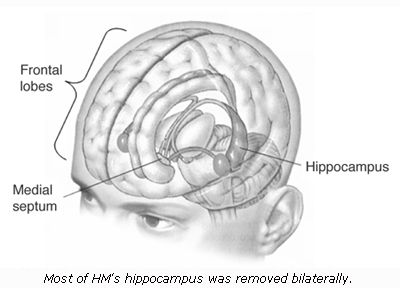
    Study Finds PTSD Risk Rooted in Stress as Neuroscience Field Bids Farewell to "Patient H.M."

    Last week, Henry Gustav Molaison -- a name most would not recognize even though he was the neuroscience field's most famous of patients -- passed away at the age of 80. Since 1953, when experimental brain surgery to alleviate severe epileptic seizures severely damaged his ability to lay down new memories, Molaison was known simply as "H.M."

    From Wikipedia:

    Henry Gustav Molaison (February 26, 1926 – December 2, 2008), better known as HM or H.M., was a memory-impaired patient who was widely studied from the late 1950s until his death. His case played a very important role in the development of theories that explain the link between brain function and memory, and in the development of cognitive neuropsychology, a branch of psychology that aims to understand how the structure and function of the brain relates to specific psychological processes.

    Before his death, he resided in a care institute located in Windsor Locks, Connecticut, where he was the subject of ongoing investigation. Audio recordings from the 1990s of him talking to scientists were released in early 2007. Henry loved to do crossword puzzles, play bingo, watch TV, and socialize with the people who took care of him.

    Not surprisingly, in February 2007, NPR's Weekend Edition [listen] introduced their audience to the man whose ill-fated surgery gave scientists a clearer window into the body's most complex and vital organ: the brain. The program also provides a short introductory primer on memory and the brain.

    Due to PTSD and memory's unique relationship -- with past traumatic experiences feeling vivid, painfully immediate and even more "real" than recent events rather than the distant memories they should be for its sufferers -- H.M. (who was an "n of 1," or the only person who is known to have had the surgical procedure performed on him; therefore, the only one available in this specific research pool) increased our knowledge base in this area, too.


    In extended, a journey into the world of Molaison's amnesia, along with a host of fresh research coming out on the subject.


    Monday, September 08, 2008

    Join Me at Park Ridge VFW Veterans Town Hall Meeting on TBI/PTSD Brain Scan Imaging

    This Tuesday, I'll be taking part in a veterans' issues town hall meeting hosted by the Park Ridge VFW #3579 ("Illinois' Friendliest VFW Post") and State Senator Dan Kotowski. Kotowski has been a great champion of area veterans, his leadership bringing together the Northwest Suburban Veterans Advisory Council, the Illinois Department of Veterans Affairs, the federal VA, private health care and local community members in common cause.

    These groups are now all working together to provide this area with a Military Support System and model PTSD diagnosis and treatment program administered by The Vet Center at Alexian Brothers Medical Center.

    It's an exceptional resource for the community.

    The Center's new Veterans Imaging Program [VIP] is using state-of-the-art brain imaging or mapping technology – more powerful than a standard CAT scan – called MEG to detect the neurobiological signs of PTSD. MEG promises to quickly and accurately spot these brain changes found in PTSD patients in a completely non-invasive way. And this same technology can be used to help detect traumatic brain injury.

    We'll be talking about both PTSD and TBI tomorrow night, and I invite you to join us if you're in the area.

    [UPDATE Sept. 28, 2008]: A surprise guest, IL Director of Veterans Affairs Tammy Duckworth, very easily and graciously upstaged all of the rest of us. A top thrill for me of the year to have the chance to share a few moments with her and to thank her for her service to us both in and out of uniform. Photos:

    vfw_01 vfw_02 vfw_05 vfw_07 vfw_08 vfw_06


    Friday, August 29, 2008

    UA to Study Veterans Reintegration, Obama Aims to Nationalize Montana National Guard PTSD Screening Program, Vets and Intimacy

    • As the new GI Bill rolls out, the University of Arizona (with ~400 veterans already on its campus) is gearing up to welcome even more onto its rolls. Their Teaching Center is "developing a transition curriculum for veterans and is training faculty on how to teach them ... [and] has begun to offer veterans classes on resilience and stress management...designed to improve memory, strengthen problem-solving skills and build a social support network." Vets attending the University of Arizona will also be able to take part in their Disability Resource Center's federal Participatory Action Research Project , which will "study veterans reintegration and transition from the military into college." UA is hosting a celebration for veterans and their sponsors on Thursday, Oct. 9, from 4-6 p.m. in the Student Union Memorial Center.

    • This past Wednesday, presidential candidate Sen. Barack Obama met with Matt Kuntz, the stepbrother of Montana National Guard and Iraq vet Chris Dana. Dana "took his life in March 2007, less than two years after returning from a tour in Iraq. His family believes he was a victim of post traumatic stress disorder, brought on by his combat experience." Since then, his stepbrother has been among those pushing Montana to implement "more than a dozen changes in its policies in an effort to address PTSD and traumatic brain injuries in returning soldiers. A key initiative in the new plan is to screen all returning soldiers every six months for two years after their tour of duty." Obama has promised that he would "expand Montana's pilot program to assess the mental health of combat vets nationwide."

    • Last week, the Minneapolis-St. Paul Star Tribune's Gail Rosenblum delivered an important piece on "the private scars of war," intimately introducing us to one family dealing with the most personal after-effects of war. With ~56 percent of today's troops being married, "the U.S. Defense and Veteran's Affairs departments are acknowledging that the physical and emotional scars that troops carry home present a sensitive challenge: sexual intimacy and body-image issues that most couples' therapists are ill-prepared to treat. ...The number of people returning with disabilities, is an 'enormous problem ... an astonishing problem.' ...Combined with the fact that returning vets are usually older and partnered, this is having a devastating effect on relationships."


    Tuesday, August 26, 2008

    New York Times Reports on the Unique Characteristics of Combat TBI

    Lizette Alvarez of the New York Times writes of the special blast category that is combat-related traumatic brain injury (TBI). The entire piece is well worth a read, but I'd like to share a few of the more statistics-heavy grafs:

    As many as 300,000, or 20 percent, of combat veterans who regularly worked outside the wire, away from bases, have suffered at least one concussion, according to the latest Pentagon estimates. About half the soldiers get better within hours, days or several months and require little if any medical assistance. But tens of thousands of others have longer-term problems that can include, to varying degrees, persistent memory loss, headaches, mood swings, dizziness, hearing problems and light sensitivity. ...

    Little is known medically by doctors or scientists about what happens to a brain as a result of a powerful bomb blast, as opposed to car crashes on a highway, blows to the head on a football field or a bullet wound. These are the first wars in which soldiers, protected by strong armor and rapid medical care, routinely survive explosions at close range and then return to combat.

    The bomb blasts, which throw off energy waves — atmospheric overpressures and underpressures — that are absorbed by the body, add a little-studied dimension to the trauma. Scientists are only now beginning to study the extent of the damage.


    Monday, August 04, 2008

    DoD's $300M PTSD/TBI Research Push, Ft. Hood Presidential Candidate Debate?, Online Sleeplessness Chat

    • Congress and the Pentagon are in the midst of funding a record $300 million military PTSD/TBI research push this summer. With approximately 1.4 million Americans diagnosed with TBI annually, civilians will benefit from the groundbreaking drive, too. "The Pentagon also will target new ways of delivering therapy to PTSD victims living in remote areas of the USA and reducing the stigma that can keep victims from seeking help."

    • Since last November, Military Spouses for Change has been on a mission to bring our presidential candidates together for a Fort Hood, Texas, debate and discussion of issues important to military families. Founder Carissa Picard has so far succeeded in securing a date (August 11); getting CBS to agree to broadcast the event live; and received candidate John McCain's OK. As for Barack Obama? He says that due to scheduling difficulties he can't be there. Maybe something will change by then and the conversation will get underway. If not, a tip of the hat to MSC for their effort.

    • Don't forget Tuesday's LA Times online chat on the sleeping difficulties of combat veterans diagnosed with PTSD. The chat begins at 9:00 am Eastern/noon Pacific, but the accompanying article is already online. Some stats: "About 36% of Army troops who have been back from Iraq for a year said they struggled nearly every day with feeling tired. About 34% said they had difficulty falling asleep, staying asleep or sleeping too much nearly every day... About 70% of veterans being treated for [PTSD] have sleep problems."

    • And if you're looking for more stats on the mental health and well being of our OEF/OIF troops and veterans, "The military's invisible wounds" by David Isenberg would be well worth a read.


    Monday, May 19, 2008

    Tallying War's Costs and Strains

    A selection of some of the latest OEF/OIF-reported stats. First up, from yesterday's New York Times editorial board:

    Repeated, long deployments have put unsustainable stress on troops and pose significant risk to the all-volunteer military. Some 1.6 million troops have served in Iraq and Afghanistan since 2001; many of them have deployed to the war zone for three or four tours. Fifteen-month combat tours, followed by only 12 months of home leave, put incredible stress on families and make it hard to train for the next mission.

    President Bush and the Congress favor expanding the number of ground forces. The Army has already had to reduce its standards to meet recruitment quotas. In 2007, only 79 percent of recruits had high school diplomas, down from 92 percent in 2003. The Army is also granting an increasing number of so-called “moral” waivers — given to recruits with criminal histories ranging from marijuana use to felony convictions.

    Retaining the best and most experienced war fighters is getting harder. The Army has only 83 percent of the majors that it needs. It has offered bonuses of up to $35,000 to keep captains from leaving, promoted junior officers at an unprecedented rate and allowed senior officers to serve beyond mandatory retirement dates.

    Nearly one-fifth of the troops — some 300,000 men and women — have returned from Iraq and Afghanistan reporting post-traumatic stress disorders; only half have sought mental health treatment, in part because many feel it will derail careers, according to a study by the RAND think tank [full pdf : summary pdf]. That leaves countless service members susceptible to depression and suicide. ...

    The National Guard, whose primary task is to protect the homeland and respond to disasters, has only about 61 percent of its equipment because the rest is overseas. The Pentagon’s acquisition process is so flawed that dozens of the most costly weapons program are billions of dollars over budget and years behind schedule, according to a recent study by Congress’s Government Accountability Office.


    Sunday, April 06, 2008

    Editorial: Veterans funding or permanent tax cuts?

    From the Mankato [MN] Free Press editorial board:

    The U.S. House of Representatives and the U.S. Senate recently passed budgets that boost funding for veterans’ health care and other veterans’ needs at amounts higher than the Bush Administration’s proposal. The Bush budget boosts total VA funding by about 1.6 percent, or $1.7 billion.

    The House bill adds about $600 million to the Bush proposal, which would bolster overall spending to about 2.6 percent. The Senate adds $3 billion, making the overall spending increase about 5 percent.

    Many veterans groups have favored the congressional proposals saying the number of veterans entering the VA health system from wars in Iraq and Afghanistan warrants the extra funding. In fact, Congress and the president in the most recent fiscal year boosted VA funding by an “emergency” $3.7 billion appropriation midway through the budget year after seeing tremendous increases in health care costs for veterans returning from Iraq and Afghanistan. That figure is close to the increase being proposed by Bush.


    Wednesday, April 02, 2008

    House Veterans Affairs Subcommittee Hears Testimony on PTSD Treatment and Research

    Yesterday, the House Veterans Affairs Subcommittee on Health convened a long-anticipated hearing on Post Traumatic Stress Disorder (PTSD) Treatment and Research: Moving Ahead Toward Recovery. The hearing was the first to be telecast live from the House committee's website and can be viewed online in full today.

    From Chairman Michael H. Michaud's opening statement:

    Post-traumatic stress disorder is among the most common diagnoses made by the Veterans Health Administration. Of the approximately 300,000 veterans from Operations Enduring and Iraqi Freedom who have accessed VA health care, nearly 20 percent –60,000 veterans- have received a preliminary diagnosis of PTSD. The VA also continues to treat veterans from Vietnam and other conflicts who have PTSD.

    With the release of the 2007 IOM report “Treatment of Posttraumatic Stress Disorder: An Assessment of the Evidence,” we learned that we still have much work to do in our understanding of how to best treat PTSD. I hope that my colleagues will continue to work with me in supporting VA’s PTSD research programs.

    I look forward to hearing testimony today from several organizations that are working to provide comprehensive and cutting edge treatment to those with PTSD. The committee recognizes that this is an important issue and one that will be with us for a long time to come. We are committed to ensuring that all veterans receive the best treatment possible.


    Tuesday, March 25, 2008

    New Age Treatments for a New Age of Warfare: Army Seeking Alternative, Holistic Therapy Research Proposals

    Noah Shachtman at Wired (and cheers back to you, Noah, for the 'special thanks' mention and link to PTSD Combat) looks at the Army's obviously necessity-inspired opening-up of minds and pocketbooks regarding the use and exploration of alternative treatment options for wounded returning troops:

    The military is scrambling for new ways to treat the brain injuries and post-traumatic stress of troops returning home from war. And every kind of therapy -- no matter how far outside the accepted medical form -- is being considered. The Army just unveiled a $4 million program to investigate everything from "spiritual ministry, transcendental meditation, [and] yoga" to "bioenergies such as Qi gong, Reiki, [and] distant healing" to mend the psyches of wounded troops. ...

    The Defense Department "is dedicated to supporting evidence-based approaches to medical treatment and wants to support the use of alternative therapies if they are proven efficacious," notes a recently-issued request for proposals.

    But many of these treatments haven't been held up to much rigorous scientific scrutiny before. So the Army is looking to hand out $4 million in "seedling grants" to "conduc[t] rigorous clinical studies" into all sorts of "novel approaches." Projects "containing preliminary data" will be eligible for up to $1 million. But even "innovative but testable hypotheses without preliminary data" could get as much as $300,000. Proposals are due May 15.

    Full Defense Center of Excellence for Psychological Health (PH) and Traumatic Brain Injury (TBI) program announcement for the Military Psychological Health Research – Complementary and Alternative Strategies grant is available online as an MS Word doc. Grant instructions and application forms are available, too.


    Previous/Older Posts Return Home

    Archives
    2011: Jan Feb
    2010: Jan Feb Mar Apr May Jun Jul Aug Sept Oct Nov Dec
    2009: Jan Feb Mar Apr May Jun Jul Aug Sept Oct Nov Dec
    2008: Jan Feb Mar Apr May Jun Jul Aug Sept Oct Nov Dec
    2007: Jan Feb Mar Apr May Jun Jul Aug Sept Oct Nov Dec
    2006: Jan Feb Mar Apr May Jun Jul Aug Sept Oct Nov Dec
    2005: Sept Oct Nov Dec

    Legal Notice

    The information presented on this web site is based on news reports, medical and government documents, and personal analysis. It does NOT represent therapeutic prescription or recommendation. For specific advice and information, consult your health care provider.

    Comments at PTSD Combat do not necessarily represent the editor's views. Illegal or inappropriate material will be removed when brought to our attention. The existence of such does not reflect an endorsement.


    This site contains at times large portions of copyrighted material not specifically authorized by the copyright owner. This material is used for educational purposes, to forward understanding of issues that concern veterans and military families. In accordance with U.S. Copyright Law Title 17 U.S.C. Section 107, the material on this site is distributed without profit. More information.