x

Wednesday, February 28, 2007

Top Notch War Reporting: A Review and ^5

The following commentary was posted on Monday at various online communities (the Daily Kos version received a lot of feedback). Reprinting it here to 'add it to the record' so-to-speak.

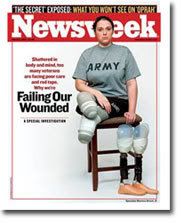
This week, Newsweek reported that between 500 and 1,000 OEF/OIF veterans are homeless and that "[military] families [are] sliding into debt as VA case managers study disability claims over many months, and the seriously wounded [require] help from outside experts just to understand the VA's arcane system..." Last week it was the Washington Post. In December it was NPR. And at various times last year it was the Hartford Courant, the San Diego Union Tribune, The Oregonian, the Colorado Springs Independent, Washington Post, or USA Today...

Each delivered exceptional news coverage. What follows is some of the best, along with an invitation to read the opening installment of a new series on combat PTSD appearing on General Wesley Clark's Clark Community Network blog.

Click on 'Article Link' below tags for more...

As many of you know, I've been covering the story of troop reintegration and combat PTSD for a while now. I've noticed (as I'm sure many of you have) that some stories rise above the others, taking the issue to the next level.

Some reporting, like that done by Dana Priest and Anne Hull for the Washington Post last week, is literally life-changing for troops who have been neglected at Walter Reed. This kind of reporting leaves an impression and makes an impact -- and it gets the powers-that-be to stir from their usual institutional sluggishness.

Sure, there's a lot of lousy reporting. Sure, some of the complaints we lob at the media are valid and appropriate. But, every once-in-a-while some reporters and news organizations get it right. They set the bar higher, and their work acts like a marker in time. We can glance back on and guage our progress -- or realize how far we have yet to go.


January 3, 2006
'Marlboro Marine': Home Front Woes
CBS

This first entry isn't necessarily focused on courageous reporting; its focused on a courageous veteran.

After achieving legendary status as the 'Marlboro Man,' 'The Face of Fallujah,' or even Dan Rather's label of the 'Face of War,' Marine James Blake Miller came forward to speak about his PTSD following his tour of Iraq (he took part in the re-taking of Fallujah in November 2004 as well as serving down in New Orleans following Hurricane Katrina).

Miller became the first returning vet to use his war experience and fame to try to educate the American people and shed light on their plight. From CBS:

In November 2004, a photo of a U.S. Marine made the front page of newspapers across the country. The picture is still one of the best-known images of the war. But the man himself has moved on, and is having trouble adjusting to civilian life.

Lance Cpl. Blake Miller of Jonancy, Ky., came to be known as the "Marlboro Marine" when his picture was splashed across the nation. The attention didn't get him any special privileges, and he served his entire combat tour before he and his unit were ordered home. ...

Miller knows he's not alone [in coping with PTSD since coming home].

"A lot of guys have had way worse incidents from being in Iraq," he said. "And I guess it just — it troubled me due to the fact that their incidents may have been more severe, and they weren't suffering from the same things I was. I just didn't understand how it could affect me so dramatically and not affect some of these guys. But a lot of them deal with different ways.

"The more and more I talk to (other guys), the more I found out there were a lot of Marines that are going through same or similar emotions. It's tough to deal with. Being in Iraq is something no one wants to talk about."

The first installment of CCN's Troops & Vets PTSD series has more on Miller's experience and conflict with the war that he fought in.


March 1, 2006
Veterans Report Mental Distress
Washington Post

Running on Page One in the weeks before the third anniversary of the start of the Iraq War, Shankar Vedantam (the same reporter who wrote of the VA's desire to review 75,000 PTSD cases because costs were going through the roof; the public backlash put an end to the idea right quick) shook things up a bit by reporting that 1/3 of our troops might come home with psychological injuries. It seems almost tepid this news by today's standards.

But, after following the combat PTSD story since the summer of 2005, this piece was the first to signal a shift. It became a bellweather of things to come. This was a clear attempt to report seriously on the effects of the war by one of the big media guns -- a war that had gotten a lot of passes, admittedly, up until that time:

More than one in three soldiers and Marines who have served in Iraq later sought help for mental health problems, according to a comprehensive snapshot by Army experts of the psyches of men and women returning from the wars in Iraq, Afghanistan and other places. ...

In questionnaires filled out after their deployment, more than half of all soldiers and Marines returning from Iraq reported that they had "felt in great danger of being killed" there, and 2,411 reported having thoughts of killing themselves, the report said. It did not have comparable data from earlier conflicts.

Earlier research has suggested that 12 to 20 percent of combat veterans develop post-traumatic stress disorder (PTSD), which produces flashbacks, nightmares, and intrusive thoughts that disrupt work and home life. The new study found that Iraq veterans are being diagnosed with mental disorders at the rate of 12 percent per year.


February 28, 2006
Zogby International press release

Although Zogby released the results of a first-ever opinion poll of our combat troops serving in Iraq the day before Vedantam's piece, it made the news the same day as the WaPo's front page story, delivering a one-two punch. The results were absolutely stunning:

- Le Moyne College/Zogby Poll shows just one in five troops want to heed Bush call to stay “as long as they are needed”
- While 58% say mission is clear, 42% say U.S. role is hazy
- Plurality believes Iraqi insurgents are mostly homegrown
- Almost 90% think war is retaliation for Saddam’s role in 9/11, most don’t blame Iraqi public for insurgent attacks
- Majority of troops oppose use of harsh prisoner interrogation


March 19, 2006
Wounded Lives
The Oregonian

But it would be a 'smaller' newspaper that would deliver a massive 12-page investigative piece on PTSD on the third anniversary of the launch of the Iraq War. Written by Julie Sullivan (assisted by Torsten Kjellstrand), we learned of the experiences of the Stout family, gaining a detailed view of the struggle some of our veterans -- and their families -- had to face as they coped with the post-traumatic stress disorder that now invaded their lives:

The 2-162 returned to Fort Lewis on March 17, 2005, to thundering cheers, flags and a Rogue "Sunset Ale" specially brewed for the homecoming of a unit that traces its history back to Oregon's famed "Sunset Division." Six months earlier, Bill [Stout] had arrived at Portland International Airport alone. On Sept. 20, 2004, Wendy and the girls waited at the gate holding signs: "I love you Dad!" They threw themselves into his arms. Bill's absence had transformed their lives.

He spiralled downward in the months that followed, writing in a notebook that his family had found:

"I used to feel normal. Since I've been to Iraq, and seen and done the things I did, PTSD has taken control of me. I can't be happy anymore. I can't stop the nightmares of losing Ken. It drives me crazy, thinking about it. I haven't slept for months, my stomach is always upset. No matter how hard I've tried, nothing goes right with my family. I can't put it together. I am always angry. I have to force myself to be social in any way. I hate myself and life now. No matter how hard I try, I just can't get it together. The calm ways of this life are making me crazy. I feel like I always have to be going 120 mph. I feel like I should constantly be in a firefight. Even with medication the doctor has given me, I feel like I can't control myself anymore."

It was more detailed than any other account at the time and made a big stir.


March 19, 2006
Some troops headed back to Iraq are mentally ill
San Diego Union-Tribune

Another third anniversary offering to come out of the west coast was Rick Rogers' piece on the practice of sending troops back to the combat zone with their own supply of antidepressant and anti-anxiety medicine; service members who had been having mental health issues were routinely sent into combat for a second, third or fourth tour. This was the precursor to the in-depth Hartford Courant investigation that was coming on strong on this report's heels.

The redeployments are legal, and the service members are often eager to go. But veterans groups, lawmakers and mental-health professionals fear that the practice lacks adequate civilian oversight. They also worry that such redeployments are becoming more frequent as multiple combat tours become the norm and traumatized service members are retained out of loyalty or wartime pressures to maintain troop numbers.

Sen. Barbara Boxer hopes to address the controversy through the Department of Defense Task Force on Mental Health, which is expected to start work next month. The California Democrat wrote the legislation that created the panel. She wants the task force to examine deployment policies and the quality and availability of mental-health care for the military.

“We've also heard reports that doctors are being encouraged not to identify mental-health illness in our troops. I am asking for a lot of answers,” Boxer said during a March 8 telephone interview. “If people are suffering from mental-health problems, they should not be sent on the battlefield.”


May 14, 2006
Mentally Unfit, Forced To Fight
Hartford Courant

The Hartford Courant completed an exhaustive investigation based on Freedom of Information Act requests which concluded that "U.S. military troops with severe psychological problems have been sent to Iraq or kept in combat, even when superiors have been aware of signs of mental illness." After this initial investigation, reporters Lisa Chedekel and Matthew Kauffman continue cranking out one important report after another, delivering the best reporting on this issue:

The U.S. military is sending troops with serious psychological problems into Iraq and is keeping soldiers in combat even after superiors have been alerted to suicide warnings and other signs of mental illness, a Courant investigation has found.

Despite a congressional order that the military assess the mental health of all deploying troops, fewer than 1 in 300 service members see a mental health professional before shipping out. Once at war, some unstable troops are kept on the front lines while on potent antidepressants and anti-anxiety drugs, with little or no counseling or medical monitoring. And some troops who developed post-traumatic stress disorder after serving in Iraq are being sent back to the war zone, increasing the risk to their mental health.

These practices, which have received little public scrutiny and in some cases violate the military's own policies, have helped to fuel an increase in the suicide rate among troops serving in Iraq, which reached an all-time high in 2005 when 22 soldiers killed themselves - accounting for nearly one in five of all Army non-combat deaths.

The Courant's investigation found that at least 11 service members who committed suicide in Iraq in 2004 and 2005 were kept on duty despite exhibiting signs of significant psychological distress. In at least seven of the cases, superiors were aware of the problems, military investigative records and interviews with families indicate.


July 12, 2006
Stressed-Out Soldiers
CBS Evening News/Colorado Springs Independent

Michael de Yoanna for CSIndy and CBS' Armen Keteyian teamed together for the rumble in what would later be an earthquake of a December NPR investigation into the abusive treatment of soldiers at Fort Carson, Colo. They found that soldiers with PTSD and other psychological injuries were "saying members of the Army Command [were] simply paying lip service, at best, to PTSD — hindering their treatment and upending their careers:"

In the face of what some are calling an epidemic of PTSD in the military, nearly a dozen soldiers at Fort Carson told CBS News that their cries for mental health either went unanswered or they found themselves subject to unrelenting abuse and ridicule.

Kaye Baron is a clinical psychologist in private practice in Colorado Springs, Colo. Each week, she counsels up to 25 soldiers and their families who are either unwilling or unable to face their problems while on base. "I think it's a very big problem," says Baron. "They could potentially lose their promotion potential, or just feeling like they're not able to advance in their career. That it's kinda over for them."

Lt. Col. Eric Kruger, Commanding Officer of the 2nd Brigade Combat Team at Fort Carson, says he's concerned that soldiers aren't seeking help due to fears of fearing ridicule or reprisal. "It's a tremendous concern," he says. "You don't want a soldier not to seek help for anything. They're our No. 1 asset. Leaders have to engage that every day — and in my experience here, we do.


August 8, 2006
Center for war-related brain injuries faces budget cut
USA Today

OK. So, psychological injuries are one thing. They are harder to 'see' than physical wounds received on a battlefield. But what happens when reporter Gregg Zoroya files an article which reported that the House and Senate Appropriation Committees were poised to slash by half TBI funding used for research and treatment of war-related brain injuries in its 2007 Defense appropriation bill? Outrage. Traumatic brain injury is the signature wound of our nation's current wars. As of January 2006, 20% of those injured in Iraq had TBI. Cutting funding when it is most needed is reckless and immoral, and after this explosive piece hit the stands it wasn't long before the public backlash was sure and swift. Funding restored.

Congress appears ready to slash funding for the research and treatment of brain injuries caused by bomb blasts, an injury that military scientists describe as a signature wound of the Iraq war. House and Senate versions of the 2007 Defense appropriation bill contain $7 million for the Defense and Veterans Brain Injury Center — half of what the center received last fiscal year.

Proponents of increased funding say they are shocked to see cuts in the treatment of bomb blast injuries in the midst of a war. "I find it basically unpardonable that Congress is not going to provide funds to take care of our soldiers and sailors who put their lives on the line for their country," says Martin Foil, a member of the center's board of directors. "It blows my imagination."

The Brain Injury Center, devoted to treating and understanding war-related brain injuries, has received more money each year of the war — from $6.5 million in fiscal 2001 to $14 million last year. Spokespersons for the appropriations committees in both chambers say cuts were due to a tight budget this year. "Honestly, they would have loved to have funded it, but there were just so many priorities," says Jenny Manley, spokeswoman for the Senate Appropriations Committee. "They didn't have any flexibility in such a tight fiscal year."


December 4, 2006
Soldiers Say Army Ignores, Punishes Mental Anguish
NPR

Prior to last week's Washington Post/Walter Reed shockwave, NPR held the title for creating the most significant tremors in the military reporting landscape. Daniel Zwerdling reported on conditions at Fort Carson, Colo., where officers were said to stand in the way of soldiers desperate to get help for psychological problems or PTSD; some had even been kicked out of the Army rather than given the help they needed. The story created such public outcry that Senators Barbara Boxer (D-CA), Christopher Bond (R-MO) and Barack Obama (D-IL) immediately asked the Pentagon to open an investigation into the allegations.

[Some] soldiers who've returned to Ft. Carson from Iraq say they feel betrayed by the way officials have treated them. Army files show that these were soldiers in good standing before they went to Iraq, and that they started spinning out of control upon their return.

Since the war in Vietnam, military leaders have said that soldiers who are wounded emotionally need help, just like soldiers missing limbs. "The goal, first and foremost, is to identify who's having a problem," says William Winkenwerder, assistant secretary of defense for health affairs. "Secondly, it's to provide immediate support. And finally, our goal is to restore good mental health."

The Army boasts of having great programs to care for soldiers. The Pentagon has sent therapists to Iraq to work with soldiers in the field. And at Army bases in the United States, mental-health units offer individual and group therapy, and counseling for substance abuse. But soldiers say that in practice, the mental-health programs at Ft. Carson don’t work the way they should.

And from these big news stories, we arrive back at the Washington Post and Newsweek pieces of the past two weeks. Both are making significant changes possible like good reporting should. Three cheers for the reporters whose work I've tried to briefly highlight here; they certainly deserve a ^5 from us.

Keep it coming...

Labels: , , , , , , , , , , , , , , ,

Recon: The Wounds Within

From the Pentagon Channel, ~20 mins long:

Labels: , , , ,

Study: 'Prolonged Exposure' Therapy Superior Treatment for Female PTSD

From a JAMA press release:

Using a cognitive behavioral therapy called "prolonged exposure" appears more effective than "present-centered" therapy, a supportive intervention to treat female military veterans and active duty women with posttraumatic stress disorder, according to a study in the February 28 issue of the Journal of the American Medical Association (JAMA).

"Events such as the terrorist attacks on September 11, 2001, the war in Iraq, and hurricane Katrina have focused attention on posttraumatic stress disorder (PTSD), an anxiety disorder that can result from exposure to traumatic events like combat, rape, assault, and disaster. Posttraumatic stress disorder is characterized by symptoms of re-experiencing the traumatic event, avoiding reminders of the event or feeling emotionally numb, and a state of increased psychological and physiological tension. The disorder is associated with psychiatric and physical illnesses, reduced quality of life, and substantial economic costs to society", according to background information in the article. "Lifetime prevalence in U.S. adults is higher in women (9.7 percent) than in men (3.6 percent) and is especially high among women who have served in the military." There has been no prior study to evaluate treatment for PTSD in this group.

Click on 'Article Link' below tags for more...

Continuing:

Paula P. Schnurr, Ph.D., of the Department of Veterans Affairs (VA) National Center for PTSD, White River Junction, Vt., and Dartmouth Medical School, Lebanon, N.H., and colleagues conducted a study to compare the effectiveness of two types of treatments for PTSD, prolonged exposure and present-centered therapy. Prolonged exposure is a cognitive behavioral therapy (CBT) in which a patient is asked to vividly recount a traumatic event repeatedly until the patient's emotional response decreases and to gradually confront safe but fear-evoking trauma reminders. Present-centered therapy, a supportive intervention which is typically used by VA clinicians to address the problems of female veterans with PTSD, includes discussing and reviewing general daily difficulties that may be manifestations of PTSD.

The study found that prolonged exposure therapy decreased anxiety while quality of life was increased. More details at JAMA.


 Related Posts

Labels: , , , , , ,

Tuesday, February 27, 2007

Sen Patty Murray: Bush Gets an 'F' on Veterans Healthcare Leadership

From Newsweek:

Democratic Sen. Patty Murray of Washington has been a longtime advocate of veterans’ rights. The daughter of a disabled World War II veteran, Murray serves on the Senate Veterans’ Affairs Committee and is the author of the law that ensures that all veterans have the right to military funeral honors. She has been honored for her work by groups like the Vietnam Veterans of America, American Ex-POW’s, the Veterans of Foreign Wars and others.

She is also one of the leading voices in the Democratic Party speaking out against the Bush administration’s proposed budget for veterans’ health care—arguing that it fails to address the rapidly rising costs. The Department of VA predicts it will need to treat 5.8 million patients next year, including 263,000 Iraq and Afghanistan vets returning with serious injuries requiring expensive care. Murray and her Democratic colleagues believe the Bush budget will force new costs—such as increased prescription copayments and new enrollment fees—onto veterans themselves. Murray spoke with NEWSWEEK’s Eve Conant about the problem, and how to solve it.

H/t to smintheaus for pointing me to this interview. Click on 'Article Link' below tags for more grafs...

For educational purposes, the piece is quoted from extensively.

Continuing:

Earlier this month, you grilled Veterans’ Affairs Secretary James Nicholson about President Bush’s proposed veterans’ budget for 2008. Is the VA pushing for enough money?

Patty Murray: No. What I have seen over the last four years since the Iraq war began is an underestimation, on the part of the VA, of the number of soldiers that will be going into the VA system—from the conflicts in Iraq and Afghanistan and also from Vietnam. We have an aging population of Vietnam veterans who are having health problems for the first time and coming into the VA. They never looked at that and said, ‘Oh, because of the age of this population we’re going to have an increased number, and therefore we should ask for additional dollars.’ In addition, health-care inflation for everyone is going up by the double digits. You would expect that if you provided health care for people that you would take inflation into account, but I don’t believe the VA has realistically looked at that either.

How many vets does the VA project will be going into the system this coming year? And how far away is that from what you believe the real numbers are?

PM: The VA, last year, was underprojecting how many men and women would come into the VA system from Iraq and Afghanistan. They expected 45,000 and ended up with over 100,000. Now they are projecting 263,000 Iraq and Afghan vets next year. But we’re hearing from independent sources that the figure will be over 300,000. ...

But wouldn’t the leaders of an organization want that organization to get more money, not less?

PM: I’ve worked with the VA for a very long time and up until this point we have had the VA be very honest in their assessment of what is going to be needed, because they are the ones that turn around and serve the veterans. But I have found that over [the] past four years, for the first time, we have a VA that is just toeing the line on the numbers. I believe that the administration, from Day One with this war, didn’t want the American public to recognize the cost of war. They knew that it would generate a negative impact of their moving forward on it. So they have low-balled everything from how long the war was going to [take] to how much it was going to cost. They never told the American public that we will have thousands and thousands of men and women coming home who will have PTSD, who’ve lost legs and arms, who have long-term disabilities and we’re going to have to pay for this, it’s going to cost something. It’s symptomatic of an administration that has failed to tell the American public the cost of this war. What happens then is that the VA doesn’t have the money it needs. Then these men and women come home and are in long waiting lines, can’t get appointments, and don’t get the health care they need.

What are current problems within the VA system that require the most attention?

PM: Once you get into the VA there are excellent doctors. It is an excellent system, and by and large, once you get in you get good service. Where [VA Secretary] Nicholson and I don’t agree is whether or not you can get into that system. A great health-care system is not helping a veteran who is sitting at home and cannot get an appointment. That is where we have a huge problem. We have a backlog of patients that cannot get in. The VA likes to say that everyone gets an appointment within the first 30 days. Great, that’s better than it was. But I come home and talk to veterans who say, sure, after calling three times, 30 days into it, they get an appointment—for nine months later. That just doesn’t cut it. Many of them can’t start working until they’ve had their medical problems cleared. But they are sitting at home for nine months waiting to get into the VA.

What’s the difference between the VA’s projected budget, what the administration is signing off on—and what you think is needed?

PM: The administration is asking for two billion less than what the independent budget request is [the independent budget request is put together by four veterans’ service organizations: AMVETS, Disabled American Veterans, the Paralyzed Veterans of America, and the Veterans of Foreign Wars of the United States]. These are the organizations working with veterans on the ground and they know what is needed. We in Congress need to get a budget request that is honest; otherwise, men and women are not being served. ...

How would you score Bush in terms of leadership on veterans’ health issues?

PM: F. It’s one thing to say you’ve been to a VA center and how everyone is so happy with their service. It is another thing to sit down with Iraq and Afghanistan and Vietnam veterans who are close to tears, with families in stress, because they can’t get the care they need. ...

What about mental health care? You say the VA is predicting fewer in-patient mental-health cases.


PM: I’m very worried. The number of mental health-care patients that the VA is projecting in the budget is less than what we currently have today. I was in Iraq a year and a half ago and I was told by Commander Casey [Army General George Casey Jr., who recently stepped down as the highest-ranking military official in Iraq] that this war is going to create a high number of patients who need mental health care because it’s what he called a 24/7 war. There is no front line to go back from, no place to get away from the intensity of IEDs [improvised explosive devices] going off next to you.…The VA itself has issued statements saying they do not have enough clinicians to see the people who need mental health care. There is no one within the lower echelons of the VA who predicts a lower number of mental-health patients; the only people predicting this are the president and secretary Nicholson. My perspective is they are doing it so they don’t have to ask for money and show what the cost of this war is.

Please email Sen. Murray today and let her know we appreciate her being straight with the American people on these important issues.


 Related Posts

Labels: , , , , , , , , , , , ,

Monday, February 26, 2007

ABC News Tuesday: Bob Woodruff Returns

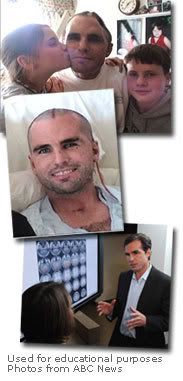
A timely and much-anticipated return to ABC News by Bob Woodruff, the embedded Iraq reporter and anchor who was gravely injured when an IED struck the vehicle he and his cameraman were riding in last year, takes place Tuesday night.

"To Iraq and Back" airs Tuesday at 10 p.m. ET and promises to be especially significant in view of recent reporting by both the Washington Post and Newsweek revealing deep institutional problems at both the VA and DoD -- organizations entrusted with the safety, care and rehabilitation of our returning troops:

Amid highly personal stories of tragedy and triumph, Woodruff delves into the crisis of care faced by so many injured soldiers and their families, uncovering important new information about veterans suffering from brain injuries and the care the U.S. government provides. Woodruff meets soldiers who, after fighting in Iraq and Afghanistan, must fight bureaucratic red tape before receiving the treatment they need, and others who may not even know they're injured, as traumatic brain injury can go unrecognized.

Catch an early glimpse of Woodruff on Good Morning America on Tuesday morning in an interview with Diane Sawyer. Send video questions to Woodruff, and then visit the hourlong documentary's main page for much, much more coverage.

Click on 'Article Link' below tags for more...


From ABC News:

The Human Cost of War

Later in Tuesday night's hour, Woodruff returns to Bethesda once again — this time in a more-familiar role: that of a journalist. It's there he meets Army Sgt. William Glass, who, like Woodruff, was struck by an insurgent's roadside bomb in Taji, Iraq, and suffered traumatic brain injury. When Glass' wife, Amelia, asks Woodruff how long it took him to recover, the reporter says, "It's still going on."

Many of the families Woodruff met with across the country express frustration at the lack of care TBI patients receive once they leave specialized rehabilitation centers and return home. Woodruff asks Secretary of Veteran's Affairs Jim Nicholson about the ability of local VA hospitals to care for brain-injured servicemen. "We have organized the VA with this priority for these combatants returning back," Nicholson says.

But following brain-injured Army Sgt. Michael Boothby from Bethesda back to the soldier's hometown of Comfort, Texas, Woodruff watches Boothby's condition quickly deteriorate as he awaits the arrival of the paperwork that would allow him to continue his treatment.

While the U.S. Department of Defense says that there have been about 23,000 nonfatal battlefield casualties in Iraq, Woodruff discovers — through an internal VA report — that more than 200,000 veterans have sought medical care for various ailments, including more than 73,000 diagnoses for mental disorders. Nicholson plays down those figures, telling Woodruff, "A lot of them come in for dental problems. … We're providing their health care."

Woodruff reports that even these numbers may not tell the whole story: According to unreleased data from the Department of Defense, at least 10 percent of Iraq and Afghanistan veterans may have sustained a brain injury during their service.

The ABC News anchor reports: "That could mean that of the 1.5 million who have served or are now serving in Iraq and Afghanistan, more than 150,000 people could have a brain injury that may be undiagnosed and unrecognized by the casualty numbers from the Department of Defense."

While everyone with symptoms of a brain injury may not need extensive treatment, Woodruff learns that the Department of Defense is not screening all returning soldiers, despite recommendations from the Defense Department's own Defense and Veteran's Brain Injury Center.

Welcome back, Mr. Woodruff, and thank you for your fine reporting. We'll be watching!


Related Posts

Labels: , , , , , , ,

CCN's Troops & Vets Series on Combat PTSD, Society and the Soldier

An invitation to be the first to read the opening installment of a new series on combat PTSD appearing this morning on General Wesley Clark's Clark Community Network blog. You may remember this team for their gripping traumatic brain injury (TBI) series on the 'signature wound' of the Iraq War.

I'm pleased to have been invited to write with CCN's Troops & Vets team for this special look at the effects of post-traumatic stress disorder on 'Society and the Soldier.' Today's offering is a preview of sorts. Many of the grafs were cuts made from my upcoming book, Moving a Nation to Care, due to size limitations. Let me -- and CCN -- know what you think...

Click on 'Article Link' below tags for related posts...


 Related Posts

Labels: , , ,

Sunday, February 25, 2007

Newsweek Expands Walter Reed Story to Include Veterans Administration

Following last week's Washington Post Walter Reed investigation, Newsweek ratchets up attention on the treatment of our returning troops with a cover story that broadens the scope of the problem to include the VA. What Newsweek adds to the mix is damning:

A NEWSWEEK investigation focused not on one facility but on the services of the Department of Veterans Affairs, a 235,000-person bureaucracy that provides medical care to a much larger number of servicemen and women from the time they're released from the military, and doles out their disability payments. Our reporting paints a grim portrait of an overloaded bureaucracy cluttered with red tape; veterans having to wait weeks or months for mental-health care and other appointments; families sliding into debt as VA case managers study disability claims over many months, and the seriously wounded requiring help from outside experts just to understand the VA's arcane system of rights and benefits. "In no way do I diminish the fact that there are veterans out there who are coming in who require treatment and maybe are not getting the treatment they need," White House Deputy Press Secretary Tony Fratto tells NEWSWEEK. "It's real and it exists."

Click on 'Article Link' below tags for more...

Newsweek explores the problem of homelessness:

Already, nearly 200,000 veterans—many from the Vietnam War—sleep on the streets every night, according to the Department of Veterans Affairs. But young warriors just back from the Mideast—estimated around 500 to 1,000—are beginning to struggle with homelessness too. Drinking or using drugs to cope with PTSD, they can lose their job and the support of family and friends, and start a downward spiral to the streets. Their tough military mentality can make them less likely to seek help. Advocates say it can take five to eight years for a veteran to exhaust their financial resources and housing options, so they expect the number to rise exponentially in a few years. "Rather than wait for the tsunami, we should be doing something now," says Cheryl Beversdorf, president of the National Coalition for Homeless Veterans.

The problem is mainly a lack of resources, advocates say. There are only about 15,000 beds available in VA-funded shelters or hospitals nationwide, and nearly every one is taken. In some smaller cities there simply aren't many places for a homeless veteran to go. And as affordable housing units shrink nationwide, veterans living on a disability check of, say, $700 a month, (which means a 50-percent disability rating from the VA), are hard-pressed to find a place to live. Most shelters require veterans to participate in a rehabilitation program, but a "fair amount" of veterans just go back to the streets once they leave, says Ed Quill, director of external affairs at Volunteers of America, the nonprofit housing group for veterans that helped Felty.

The March 5 issue should be on newsstands tomorrow. Read the offerings online or be sure to pick up a copy for full coverage. Submit questions to reporter Dan Ephron. He is going to be available for a Live Talk about the broken state of health care for injured veterans returning from Iraq, on Tuesday, Feb. 27, at noon, ET

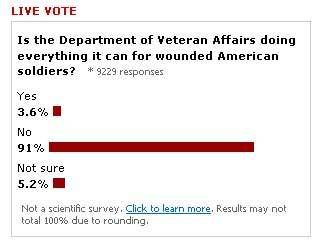
Cast your vote:


Click over to a smattering of the discussion going on today on the issues raised by the Newsweek piece here and here. But more importantly, let's contact our elected representatives and tell them we are no longer going to avert our eyes.


 Related Posts

Labels: , , , , , , , ,

NBC Nightly News Update on Walter Reed Story


Click on 'Article Link' below tags for related posts...


 Related Posts

Labels: , , , ,

Saturday, February 24, 2007

Resources for Communities, Counselors and Vets: ONE Freedom

People often ask me, "Where can I go to learn more about ways to help our troops or where can I send returning soldiers for help?"

I think I've found one answer. Called ONE Freedom Inc., the nonprofit is already delivering services in cities and towns around the country. Its aim is to "train the trainers" in local communities to assist veterans with their reintegration, in combination with training the soldier before they go to war so that they can be prepared to cope with their experience right out of the gate:

ONE Freedom is a Colorado-based 501(c) 3 research and education organization delivering services and programs to returning OIF and OEF veterans and their families on issues regarding reintegration while supporting research on ground-breaking techniques for trauma recovery. ONE Freedom’s community-based programs focus on de-stigmatizing stress and post-trauma by educating audiences on the brain and body’s natural response to stress and what can be done to mitigate the impacts. The programs promote skill-building and self-management for the rebalancing of the central nervous system, regulating emotions and thought, and discharging stress from the body.

Click on 'Article Link' below tags for more...

Please visit ONE Freedom for more information, email them directly to get personalized attention, and if you have a mind to, please consider donating to this important organization.

More details:

ONE Freedom—Research and Education for the Advancement of Human Potential
PO Box 7418 Boulder, CO 80306
303-444-1221 / 1-888-334-VETS

Challenge
Today’s call is to find an intelligent solution to veteran reintegration, for warriors and families, that will set the stage for future national reintegration efforts. To date, the V.A. is overwhelmed by the demand of returning OIF and OEF veterans and does not have the capacity to serve the numbers seeking care. As well, substantial numbers of veterans needing assistance from the V.A. will not seek it due to a myriad of complicated conditions including stigma, institutional distrust, and the probability of pharmaceutical solutions.

Due to the recent conflicts, US service members and their families have paid dearly. With over 600,000 already returned, communities will also pay a price. For some, it will be the direct costs of care for the service member. For others, it will be the opportunity costs of non-participating citizens. For others still, family structures will disintegrate, relationships will be lost and children dislocated. Some of these impacts are inevitable, many are not. Now is the time for a continuum of care that starts where the rubber meets the road—in the communities where America’s veterans are coming home.

Vision
ONE Freedom’s long-term vision is to serve a nation in the midst of a stress epidemic. Every part of society, from healthcare to education, the private sector to the military, is experiencing this profound stress. Through educational campaigns, direct trainings, lectures, skill-building, interactive media and more, ONE Freedom intends to be a national resource for the understanding and transformation of stress and trauma thereby becoming a national response for healing.

Mission
ONE Freedom is presently 100% committed to serving OEF and OIF service members and their families by providing a wide range of services, resources and solutions. Most of the skills are self-applicable and self-manageable putting the healing and recovery process more directly in the hands of the person thereby empowering meaningful change. ONE Freedom’s message focuses on the naturalization of the stress-response as opposed to the “mental-behavioral health” response which helps rid stigma as a complicating obstacle to seeking assistance.

Deliverables
ONE Freedom is currently offering community-based programs along the Colorado Front Range including 2-hour introductory classes that are a precursor to weekend intensives and outline the core curriculum. Once the prototypes of these programs are established and evaluations have been reviewed, ONE Freedom will launch the trainings nationally traveling to key installations and states with high veteran populations offering the weekend intensive and day-long models. ONE Freedom programs are facilitated by former military personal, stress experts, traumatologists, and human performance specialists and are free to veterans and families.

Call to Action
ONE Freedom needs assistance in addressing the critical issues of reintegration after combat, of peace after war, of wholeness after shattering, of growth from suffering. America’s veterans and families deserve to have meaningful solutions for their service and sacrifices. Call today to find out how you can be part of the solution.

Helplessness is the hallmark of trauma; empowerment is its anecdote.

I spoke with Ms. Hawkins, executive director of ONE Freedom, today and am very excited about the work that this organization is doing. They have been laying the groundwork quietly, slowly putting their programs and resources together in preparation for their big debut.

She tells me their website is on tap for an update in the next month and will have a lot more to offer including online training and self-help resources. Please take a peek at the information available right now, bookmark it, and but be sure to check back in a month or two to see what new offerings they have for us this spring.

Their community-based approach is exactly the kind of program I think our returning veterans and our larger society as a whole will benefit greatly from.


Related Posts

Labels: , , , ,

Government Contractors: Hidden Casualties, PTSD

Stunning figures reported yesterday:

In a largely invisible cost of the war in Iraq, nearly 800 civilians working under contract to the Pentagon have been killed and more than 3,300 hurt doing jobs normally handled by the U.S. military, according to figures gathered by The Associated Press.

Exactly how many of these employees doing the Pentagon's work are Americans is uncertain. But the casualty figures make it clear that the Defense Department's count of more than 3,100 U.S. military dead does not tell the whole story. "It's another unseen expense of the war," said Thomas Houle, a retired Air Force reservist whose brother-in-law died while driving a truck in Iraq. "It's almost disrespectful that it doesn't get the kind of publicity or respect that a soldier would."

Employees of defense contractors such as Halliburton, Blackwater and Wackenhut cook meals, do laundry, repair infrastruture, translate documents, analyze intelligence, guard prisoners, protect military convoys, deliver water in the heavily fortified Green Zone and stand sentry at buildings - often highly dangerous duties almost identical to those performed by many U.S. troops. The U.S. has outsourced so many war and reconstruction duties that there are almost as many contractors (120,000) as U.S. troops (135,000) in the war zone.

And contractors also get PTSD.

Click on 'Article Link' below tags for more...

Another couple of grafs to aquaint ourselves with some of the data before we take a look at the issue of PTSD as it relates to our civilian contractors:

If the contractor deaths were added to the Pentagon's count of U.S. military casualties, the number of war dead would climb about 25 percent, from about 3,000 as of the end of 2006 to nearly 3,800. If the contractors injured badly enough to be off the job for at least four days were added to the nearly 14,000 U.S. troops requiring medical air transport because of injuries, the injury total would rise by about the same percentage.

Early in the war, most of the casualties on the coalition side were military. But with the fall of Saddam Hussein, contractors flowed in behind the troops, and the number of deaths among the contract workers has been increasing each year.

Contractor deaths are less costly politically, said Deborah Avant, a political science professor at George Washington University. "Every time there's a new thing that the U.S. government wants the military to do and there's not enough military to do it, contractors are hired," she said. "When we see the 3,000 service member deaths, there's probably an additional 1,000 deaths we don't see."

Last week, NPR Day to Day had a program about their experiences in Iraq and in folding back into society once they return home. In some aspects, they have a rougher time because they don't have as good of a support system as the military does.

From a November article:

No one knows how many of them have been injured and killed. No one keeps track of how many contractors there are in Iraq. And when they come back, many find themselves abandoned. "Nobody ain't doing nothing for us," said Thompson, 43, who for six months in 2004 drove a supply truck in Iraq for Halliburton subsidiary KBR, the largest corporate contractor in Iraq.

Thompson was paid $1,850 a week while he was there -- far more than he had been earning before the war. "And I'll tell you right now, it wasn't worth it," he said. Thompson said he survived several roadside bombs, mortar and rocket attacks, and countless small-arms firefights as he transported supplies for U.S. troops along Iraq's perilous roads. He returned from Iraq without physical injuries.

But his war wounds are evident in the cocktail of prescription medications he takes every day -- for hostile behavior, hallucinations, depression, insomnia, anxiety, anxiety-related tics and spasms, and hypertension, all symptoms he says he developed during his time in Iraq.

Two doctors in North Carolina have independently diagnosed Thompson with post-traumatic stress disorder, a psychological ailment with symptoms that typically include anxiety, loss of sleep and flashbacks. The government has acknowledged that he is disabled, and he receives a $1,224 monthly Social Security payment.

But Thompson says his claim for treatment for post-traumatic stress disorder was denied by American International Group Inc., or AIG, the insurance company for KBR, on the grounds that there was not enough medical evidence of his trauma.

This from the Chattanooga Times Free Press:

"They've lost their livelihoods, their integrity, their families," said Jana Crowder, a Knoxville homemaker and mother of four who organized the conference. She started a Web site for contractors while her husband, a former contractor, was in Iraq in 2004. He wasn't injured, but her Web site, www.americancontractorsiniraq.com, attracted the attention of a number of contractors looking for help. She now spends as much as 12 hours a day contacting therapists, attorneys and medical professionals on behalf of injured workers.

E.C. Hurley, director of the Center for Stress and Combat Trauma near Fort Campbell, Ky., held a session for the contractors on post traumatic stress disorder, similar to the debriefing soldiers get when returning from war. He said that 18 percent to 24 percent of combat soldiers experience PTSD, and the percentage can be higher for contractors. "What they are experiencing is the same," Dr. Hurley said. "(Contractors) are more open to talking about it than soldiers are. The military has a mentality that it's a weakness, that it's a career-stopper."

Some contractors noticed problems after they came home and had their first nightmare or lost a job or a girlfriend because of mood swings or a newfound temper. "I would cry and cry, and there were days when I didn't understand what was wrong with me," said Steve Thompson, a 43-year-old from Asheboro, N.C., who said he has been fired from several jobs since coming home from Iraq, lives in his car because he can't afford rent, and believes he has PTSD.

He said the doctor his insurance company pays for him to see is trying to prove that his problems today are caused by an anger problem that existed before he went to Iraq, not PTSD.

Where have we heard this before?

But while soldiers and contractors may share some common experiences, frustrations and traumas, that does not make them natural allies. Fox News ran a four part series in the summer of 2005 exploring this issue [ 1 | 2 | 3 | 4 ]. A few key grafs:

[T]he contractors' profile sometimes isn't seen as being as honorable. Many hold the view that contractors are only in Iraq to make a profit, often stepping on the toes of the military and causing more chaos in regions that already are on shaky ground. In the contractor corps, many civilian workers are former military personnel who say they're trying to make a difference while making a better living. ... Most military personnel are deployed on yearlong missions and some have been deployed two to three times already. Many contractors, on the other hand, get more flexible rest and relaxation (R&R) time and often do get to see their families more often.

These disparities, added with the high intensity found in a combat zone, can result in anger and animosity, as seen in this well-publicized incident from May 2005:

For three days, a group of 16 American contractors in Iraq feared they had stumbled into a different world — one where the U.S. military viewed them, and not Islamic extremists, as the enemy.

The ordeal began May 28 when a group of Marines suspected the contractors for Zapata Engineering (search) of shooting at them and Iraqi civilians in Fallujah. The Marines allegedly bound and roughed up the contractors, who were given orange jumpsuits to wear. They also received a prayer rug and a copy of the Koran (search) and were placed in a cell next to Iraqi insurgent suspects.

The contractors, eight of whom are former military men, wondered how the Marines supposedly could throw the idea of "Semper Fi" out the window and treat fellow Americans so poorly. "If we were terrorists, they would have extradited us so they could have charged us … once they cleared us, they should have let us go," Pete Ginter, one of the Zapata contractors, told FOXNews.com in a recent interview. "I think it's some personal vendetta they had against us."

Several of the contractors told FOXNews.com the gripe appeared to be financial, stemming from jealousy over the belief that contractors make more money. "How do you like your contractor money now?" one Marine barked, according to those contractors interviewed. ...

Among the contractors are about 20,000 who work for private security companies, some of whom have come under criticism for bad behavior. Witnesses have been quoted telling stories about caravans of intimidating contractors driving fast through Iraqi streets in their SUVs with guns hanging out the window.

Marine Col. John Toolan, who was the military commander of the area that included Fallujah when four private security contractors employed by Blackwater were ambushed and murdered last year, told PBS' "Frontline" that the part of the problem is that the military and contractors have different motivations in a dangerous environment.

"We have a tendency to want to be a little bit more sure about operating in an environment," he said. "Whereas I think some of the contractors are motivated by the financial remuneration and the fact that they probably want to get someplace from point A to point B quickly, their tendency [is] to have a little more risk. So yes, we're at odds. But we can work it out."

From Congressional testimony given by the four widows of the Blackwater contractors who were killed in Fallujah, we glimpse the reality of life as a civilian contractor. Here's one wife's story, find the others here.


See Private Warriors, a Frontline special, for more.

[UPDATE June 30 2007] Dan Rather Reports did a segment on HDNet worthy of viewing called "Civilians at War":

Part 1


Part 2


Part 3


 Related Posts

Labels: , , , , , , ,

Friday, February 23, 2007

Mental Health Parity Act of 2007

The Mental Health Parity Act of 2007 [pdf], a bill aimed at improving mental health care insurance coverage, took a big step forward last week when it cleared the Senate's Health, Education, Labor and Pensions Committee.

Next step? A vote by the full Senate. The Diane Rehm Show offers a solid introduction [audio] to this bill:

Senators Pete Domenici, Edward Kennedy, and Mike Enzi have introduced legislation that requires health insurers who cover mental illnesses to offer benefits on par with those provided for physical ailments. We'll talk about the implications of parity for mental health benefits and prospects for this legislation.

Guests
Senator Pete Domenici, R, New Mexico
Paul Dennett, vice president for health policy, American Benefits Council
Andrew Sperling, director of federal legislative advocacy, National Alliance on Mental Illness (NAMI)
Keith Dixon, president, Cigna Behaviorial Health
Senator Edward Kennedy, D, Massachusetts

Click on 'Article Link' below tags for more including an action item...

From the Health, Education, Labor and Pensions Committee:

WASHINGTON – U.S. Senators Edward Kennedy (D-Mass.), Pete Domenici (R-N.M.), and Mike Enzi (R-Wyo.) today introduced breakthrough mental health legislation to ensure greater health insurance parity for persons with mental illness. The Mental Health Parity Act of 2007 represents the culmination of more than a year’s negotiations involving lawmakers, mental health, insurance and business organizations to craft compromise legislation. The new policy would build on the landmark 1996 Mental Health Parity Act, a law authored by Domenici and the late Minnesota Senator Paul Wellstone that began the process of ending health insurance discrimination against people with mental illness.

The bill does not mandate group plans to provide any mental health coverage, but it does require health insurance plans that offer mental health coverage to provide that coverage on par with financial and treatment coverage offered for other physical illnesses. “One in five Americans will suffer from mental illness this year. But unlike in the past, we know today that mental illnesses are treatable – more treatable than many physical illnesses. Yet, only one third of those facing mental illnesses will receive treatment,” Kennedy said. “The bill we introduce today will begin to right these wrongs. It represents an agreement, after seven long years of stalemate, not only between Democrats and Republicans, but also with the mental health community, businesses and the insurance industry. And it provides new hope to millions of our fellow citizens.”

“We are here today after years of hard work,” Domenici said. “Simply put, our bill will provide parity between mental health coverage and medical and surgical coverage. No longer will a more restrictive standard be applied the mental health coverage and another more lenient standard be applied to medical and surgical coverage. This is a matter of fairness and I am genuinely excited that we may finally make progress to build on the 1996 law and offering this much-needed help to those with mentally ill and those whose care for them.”

“This carefully crafted, balanced compromise bill could only be reached by bringing together employer, insurance and mental health communities and asking them to set aside partisanship and find a common ground. By bringing everyone to the table to air concerns and determine areas of agreement, we have finally overcome years of legislative paralysis to make progress for the millions of Americans affected by mental illness,” Enzi said.

See the 6-page release for more specifics.

The bill appears to be receiving broad support from various groups including insurers, employers and mental health professionals and organizations that represent them.

Aetna's response:

Aetna (NYSE: AET - News) today announced its support for the Mental Health Parity Act of 2007 (S.558) proposed by U.S. Senators Pete V. Domenici, Michael B. Enzi and Edward M. Kennedy. The legislation establishes parity between mental health benefits and medical/surgical benefits with respect to financial requirements and treatment limitations for consumers. As a leading health insurer that provides the full spectrum of health benefits to more than 35 million Americans, Aetna believes that this legislation will promote timely and appropriate care for mental health, which is an essential component of effective health care. Aetna said the federal legislation will create a national solution to inconsistent behavioral health care regulation, inconsistencies that can be a threat to Americans' overall health.

"Aetna supports this legislation and will work with Congress to see that it is enacted without modifications that undermine the compromise forged by Senators Kennedy, Domenici and Enzi," said Mary Fox, head of Medical Related Products, which includes the behavioral health and pharmacy businesses. "Aetna is supportive of the principles and approach embodied in this legislation. If passed, we believe our members will benefit by being better able to achieve their optimal health through more integrated health and behavioral programs, benefits and services."

Tha National Alliance on Mental Health (NAMI) offers an easy-to-use online action form to throw our support in S 558's direction:

Action Required

Support the Mental Health Parity Act of 2007 (S 558)
Senators Introduce Mental Illness Parity Legislation – Senate Committee Set for Immediate Action on Bill Ending Insurance Discrimination

On February 12, a bipartisan group of senators, led by longtime NAMI allies Senator Pete Domenici (R-NM), Edward M. Kennedy (D-MA) and Mike Enzi (R-WY), introduced legislation to require employers and health plans to equally cover treatment for mental illness. This legislation, known as the Mental Health Parity Act of 2007 (S 558), would expand an existing 1996 federal law and prohibit employers and health plans from imposing durational treatment limits and financial limitations on coverage for mental illness that do not apply to all other medical conditions.

Advocates are strongly encouraged to contact their Senators and urge them to support and cosponsor S 558. It is critically important that strong and immediate bipartisan support be demonstrated for this legislation.

When contacting Senate offices, it is critically important to remind them that:

*Mental illnesses are real
*Treatment works
*There is no justification for a health plan to impose limits or conditions on coverage that do not apply to all other illnesses, and
*After nearly 15 years of delay, it is time for the Senate finally pass parity legislation.

Please lend your support to this important new bill.

Labels: , , , , , , ,

Join IAVA's Paul Rieckhoff on TPM Cafe Today

Paul Rieckhoff is tireless and a straight-shooter.

He's posted another great response to the Walter Reed scandal brought to light this week (if you missed his response to the near media blackout of the Iraq War in favor of nonstop coverage of the death of Anna Nicole Smith, that's worthy of a read, too).

Here's a quick taste from today's commentary:

Severely wounded Iraq veterans struggling to find their rooms, get appointments, or get their paperwork to the right offices. Families unable to communicate with doctors or find housing near the hospital. Mold, rodents and cockroaches in patients’ rooms.

At Walter Reed Army Medical Center, the premier Army hospital in the country, wounded Iraq and Afghanistan veterans are facing inexcusable conditions. The Army and the Department of Defense saw no need to fix these problems until they were embarrassed by a series of reports in the Washington Post. (Learn more about the issue, and hear IAVA’s response to the Walter Reed scandal on NBC Nightly News or Hardball.)


Click on 'Article Link' below tags for more...

Continuing:

Luckily, some members of Congress are taking the lead on this issue. Senators McCaskill and Obama have proposed legislation to improve the ratio of caseworkers to recovering veterans and establish timelines for repairing substandard facilities. We hope we can count on all other lawmakers to support this bill.

But problems at Walter Reed are just the tip of the iceberg. When these same veterans leave Walter Reed and return to their local clinics and hospitals, they will be entering the chronically underfunded and understaffed Veterans Affairs system -- where these very same veterans will again face the long wait times, aging facilities, and inadequate staffing.

Join Rieckhoff over at TPM Cafe today; he's replying to comments.


 Related Posts

Labels: , , , , , , ,

Moving a Nation to Care: Tour Dates/Related Events

Join me and share your knowledge at the following events...

Click on 'Article Link' below tags for tour dates...

VietNow - Rockford Charter Chapter 5Lets explore ways to get 'Moving a Nation to Care' about and for our returning troops. Let's come together for a solid discussion and learning experience on both ends.

Coming events...

Ilona will be participating in and photographing the following NIU Veterans Day events:

-------------------------
THURSDAY | Nov 5
-------------------------
6:00 p.m. / Holmes Student Center / Room 405
"NIU Veterans Club Community Roundtable" - The first such public gathering convened by the NIU Veterans Club, facilitated by Ilona.

-------------------------
FRIDAY | Nov 6
-------------------------
2:00-7:00 p.m. Open House, 7:30 p.m. Formal Ceremony / Holmes Student Center / Regency Room
"Department of Illinois Military Order of the Purple Heart Movable Memorial Wall remembering Illinois’ Fallen Operation Enduring Freedom (OEF) and Operation Iraqi Freedom (OIF) Veterans"

-------------------------
SUNDAY, Nov 8
-------------------------
7:00 p.m. / Holmes Student Center / Sandburg Auditorium
"Vet Art Project-NIU Presents New Art About War & Service -- a public performance and viewing"

-------------------------
WEDNESDAY, Nov 11
-------------------------
11 a.m. / NIU Veterans Memorial / Castle Dr. & College Ave.
Veterans Day Remembrance

Last updated on November 1, 2009.

Additional updates at the Moving a Nation to Care: Latest News page. Sign up to receive a once daily dose of PTSD Combat (as long as something new is posted) to stay on top of all the latest news and info as we push forward.

And please email me if you'd like to suggest a stop. All aboard!

Past events...

* May 10, 2007 - Waltham, MA: Back Pages Books [notes]
backpages_051007_1 backpages_051007_3 backpages_051007_5 backpages_051007_4

* May 16, 2007 - Philadelphia, PA: Robin's Bookstore [notes]

* May 18, 2007 - New York City, NY: Barnes & Noble-Greenwich Village [notes]
tour_nyc04 tour_nyc02 tour_nyc05 tour_nyc07

* May 20, 2007 - Sunday Book Salon at firedoglake, 5pm ET [notes]

* June 5, 2007 - Berkeley, CA: Moe's Books [notes]
tour_berkeley1 tour_berkeley2b

* June 6, 2007 - Tempe, AZ: Changing Hands Bookstore [notes]
tour_tempe2007_2b tour_tempe2007_1 tour_tempe2007_2 tour_tempe2007_3

* June 9, 2007 - Oceanside, CA: Barnes & Noble [notes]
tour_oceanside2 tour_oceanside4 tour_oceanside1b tour_oceanside5

* June 12, 2007 - St. Louis, MO: Left Bank Books [notes]
tour_stl1 tour_stl2 tour_stl3 tour_stl4

* June 20, 2007 - Boulder, CO: Boulder Book Store [notes]
meagher_boulder_2007-011b meagher_boulder_2007-027 meagher_boulder_2007-032 meagher_boulder_2007-020

* June 21, 2007 - Denver, CO: Tattered Cover Bookstore [notes]
meagher_denver_2007-091 meagher_denver_2007_4 meagher_denver_2007-097 meagher_denver_2007-098

* July 12, 2007 - Seattle, WA: University Book Store [notes]
tour_seattle071207_1 tour_seattle071207_2 tour_seattle071207_3

* August 3, 2007 - Chicago, IL: YearlyKos Convention appearing on the panel The Military and Progressives: Are They That Different?, 9:15 am. [notes]
ykc2007_0188 ykc2007_0181 ykc2007_0235 ykc2007_0193

* August 23, 2007 - Chicago, IL: In the Valley of Elah screening followed by combat PTSD Q&A (Ilona appears on panel) [notes]
in-the-valley-of-elah_scree DSC_0008

* September 1, 2007 - Decatur, GA: Atlanta Journal Constitution Decatur Book Festival Moving a Nation to Care signing, 3pm. [notes]
ajcdecatur2007_27 ajcdecatur2007_02 ajcdecatur2007_12 ajcdecatur2007_42

* September 2, 2007 - Decatur, GA: Atlanta Journal Constitution Decatur Book Festival Moving a Nation to Care reading and signing, 12:00 pm. [notes]
ajcdecatur2007_49 ajcdecatur2007_53 ajcdecatur2007_50 ajcdecatur2007_51

* September 6, 2007 - Chicago, IL: In the Valley of Elah screening followed by combat PTSD Q&A. Ilona appears on panel. [notes]

* September 21, 2007 - Chicago, IL: Ilona appears on 'Issue Forum with Frank Avila' on CAN-TV, 9:30 p.m. CDT. [notes]

* September 27, 2007 - Online: Second Life interview with Ilona, 6pm PST/9pm EST [details]
secondlife_ilona4 secondlife_ilona9 secondlife_ilona secondlife_ilona10

* October 16, 2007 - Amherst, MA: Food for Thought Books presentation and signing, 7pm. Kevin and Joyce Lucey, Kevin Bowe, and many other special guests. [notes]
PA160045 PA160040 PA160037 PA160038

* November 13, 2007 - Dixon, IL: Ilona delivered the Veterans Day Dinner keynote address at Dixon Elks Lodge #779 [notes]
dixonelks_16 dixonelks_07 dixonelks_10 dixonelks_04

* December 12, 2007 - Washington, D.C.: Ilona testifies at House Committee on Veterans' Affairs Hearing, Stopping Suicide: Mental Health Challenges Within the Department of Veterans Affairs. [testimony | notes]
houseva_kr1 houseva_kr7 houseva_kr6 houseva_kr10

* May 21, 2008 - Nashville, TN: "Healing the Hidden Wounds" veteran caregivers symposium sponsored by Nashville Public Television and NAMI-TN. Ilona delivered the afternoon keynote. [notes]
bna2008_05 bna2008_13 bna2008_34 bna2008_28

* September 9, 2008 - Park Ridge, IL: Ilona participated in a veterans' issue town hall meeting at "Illinois' friendliest VFW post" alongside IL Veterans Affairs Director Tammy Duckworth and State Senator Dan Kotowski. [notes]
vfw_01 vfw_02 vfw_05 vfw_07

* October 31, 2008 - Kansas City, MO: Ilona delivered the closing keynote at the "When the War Comes Home: Advocacy and Treatment for Returning Veterans" conference held at the National World War One Museum-Liberty Memorial. [notes]
MCI_WWIMem2008-003 MCI_WWIMem2008-025 MCI_WWIMem2008-035 MCI_WWIMem2008-034

* December 13, 2008 - Carol Stream, IL: Ilona attended a Vet Art Project exploratory community outreach/orientation workshop (part of the Chicago Cultural Center Incubator Series)led by Vet Art Project's Lisa Rosenthal. [notes]

VAP_01 VAP_0193 VAP_0198 VAP_0190

* January 26-27, 2009 - Washington, DC: Ilona was honored to participate in the Survivor Corps Community Reintegration Summit at the Carnegie Institution. [notes]
sc2009_0429 sc2009_0398c sc2009_0403 sc2009_0395

* February 13, 2009 - Chicago, IL: Ilona led the discussion, Renaissance by Fire: Returning Veterans, Society and the Forging of a New Enlightenment, as part of the month long Vet Art Project series. Held on the eve of the first anniversary of the NIU shootings, members of the NIU Veterans Club participated. [notes]
vap2009_0442 vap2009_0451 vap2009_0440 vap2009_0445

* February 23, 2009 - Chicago, IL: Ilona attended and photographed the Chicago Cultural Center Incubator Series/Vet Art Project showcase performance of collaboratively created art about war. The project was led by VAP's Lisa Rosenthal. [notes]
vap2009_0534 vap2009_0564 vap2009_0492 vap2009_0503

* March 27-28, 2009 - Fall River, MA: Ilona spoke at the 3rd Annual Female Faces of War Conference, which included an overnight stay on the Battleship Massachusetts for all attendees.

ffw2009_0747 ffw2009_0776 ffw2009_0881 ffw2009_0939

* April 3-4, 2009 - Hammond, IN: Ilona presented her NIU Senior Honors Capstone paper, "Combat Veterans, Mass Media and the Advancement of Social Consciousness: An Historical and Contemporary Review," at the 17th Annual Clement S. Stacy Undergraduate Research Conference.

purdue_02 purdue_01

* August 10, 2009 - Poplar Grove, IL: OIF vet and author Tyler Boudreau's "The Other Side: Cross-Country Cycling Tour Summer 2009" stop at Poplar Grove Airport Wings & Wheels Museum. Ilona (and husband) hosted Boudreau and facilitated the community discussion, "Joining Forces: A Dialogue on Forging Military and Community Bonds w/Tyler Boudreau," which also included members of the NIU Veterans Club.

aug2009_1913 aug2009_1870 aug2009_1905 aug2009_1918


More tour photos >>>


Related Posts

Labels: , ,

Local Angle on National Story: Veterans Claim Processing Nightmare

From WTAE-TV, Channel 4 [Pittsburgh]:

More than 23,000 American soldiers have been injured in Iraq and Afghanistan. Nearly 1,000 have lost a limb, and amazingly, a Team 4 Investigation found many of those injured veterans are now fighting the U.S. government for disability benefits. ... It all comes down to this: The Veterans Administration is clogged with hundreds of thousands of claims, and that logjam is forcing some of our wounded soldiers to wait more than a full year to get the benefits due them. ...

Government documents obtained by Team 4 shows more than 30,000 veterans injured in Iraq and Afghanistan have pending disability claims. Hundreds are local, and the numbers continue to grow. Stephen Dennison of the American Legion helps injured veterans in western Pennsylvania file claims. He said wounded warriors deserve better. "Then you come back to the United States, and you get out of the service, and you have to go through a hassle to get your benefits?" said Dennison. "That's not the way the government should take care of veterans."


Click on 'Article Link' below tags for related links...


 Related Posts

Labels: , , , , , ,

Thursday, February 22, 2007

Moving a Nation to Care: the ePluribus Media Review

The second early review of Moving a Nation to Care arrived tonight via my colleagues at ePluribus Media. Aaron Barlow, author and English professor by day and store/gallery owner (of Shakespeare's Sister in Brooklyn, NY) by weekend and night, was kind enough to read and review my upcoming book:

Don' t expect a pretense of " objectivity" in this review. After all, Ilona Meagher has been writing on Post-Traumatic Stress Disorder (PTSD) for a year now on ePluribus Media. Many of us have been involved with her in the work on the PTSD Timeline (a searchable database of reported Iraq and Afghanistan Vet PTSD incidents), on her articles and blog posts, and even on her book. Though I have been concerned in only the most peripheral way, I have applauded the work at every step -- and I continue to do so with the publication of this book.

Still, I can promise two things in this review: an honest evaluation and a personal viewpoint. After all, Meagher's book is an attempt to move Americans to action on veterans' rights: She is honest in her concern and this is a book on a topic that has much more relevance to our individual lives, even those of us with no immediate family members in the military, than many of us might think. What happens to the members of our military matters to our lives, no matter who we are.

Click on 'Article Link' below tags for more...

Barlow weaves contemporary music lyrics and family recollections together to reveal how each generation is connected through the experience of war. Are we taking care of our our troops as well as previous generations took care of their own?

Now, the Veterans Administration has a special place in the hearts of my own family. To us, it was a cherished organization. My grandfather, who lost a leg as a National Guard officer in World War I, worked for the VA almost from the day it was established in 1926, eventually serving as its chief legal counsel in Ohio. My father graduated from high school in Brecksville, OH -- site of the VA hospital where my grandfather worked. The VA took care of my grandfather until the day he died in 1959, long after he'd been able to work. The VA did so well by him that none of us could speak of it without a hint of awe.

For they really took care of him. He had dedicated his own life to the service of veterans -- and that dedication was repaid.

Tonight, I picked up my mother at the airport. In the car, I told her about this book, and about today's VA. She was shocked. She remembers the VA as it once was, the VA that had been her father-in-law's life-- not the sorry shadow of its former self that it has become. She also knows the way our country once treated veterans -- my father went to college (and met her) on the GI Bill. They bought their first house because of loans for veterans. Like many, however, she wasn't aware that veterans are no longer treated so well.

As it turns out, one of the few (if only) VA hospitals I quote by name is the very same Brecksville VAMC that provided the resources his grandfather needed to rebuild his life after serving his country and losing so much. Not surprisingly, Brecksville was at the leading edge in 1985, when it was the only VAMC in the nation offering a fully-funded, comprehensive PTSD program.

Continuing the ePM review:

Meagher's book is in three parts. The first two use personal stories to provide an understanding of PTSD for those of us who have never experienced it or war. This first part really has two purposes, to show that although PTSD is nothing new, it is a serious problem indeed. The second gets into the complexities of PTSD in contemporary American society, explaining why PTSD is different for veterans today, given the particulars of the contemporary Iraq and Afghanistan conflicts. In the third part, she brings it home -- literally, discussing, among other things, the impact of quick transport, picking people up from Iraq one day and dropping them home the next -- without any time for adjustment. It's here, also, that she provides lists for the activism that she hopes her "call to arms" will make necessary in each of our hearts -- places to contact, things to do relating to easing the impact of PTSD. In many ways, these are the purpose of the book. The point is to give Americans -- all of us, but particularly the veterans facing PTSD and their families -- information on how to proceed both in dealing with the trauma and in forcing our government to deal concretely with the problem.

The style of Meagher's writing is breezy; there's no anger in the prose. Meagher lets the examples she presents speak for themselves -- and that's good. The outrage is in the violence that PTSD victims have experienced and then recreate (most often against themselves) -- and in the help that comes too little and too late, if at all.

Read the rest >>

ePluribus Media announced the arrival of their review at their Community site as well as over at Daily Kos -- which became quite a warm embrace from the community cheering out work on combat PTSD. Not much objectivity, but much shared (dare I say) joy that our advocacy might do even a small measure of good.

Labels: , , , ,

Study: Military Kids Have Higher Blood Pressure, Heart Rates, and Stress Levels

From the Medical College of Georgia:

Children with parents in the military have higher blood pressure, heart rates and general stress levels than their peers during wartime, researchers say. Researchers looked at 121 adolescents – including 48 with civilian parents, 20 with a parent deployed to Iraq and 53 with a parent in the military but not deployed – days after Operation Iraqi Freedom was launched in March 2003 and nearly three months later when President Bush announced major hostilities had ceased.

At both points, adolescent offspring of military personnel self-reported higher levels of stress and measures of blood pressure and heart rates supported that. “We expected stress levels would push up blood pressure and heart rates,” says Dr. Vernon Barnes, physiologist at the Medical College of Georgia and principal author of a paper published in the January issue of Military Medicine.

Dr. Barnes and his colleagues used a posttraumatic stress disorder questionnaire developed by the military for personnel and modified for adolescents, a survey to assess psychosocial concerns such as sense of well-being and faith in government as well as more objective heart rate and blood pressure measures.

Not surprisingly, they found that particularly adolescents with deployed parents had higher rates than their classmates. Studies were done at the Academy of Richmond County, a high school in Augusta, Ga., attended by many children whose parents are stationed at Fort Gordon.

Click on 'Article Link' below tags for related posts...


 Related Posts

Labels: , , , , ,

Notes, News and Navel-Gazing @ PTSD Combat

What a week it's been.

I have Dana Priest and Anne Hull to thank for not getting much else done around here following the arrival of the Washington Post's ground-shattering series on Walter Reed Army Medical Center's handling of our returning troops in their care. A 'sacrifice' of time I'm only too happy to give up, especially if it leads to improvements in veterans' care.

Alongside juggling my Google News alerts, I've been doing some long-overdue sprucing up of the place around here. I've swapped a Flash element for the static banner of old (for some reason it didn't show up in my IE browser -- though it's fine in Firefox -- when I tested it; anyone else having that problem?).

Besides moving the deck chairs around here, PTSD Combat has gotten a few nice mentions and links of late. Not ground-breaking, but still worthy of a mention.

Click on 'Article Link' below tags for more...

Meta navel-gazing, here we come...

Think Progress gave a nice link and nod:

...John at AmericaBlog has been covering the Walter Reed issue extensively, and has a nice round-up of veterans news here. PTSDCombat, FireDogLake, Carpetbagger, Daily Kos and Atrios have more.

Now, that's a nice list to belong to (that is, if you don't mind being lumped together with all of those nasty bloggers out there. :o)

AOL Top News included a link over from their Bush Promises Help for Wounded Warriors story to my More WaPo Fallout: Senators, WH, Veterans and Pundits Chime In post (find the link from their 'Read Related Blogs and Articles' pop-up near the bottom of the page).

Didn't realize that you were going on a wild goose chase, eh?

Legacy of War gave me a nice mention:

Ilona Meagher's blog ... is a wonderful resource for all who are concerned about our military who have PTSD. I have been inspired by her commitment to this issue and credit her with making many aware of the limitations of the care given to our brave veterans.

Blush, blush, blush.

toniD's ya think? ("Keeping an eye on our government") linked to my post on this week's important Navy Times article with the words New Blog you MUST read! Thanks, ToniD!!!

Sen. John Kerry's blog was probably the most surprising and kind link; Violet Bliss Dietz quoted extensively from a post I'd written exactly one year ago, Unutterable: For Reagan it Was AIDS. For Bush, PTSD? Here's a bit of what she had to say:

In researching what's happening with veterans issues and the regular survey of the blogosphere, I've found some related items that I want to share. The first item is old but it's good.

From Ilona Meagher at PTSD Combat blog:

Unutterable: For Reagan it Was AIDS. For Bush, PTSD?

How many times has the Bush Administration uttered the phrase 'post-traumatic stress disorder' in speeches or remarks archived at Whitehouse.gov? I did a search this afternoon and found not even one document returned.

Why is a disorder that afflicts tens of thousands of our Iraq and Afghanistan veterans unutterable by this administration? And are Democrats also silent on this issue?

To head off any confusion, the question I'm proffering here is: Is PTSD as radioactive to the Bush administration as AIDS was to Reagan's? I'm not comparing the two illnesses with one another.

She goes onto search Cheney's record as well as the President's record and finds no record of them uttering those words. Then she goes onto query the Dem leaders. ...

Dietz also quotes a snippet from a more recent post, BusinessWeek Covers Unique Struggles of the Reservist-Entrepreneur, that mentions Kerry's years long work on the Military Family Bill of Rights.

So as not to end entirely on myself here, but rather to refocus on the more important issues that demand our attention, I'd like to share a bit of Dietz' post on Kerry's reaction to the Walter Reed scandal (is there really any other word for it?):

JK is responding to the story about the conditions at Walter Reed Army Medical Center. According to a statement released earlier this afternoon, he is joining with Senators Obama and McCaskill in introducing legislation aimed at improving conditions at the WRAMC. The focus of the proposed legislation is assisting patients in acquiring the counseling and rehabilitation services that they need.

WASHINGTON, DC – Sen. John Kerry (D-Mass.) announced today that he will co-sponsor legislation to improve the lives of recovering veterans at Walter Reed and other medical centers by eliminating paperwork and improving physical conditions. Kerry also said he would explore options for directing new funding to Walter Reed and to make immediate improvements to the buildings where veterans are housed. ...

The legislation that Kerry is co-sponsoring would do the following:


* Simplify the paperwork process for recovering soldiers

* Improve the ratio of caseworkers to recovering soldiers

* Increase the training of caseworkers

* Require more frequent IG inspections of hospital facilities and standards of care

* Establish timelines and benchmarks for repairs to substandard facilities

* Provide recovering soldiers with psychological counseling

* Require regular reporting to Congress on:

o the total number of recovering soldiers at military hospitals

o the number of caseworkers

o the average waiting time for treatment

o the number of suicide attempts, accidental deaths or drug overdoses

JK spoke out today:

“We owe our returning veterans a debt of gratitude, not sub-standard treatment at an overcrowded medical facility. The Administration has consistently talked a big game but shortchanged the needs of veterans. How can the president talk about a troop escalation in Iraq while failing to keep faith with the Iraq War veterans we’ve already brought home?

Brave men who have been blinded or lost a limb in Iraq should not be sitting in moldy, mouse-infested buildings. Period. It’s unacceptable and this Congress needs to do something about it.”

I couldn't agree more.

Labels: , , , ,

Wednesday, February 21, 2007

Pentagon Faults 'Leadership' at Walter Reed But Doesn't Name Names

Update from the Washington Post:

Top Pentagon officials today blamed a breakdown in leadership for problems with outpatient care at Walter Reed Army Medical Center and vowed to take quick corrective action. In a Pentagon briefing, however, the officials said they did not know about the most serious problems until The Washington Post reported on them in a two-part exposé on Sunday and Monday. An "independent review group" is being formed to look into the problems and report back as soon as possible, the officials said.

Gen. Richard A. Cody, vice chief of staff of the Army, and William Winkenwerder Jr., assistant secretary of defense for health affairs, declined to specify precisely where the leadership breakdown occurred or to identify anyone who was at fault. Instead, they and the commander of Walter Reed, Maj. Gen. George W. Weightman, said they took overall responsibility for the situation. ...

Pressed on where the leadership breakdown occurred, Cody replied, "I'd rather not say. I'll take responsibility. I'm the vice chief of staff of the Army. I'll take responsibility for this, and I'll make sure that it's fixed. But I'm not here today to lay out at what level. We know what level. I've had meetings with those people, and the appropriate actions have been taken."

Click on 'Article Link' below tags for more...

A few more grafs, continuing:

[Cody] said later that no one has been relieved of command or fired but that "we will do the right thing across the board as we continue to assess where the leadership failure and breakdowns were."

"We had people that were put in charge that did not have . . . the right rank and the right experience and the authority to be able to execute some of the missions that was required," Cody said. In some cases, he said, wounded soldiers volunteered to take charge of "quarters duties," which he said was appropriate because it contributed to their rehabilitation and utilized their experience.

"But at certain levels, we should have had higher-level noncommissioned officers, and we should have had higher-level officers overseeing Building 18 and the outpatient care," Cody said. "And that's what we're correcting right now."

Is that a tinge of blaming the low-ranking veterans who were helping out their fellow battle buddies at Walter Reed that I detect in there?

This is interesting, too:

Although he has been in office for six years and has visited Walter Reed regularly, Winkenwerder said, "This news caught me -- as it did many other people -- completely by surprise." He indicated that the independent review group will look into why the problems were not reported up the chain of command. ...

Winkenwerder added: "One of the matters I hope to learn about is why the problems and concerns were not raised up. I think that's an important issue to identify."

Interesting comment in light of the following facts:

In a scathing statement on the issue, Rep. Thomas M. Davis III (R-Va.), the top Republican on the House Committee on Oversight and Government Reform, said the problems at Walter Reed go far beyond building repairs and that the Army has known about underlying personnel, management and record-keeping shortcomings for years. ...

Davis, the Virginia Republican who formerly chaired the House Government Reform Committee, said in a statement today: "It's nice the Army brought out the tape and spackle and is talking about a new HVAC system, but that's just reacting to the problem at the end of their nose. You could put all of the wounded soldiers in the Ritz-Carlton and it wouldn't fix the personnel, management and record-keeping problems that keep them languishing in outpatient limbo out there for months while paperwork from 11 disjointed systems gets shuffled and lost."

A committee hearing attended by Army officials two years ago "recorded gut-wrenching testimony from wounded soldiers trapped in a frustrating thicket of Army commands and regulations," Davis said. "Painting and papering won't fix those problems. The issue is the standard of care, not the building code."

The outrage is commendable.

Now let's make sure they know we're not going to let this thing fall by the wayside. Please contact your elected officials and demand that they put their money where their mouths are, and go about doing the real business of supporting our troops.


 Related Posts

Labels: , , , , ,

YouTube Speaks Out: Let's Help Our Vets!

So, now that we're outraged at the news out of Walter Reed, what to do? ReluctantRedneck has started a campaign asking us to speak out, write, phone, podcast, or record a video reply to the treatment of our returning vets at Walter Reed Army Medical Center. Here's his call:


The video responses he's already received are pretty moving, so I've included some of them in extended.

Click on 'Article Link' below tags for more...

Don't forget to rate these vids up here.


lewismdmx, a Desert Storm vet, is passionate and angry:


diverkev, a military veteran who receives care from the VA in Hawaii (of course!), is thoughtful and slowly works his way into a really moving commentary:


stukeck is a Vietnam vet who advises, "Don't ask our government to do something that you're not willing to do yourself...I think we should all get off our backsides and find those folks who need our help in our local communities..."


What do you have to say about it?

[UPDATE Apr 1, 2007]: Although not a direct response to ReluctantRedneck's call for vodcast replies, I just recorded my first YouTube call-to-action video last week, and it fits well here:


 Related Posts

Labels: , , , , ,

Bush on Walter Reed: "Find out what the problem is and fix it."

Yesterday, White House Press Secretary Tony Snow brushed off as old news questions about Walter Reed Army Medical Center, saying, that "the president certainly has been aware of the conditions in the wards where he has visited."

Today comes news that the president did not, in fact, have a full understanding of the situation:

At the White House, spokesman Tony Snow said he spoke with the president yesterday about Walter Reed and the president told him: "Find out what the problem is and fix it." He said Bush "first learned of the troubling allegations regarding Walter Reed from the stories this weekend in The Washington Post. He is deeply concerned and wants any problems identified and fixed."

Snow said he did not know why the president, who has visited the facility many times in the past five years, had not heard about these problems before.

Will the president speak out more about this now that he knows?

Click on 'Article Link' below tags for related posts...


 Related Posts

Labels: , , , , ,

Tuesday, February 20, 2007

More WaPo Fallout: Senators, WH, Veterans and Pundits Chime In

The fallout to the Washington Post investigation into conditions at Walter Reed Army Medical Center has gone nuclear today, with reactions from all quarters coming in hot and quick. The latest developments include a call for an Inspector General's investigation, White House Press Secretary Tony Snow stating that “the president certainly has been aware of the conditions in the wards where he has visited, and visited regularly,” new legislation coming next week, and reaction from veterans and pundit reaction galore.

Click on 'Article Link' below tags for the significant developments...

Calls for an investigation are underway:

(Washington, D.C.) - Today, U.S. Senators Barbara Mikulski (D-MD) and Patty Murray (D-WA) wrote to Defense Secretary Robert Gates, urging him to launch an Inspector General's investigation of the deplorable living conditions facing returning Iraq and Afghanistan war veterans at the Army's flagship military hospital, Walter Reed Army Medical Center in Washington, D.C. ...

The Senators also asked for an investigation into conditions at the Navy's top hospital, Bethesda Naval Hospital. The letter follows an investigation by The Washington Post that revealed substandard living conditions, bureaucratic delays and inadequate benefits for seriously injured service members. Mikulski and Murray are both members of the Senate's Defense Appropriations Subcommittee, which oversees funding for the two facilities.

Specifically, the Senators asked for:

  • an inspection of each outpatient facility to assess their quality and safety,

  • a report on the number of caseworkers and an assessment of their training and workload,

  • a review of the paperwork requirements for recovering soldiers,

  • a report on the accessibility and quality of psychological counseling for Soldiers and their families,

  • and a remediation plan, including a timeline and description of the steps the Department of Defense will take to improve outpatient care, and improve and simplify benefits for wounded military personnel.

Meanwhile, ThinkProgress has video of the White House reaction, following a reporter's question to Press Secretary Tony Snow today:

QUESTION: You responded to me a moment ago that the administration was aware of this before the articles appeared in the paper.

SNOW: That is my understanding. But, again, this is something that’s an action item over at the Department of Defense and in particular the Department of the Army. I am not fully briefed on the activities of who knew what, when. And I suggest…

QUESTION: Was the president aware of it? Was the White House aware of it?

SNOW: I am not certain when this — when we first became aware of it. Now, the president certainly has been aware of the conditions in the wards where he has visited, and visited regularly. And we also have people from Walter Reed regularly over to the White House as the guests, sometimes in fairly large numbers.
[UPDATE: Feb 21 2007]
Tony Snow backtracked today, saying the president did not know of the conditions at Walter Reed.

Legislation will be introduced next week:

Democrats Tuesday reacted swiftly to reports that some soldiers recovering at Walter Reed Army Medical Center face desolate conditions.

Following two votes last week in which Democrats rejected President Bush's surge plan and faced questioning from Republicans regarding their commitment to the troops, Democrats quickly seized on a story published by the Washington Post describing the conditions some soldiers encounter at Walter Reed. "Caring for our returning heroes is one of the things we can still get right about this war, and that's why the deterioration of the conditions at Walter Reed is both appalling and unacceptable," presidential hopeful Sen. Barack Obama (D-Ill.) said.

Obama and Sen. Claire McCaskill (D-Mo.) said they would introduce legislation to improve the ratio of caseworkers to recovering soldiers, ensure caseworkers are better trained, cut back on the red tape recovering soldiers confront and set a timeline for repairs to "substandard facilities."

McCaskill also appeared on Chris Matthews' Hardball program on MSNBC tonight; I'll include a link to the video if and when its made available. Dan Priest, the reporter for the WaPo who uncovered this story, appeared on Hardball yesterday:


Here's last night's Walter Reed report on Keith Olbermann's program, which included a report filed by WaPo reporter Dana Priest and an interview with Joe Soltz of VoteVets:


 Related Posts

Labels: , , , , , , , , , , , , , , ,

WaPo Reporter Dana Priest on Don Imus Show


Click on 'Article Link' below tags for related posts...


 Related Posts

Labels: , , , , , ,

Fewer Vets Granted Permanent Disability Today Than in 2001, Based on Percentages

Navy Times adds to the already overwhelming Washington Post coverage unmasking the odyssey returning troops face as they attempt to heal from war's physical and/or psychological wounds:

[Pvt. Robert] Van Antwerp is one of thousands of wounded troops rushed from the war zone for health care and then stranded in administrative limbo. They are at the mercy of a medical evaluation system that’s agonizingly slow, grossly understaffed and saddled with a growing backlog of cases. The wounded soldiers, sailors, airmen and Marines are stuck in holding companies awaiting hearings and decisions on whether they will continue their military service or be discharged, and if so, at what level of benefits — if any.

In 2001, 10 percent of soldiers going through the medical retirement process received permanent disability benefits. In 2005, with two wars raging, that percentage dropped to 3 percent, according to the Government Accountability Office. Reservists dropped from 16 percent to 5 percent.

Click on 'Article Link' below tags for more...

[In the interest of education, I will quote extensively]:

Soldiers go to VA to try for more benefits, but the department had a staggering 400,000-case backup on new claims in fiscal 2006, according to VA. For that reason, Van Antwerp faces another wait at VA. Cases there have an average of a one-year wait. ... [M]any of the soldiers leaving Walter Reed face post-traumatic stress disorder. Studies have shown that if soldiers receive treatment within a year, they fare much better. ...

Since the wars in Iraq and Afghanistan began, the number of soldiers wading through the paperwork, physicals and appointments has doubled at Walter Reed. According to a Defense Department directive, it should take a total of 120 days from start to finish, but the average stay for Walter Reed soldiers is 270 days. The soldiers navigate a complicated system with the help of counselors with little more experience — or rank — than they have, and who lack training, according to a March 2006 Government Accountability Office report.

On March 2, 2006, Col. Robert Norton, deputy director, Government Relations, for the Military Officers Association of America, told the Senate Committee on Veterans Affairs that since October 2003, medical evaluation boards have averaged 67 days and physical evaluation boards have taken between 87 and 280 days. “Taken together, the convalescence, [medical evaluation board] and [physical evaluation board] processes appear to average between nine and 15½ months for Army soldiers,” he said.

The reason?

Part of the problem is that the system is understaffed.

On Feb. 17, 2005, Lt. Gen. Franklin Hagenbeck, former deputy chief of staff for personnel, told the House Committee on Government Reform that the Army did not have nearly the resources it had during the Vietnam War. He said the Army processed 15,000 cases in 2004 with three physical evaluation board systems and a total of 70 employees. “The last time we had that many cases was in 1972, when [we] processed 19,000 cases,” he said. “At that time, there were six [physical evaluation boards] across five states and the District with a total of 260 employees.”

Buchanan said that number has grown to 95 employees since the hearing, though he is only authorized 61.

The next grafs are especially important to those of us advocating that fairness, compassion and full assistance be given returning veterans who are working to get their lives back on track:

On Christmas Day, six soldiers spent their time at Walter Reed picking up trash, mopping floors and emptying garbage. “I was planning to go home for the holidays,” said Spc. Ruben Villalpando, who dropped from sergeant rank when he came up hot for marijuana on a urinalysis while at Walter Reed. “There’s a 100 percent urinalysis policy for med hold.” In other words, every soldier in the medical hold company is tested for drugs.

The other five soldiers also came up hot, he said. Not only did Villalpando lose his holiday, the reduction in rank means that if he does receive a disability payment, it will be lower than it would have been a month before.

Ray Parrish, director of the military counseling service for Vietnam Veterans Against the War, helps soldiers through the medical and physical evaluation boards and has worked as a counselor since his days as a soldier. The long wait can be a problem, he said, especially for soldiers suffering from PTSD. Those soldiers have a tendency to self-medicate, as well as act out in anger. “During that six- to eight-month wait, you’re just sitting around,” Parrish said. “It’s quite literally an opportunity to get in trouble.”

And soldiers discharged with other-than-honorable stamped on their DD214s can’t get benefits from VA. Randy Reese, national service director for Disabled American Veterans, also works with soldiers going through the process. He said he understands why they take the first rating they get: “They’re in the hospital for a long time away from their friends,” he said. “A lot of people will do whatever they have to do to get back home, and they’re missing out on a whole world of retirement benefits that could be available to them.”

Villalpando arrived at Walter Reed after forcing a fistful of antidepressants down his throat. While Villalpando was in Iraq in May 2005, his cousin, Marcos Omar Nolasco, was electrocuted in a faulty shower in Baghdad. “He came back from a mission, and he took a shower, and he got electrocuted,” Villalpando said, surrounded by his own artwork and a Morrissey poster at the barracks across the street from Walter Reed. “It did a good number on me. I was so close to him. I spent the remainder of my tour on antidepressants.”

The 7th Field Artillery, 1st Infantry Division, soldier said he attempted suicide to try to get help after falling into a depression. Now his end term of service date has passed — he was to get out in August — and still he sits at Walter Reed. In his case, there have been clerical errors, such as a mistyped Social Security number that meant his paperwork had to be processed again, he said. “This place gets so depressing,” he said. “I’m frustrated. I’m tired. I’m angry. I want to go home.”

Hurdles returning troops face as they make their way through medical claims processing:

* A physician evaluates the soldier’s injury or disease.

* The doctor’s report initiates the medical evaluation board process. At least two doctors informally decide whether that soldier can return to duty. If so, he goes back to work — process over. That’s all supposed to happen within 30 days of the first diagnosis, according to Army regulations.

* If not, the medical evaluation board doctors forward their evaluation of the solder deemed not fit to return to duty to the physical evaluation board. The soldier selects a counselor, either from the Army or a civilian provided by the Disabled American Veterans. Without the soldier present, the physical evaluation board conducts an informal assessment. Three voting members — a combat arms colonel, a personnel management officer and a physician — look at the evidence and decide whether the soldier is fit for duty. If so, the soldier is returned. If not, the board assigns that soldier a disability rating, based on injury- or disease-specific factors.

* If the disability rating is at least 30 percent, the soldier gets medical benefits for life as well as the same percentage of base pay. If it is lower, the soldier receives a one-time severance payment, calculated by multiplying his number of years in service by his monthly pay and then doubling the total.

* The soldier then talks with his counselor about whether he should accept the recommendations or request a formal hearing. The government does not argue its case against the soldier — the board is there to hear the evidence from the soldier. If the soldier is still not satisfied, he can appeal to the Physical Disability Agency — the Defense Department’s oversight agency.


 Related Posts

Labels: , , , , , , , , , , , , , ,

WaPo Investigation Fallout: Walter Reed Jumps Into Action

Ah, the power of the press -- when it does its job. Lightning swift changes taking place at Walter Reed Army Medical Center following a series [ 1 | 2 ] of investigative pieces by the Washington Post. The latest:

Walter Reed Army Medical Center began repairs yesterday on Building 18, a former hotel that is used to house outpatients recuperating from injuries suffered in Iraq and Afghanistan and that has been plagued with mold, leaky plumbing and a broken elevator.

The facility's commander, Maj. Gen. George W. Weightman, said Army staff members inspected each of the 54 rooms at the building and discovered that outstanding repair orders for half the rooms had not been completed. He said that mold removal had begun on several rooms and that holes in ceilings, stained carpets and leaking faucets were being fixed.

Click on 'Article Link' below tags for more on the repairs, a newly opened investigation of the director of Walter Reed Army's Medical Family Assistance Center, and more...

From Obsidian Wings:

When people with enough power pay attention to these things, problems miraculously disappear without a wounded soldier having to travel around in his wheelchair trying to fix them. But whether or not those people pay attention to wounded soldiers' problems shouldn't depend on whether or not their wives happen to meet aides to Paul Wolfowitz. It should be a matter of course. They should make sure that these kinds of nightmares do not exist because there are decent policies in place to prevent them, and then they should check to make sure that those policies are working. Because we owe people who have been wounded in battle better than this.

Wow, what a difference a couple of articles make!

  • A broken elevator has been fixed.
  • Workers are clearing snow and ice from streets and sidewalks that was making it hard for wounded vets to journey outdoors for a bit of fresh air or to take care of errands and keep appointments.
  • A broken garage door is getting the attention it should have gotten months ago.
  • And that moldy wall in Spc. Jeremy Duncan's room? Getting repaired.
The feverish pace will continue:

Walter Reed and Army officials have been "meeting continuously for three days" since the articles began appearing, Weightman said. A large roundtable meeting with Army and Defense Department officials will take place at the Pentagon early this morning to continue talks about improvements in the outpatient system, he added.

Weightman said the medical center has received an outpouring of concern about conditions and procedures since the articles appeared and has taken steps to improve what soldiers and their families describe as a messy battlefield of bureaucratic problems and mistreatment. "We're starting to attack how we'll fix and mitigate" some of the problems, he said.

A roundtable meeting at the Pentagon this morning? Yep. I don't doubt it after fall-out like this:

From the Vanity Press:

Remember that all of this is happening at exactly the same time that the various branches of the federal government, located in the same city as Walter Reed itself, are debating or trying to avoid debating various non-binding resolutions and whether the words they say "send the wrong message" to the troops. Meanwhile, actual wounded veterans are living just a few miles away in a Kafkaesque hellhole -- a hellhole that is owned and operated by the best-funded military in the history of the world.

Taylor Marsh, writing for the Huffington Post:

"Support the troops" trips off the tongues of Republicans like buttah. The likes of Mr. Bush, Dick Cheney and Mitch McConnell love using the troops as a weapon against Democrats whenever they can. But the reality behind their rhetoric is stark. ... In fact, if you're a veteran, you better not come between a Republican and his power base, because you will feel the wrath of the Republicans' support the troop pr platform heading straight on into Republicans swiftboat veterans, don't we.

However, nothing will prepare you for what Republican policies have done to our veterans once they've served their pr purpose to the GOP. Veterans benefits? Hell no, say Republicans, tax cuts for the rich are for me! Make no mistake about it. These Republican policies come with a price tag, something you won't hear Rush or Sean Hannity talking about on wingnut radio. No siree. Reality is saved for those serving, not those chickenhawks who'd rather cut taxes and send our troops into harm's way over and over again, topped off with escalation, even if they don't have the equipment they need. But once home, fughettabout it, soldier, Republicans want you seen not heard. ...

That there is currently a Senate recess during an escalating war the public doesn't want and voted Democrats in to stop, while our troops go wanting on the battlefield, boggles the mind. But what Republicans are willing to do in the face of such fraudulent "suppport the troop" rhetoric falls nothing short of moral bankruptcy. ...

What Republicans don't want to talk about is what happens after they're finished with the soldiers. After the veterans come home injured, maimed or with PTSD, that's when the Republicans suddenly become mute or say, Troops? What troops?

The WaPo's efforts have led to a newly opened criminal investigation:

For the past three years, Michael J. Wagner directed the Army's largest effort to help the most vulnerable soldiers at Walter Reed Army Medical Center. His office in Room 3E01 of the world-renowned hospital was supposed to match big-hearted donors with thousands of wounded soldiers who could not afford to feed their children, pay mortgages, buy plane tickets or put up visiting families in nearby hotels.

But while he was being paid to provide this vital service to patients, outpatients and their relations, Wagner was also seeking funders and soliciting donations for his own new charity, based in Texas, according to documents and interviews with current and former staff members. Some families also said Wagner treated them callously and made it hard for them to receive assistance.

Last week, Walter Reed launched a criminal investigation of Wagner after The Washington Post sought a response to his activities while he ran the Army's Medical Family Assistance Center, a position he left several weeks ago. Maj. Gen. George W. Weightman, the commander at Walter Reed, said the probe by the Criminal Investigation Command (CID) "reflects the seriousness with which we take these allegations."

Weightman's legal adviser, Col. Samuel Smith, said that "it would clearly be a conflict of interest" prohibited by federal law, Army regulations and Defense Department ethics rules if Wagner used his position to solicit funds for his own organization.

You bet they're meeting at the Pentagon today.


 Related Posts


Labels: , , , , ,

Monday, February 19, 2007

WaPo Investigation, Part II: Walter Reed's Mologne House

White-hot reaction follows a four-month Washington Post investigation into conditions some wounded troops face as they wind their way through the vaunted but aged Walter Reed Army Medical Center. An additional article arrives today with more stories of troops left to wrestle with war demons and military bureaucracy in Mologne House, a hotel for in-limbo vets on Walter Reed property:

[Cpl. Dell] McLeod, 41, has lived at Mologne House for a year while the Army figures out what to do with him. He worked in textile and steel mills in rural South Carolina before deploying. Now he takes 23 pills a day, prescribed by various doctors at Walter Reed. Crowds frighten him. He is too anxious to drive. When panic strikes, a soldier friend named Oscar takes him to Baskin-Robbins for vanilla ice cream. "They find ways to soothe each other," Annette says.

Mostly what the soldiers do together is wait: for appointments, evaluations, signatures and lost paperwork to be found. It's like another wife told Annette McLeod: "If Iraq don't kill you, Walter Reed will."

And on it goes.

Click on 'Article Link' below tags for related posts


 Related Posts


Labels: , , , , ,

PTSD Training Arrives in the Pacific Theater

From Stars & Stripes:

YOKOSUKA NAVAL BASE, Japan — Training in a new therapy touted to cut recovery time for U.S. troops suffering from post-traumatic stress disorder will be brought to the Pacific for the first time next month.

The therapy — Eye Movement Desensitization and Reprocessing — allows troops to tackle trauma in brief sequential doses while moving their eyes back and forth. Positive imagery is introduced and reinforced during the eye movement, and eventually replaces the trauma in eight sessions, according to the EMDR Web site. ... “EMDR tends to be fast-acting and does not require [the] client to disclose the details of the painful event,” Smith said. “EMDR is cited for its potential rapidity, efficiency, and well-tolerated treatment effects.”

It is one of four therapies recommended in the 2004 Veterans Affairs/Department of Defense Clinical Practice Guidelines for Management of Traumatic Stress report. However, many mental health professionals have not been trained in EMDR nor in the top three other methods (cognitive therapy, exposure therapy and stress inoculation), said Cmdr. Mark Russell, a psychologist at Marine Corps Air Station Iwakuni. “Out of 133 mental health providers I surveyed, 90 percent of them had no training in the top four treatments the DOD recommends for PTSD,” Russell said in September in a speech given to the Multinational Medical Conference in Yokosuka.

Labels: , , , , , , , , ,

Money Dries Up for Military Homecoming Celebrations

While our political leaders are determined to keep deep tax cuts in place for civilians during a time a war -- a move unprecedented in our nation's history -- our military begins slashing homecoming celebrations for troops returning to base following tours in Iraq due to budgetary shortfalls:

In response to continuing financial strains, U.S. Army Europe has canceled all welcome home celebrations for units returning from deployment through this fiscal year, halting the tradition of free food, rides and other community festivities for returning soldiers and their families. ... USAREUR will continue to host the formal welcome-home ceremonies for returning units, where the soldiers march in formation and the colors are unfurled, according to Lt. Col. Liz Hibner, a USAREUR spokeswoman. But the celebrations — full of free food, beer and, typically, some form of big-name entertainment — will be no more. ...

Local leadership is considering some sort of potluck supper for the returning company in place of a command-sponsored event, said Ignacio Rubalcava, a spokesman for the Baumholder garrison. “There is no money for welcome homes,” Rubalcava said Thursday, adding that even a potluck at the Rhinelander Club on Smith Barracks might have monetary issues attached. “[Garrison leaders] want to do something for the unit.”

But any kind of potluck for the company and its family members would have to be funded and supported by people in the community, he said.

Welcome home, indeed.

Labels: , , ,

Sunday, February 18, 2007

Blog Explores Journey of WWII Offspring, PTSD

I received news of this fascinating new niche blog focusing on what effect war -- to be specific, World War II -- has on the warrior and those who follow in their footsteps: their children. From Legacy of War:

This is my attempt to add to the conversation about the effects of war, not only on the combatant, but also on the family members after the homecoming. The boomer generation has been mainly silent about their fathers' war legacy. We have had our stoic dads as role models. It is time to break the silence so we can share with succeeding generations what we have learned.

The author, carolsv, is the "baby boomer daughter of a paratrooper WWII dad, and the stepdaughter of a Navy WWII radar specialist." She is also involved in the Daughters of D-Day project which aims to share stories and provide support for "other men and women whose fathers fought in Europe, in the Pacific campaign, or anywhere during the span of World War II."

Labels: , , ,

WaPo: Walter Reed Patients 'Neglected, Frustrated'

This is stunning, saddening, and maddening:

The common perception of Walter Reed is of a surgical hospital that shines as the crown jewel of military medicine. But 5 1/2 years of sustained combat have transformed the venerable 113-acre institution into something else entirely -- a holding ground for physically and psychologically damaged outpatients. Almost 700 of them -- the majority soldiers, with some Marines -- have been released from hospital beds but still need treatment or are awaiting bureaucratic decisions before being discharged or returned to active duty.

They suffer from brain injuries, severed arms and legs, organ and back damage, and various degrees of post-traumatic stress. Their legions have grown so exponentially -- they outnumber hospital patients at Walter Reed 17 to 1 -- that they take up every available bed on post and spill into dozens of nearby hotels and apartments leased by the Army. The average stay is 10 months, but some have been stuck there for as long as two years.

Click on 'Article Link' below tags for much more...

[For educational purposes, I will quote extensively from the piece.]

Washington Post staff members spent four months at Walter Reed conducting interviews with patients, family members, and current and former staff. They surveyed the hospital long regarded as the pinnacle in medical care for our returning veterans. The result of their investigations is stunning.

In Building 18, for example, an "old lodge, just outside the gates of the hospital and five miles up the road from the White House" where soldiers are sent to recover from their injuries, "signs of neglect are everywhere: mouse droppings, belly-up cockroaches, stained carpets, cheap mattresses."

How bad is it?

While the hospital is a place of scrubbed-down order and daily miracles, with medical advances saving more soldiers than ever, the outpatients in the Other Walter Reed encounter a messy bureaucratic battlefield nearly as chaotic as the real battlefields they faced overseas. On the worst days, soldiers say they feel like they are living a chapter of "Catch-22." The wounded manage other wounded. Soldiers dealing with psychological disorders of their own have been put in charge of others at risk of suicide.

Disengaged clerks, unqualified platoon sergeants and overworked case managers fumble with simple needs: feeding soldiers' families who are close to poverty, replacing a uniform ripped off by medics in the desert sand or helping a brain-damaged soldier remember his next appointment.

"We've done our duty. We fought the war. We came home wounded. Fine. But whoever the people are back here who are supposed to give us the easy transition should be doing it," said Marine Sgt. Ryan Groves, 26, an amputee who lived at Walter Reed for 16 months. "We don't know what to do. The people who are supposed to know don't have the answers. It's a nonstop process of stalling."

Deplorable and unacceptable. One bright light:

Along with the government promises, the American public, determined not to repeat the divisive Vietnam experience, has embraced the soldiers even as the war grows more controversial at home. Walter Reed is awash in the generosity of volunteers, businesses and celebrities who donate money, plane tickets, telephone cards and steak dinners.

Yet at a deeper level, the soldiers say they feel alone and frustrated. Seventy-five percent of the troops polled by Walter Reed last March said their experience was "stressful." Suicide attempts and unintentional overdoses from prescription drugs and alcohol, which is sold on post, are part of the narrative here.

Vera Heron spent 15 frustrating months living on post to help care for her son. "It just absolutely took forever to get anything done," Heron said. "They do the paperwork, they lose the paperwork. Then they have to redo the paperwork. You are talking about guys and girls whose lives are disrupted for the rest of their lives, and they don't put any priority on it."

What's the reason for the frustration, for the stalling?

Maj. Gen. George W. Weightman, commander at Walter Reed, said in an interview last week that a major reason outpatients stay so long, a change from the days when injured soldiers were discharged as quickly as possible, is that the Army wants to be able to hang on to as many soldiers as it can, "because this is the first time this country has fought a war for so long with an all-volunteer force since the Revolution."

Here's a taste of the run-around some have received:

Staff Sgt. John Daniel Shannon, 43, came in on one of those buses in November 2004 and spent several weeks on the fifth floor of Walter Reed's hospital. His eye and skull were shattered by an AK-47 round. His odyssey in the Other Walter Reed has lasted more than two years, but it began when someone handed him a map of the grounds and told him to find his room across post.

A reconnaissance and land-navigation expert, Shannon was so disoriented that he couldn't even find north. Holding the map, he stumbled around outside the hospital, sliding against walls and trying to keep himself upright, he said. He asked anyone he found for directions.

Shannon had led the 2nd Infantry Division's Ghost Recon Platoon until he was felled in a gun battle in Ramadi. He liked the solitary work of a sniper; "Lone Wolf" was his call name. But he did not expect to be left alone by the Army after such serious surgery and a diagnosis of post-traumatic stress disorder. He had appointments during his first two weeks as an outpatient, then nothing.

"I thought, 'Shouldn't they contact me?' " he said. "I didn't understand the paperwork. I'd start calling phone numbers, asking if I had appointments. I finally ran across someone who said: 'I'm your case manager. Where have you been?'

"Well, I've been here! Jeez Louise, people, I'm your hospital patient!"

Additional reasons for the delays our wounded vets have to endure:

Life beyond the hospital bed is a frustrating mountain of paperwork. The typical soldier is required to file 22 documents with eight different commands -- most of them off-post -- to enter and exit the medical processing world, according to government investigators. Sixteen different information systems are used to process the forms, but few of them can communicate with one another. The Army's three personnel databases cannot read each other's files and can't interact with the separate pay system or the medical recordkeeping databases.

The disappearance of necessary forms and records is the most common reason soldiers languish at Walter Reed longer than they should, according to soldiers, family members and staffers. Sometimes the Army has no record that a soldier even served in Iraq. A combat medic who did three tours had to bring in letters and photos of herself in Iraq to show she that had been there, after a clerk couldn't find a record of her service.

Because of this, some patients get 'lost' in the Walter Reed system:

Cpl. Jeremy Harper, returned from Iraq with PTSD after seeing three buddies die. He kept his room dark, refused his combat medals and always seemed heavily medicated, said people who knew him. According to his mother, Harper was drunkenly wandering the lobby of the Mologne House on New Year's Eve 2004, looking for a ride home to West Virginia. The next morning he was found dead in his room. An autopsy showed alcohol poisoning, she said.

"I can't understand how they could have let kids under the age of 21 have liquor," said Victoria Harper, crying. "He was supposed to be right there at Walter Reed hospital. . . . I feel that they didn't take care of him or watch him as close as they should have." The Army posthumously awarded Harper a Bronze Star for his actions in Iraq.

Shannon viewed Harper's death as symptomatic of a larger tragedy -- the Army had broken its covenant with its troops. "Somebody didn't take care of him," he would later say. "It makes me want to cry. "

Unbelievable:

Soldiers discharged from the psychiatric ward are often assigned to Building 18. Buses and ambulances blare all night. While injured soldiers pull guard duty in the foyer, a broken garage door allows unmonitored entry from the rear. Struggling with schizophrenia, PTSD, paranoid delusional disorder and traumatic brain injury, soldiers feel especially vulnerable in that setting, just outside the post gates, on a street where drug dealers work the corner at night. "I've been close to mortars. I've held my own pretty good," said Spec. George Romero, 25, who came back from Iraq with a psychological disorder. "But here . . . I think it has affected my ability to get over it . . . dealing with potential threats every day."

After Spec. Jeremy Duncan, 30, got out of the hospital and was assigned to Building 18, he had to navigate across the traffic of Georgia Avenue for appointments. Even after knee surgery, he had to limp back and forth on crutches and in pain. Over time, black mold invaded his room.

But Duncan would rather suffer with the mold than move to another room and share his convalescence in tight quarters with a wounded stranger. "I have mold on the walls, a hole in the shower ceiling, but . . . I don't want someone waking me up coming in."

Wilson, the clinical social worker at Walter Reed, was part of a staff team that recognized Building 18's toll on the wounded. He mapped out a plan and, in September, was given a $30,000 grant from the Commander's Initiative Account for improvements. He ordered some equipment, including a pool table and air hockey table, which have not yet arrived. A Psychiatry Department functionary held up the rest of the money because she feared that buying a lot of recreational equipment close to Christmas would trigger an audit, Wilson said.

In January, Wilson was told that the funds were no longer available and that he would have to submit a new request. "It's absurd," he said. "Seven months of work down the drain. I have nothing to show for this project. It's a great example of what we're up against."

A pool table and two flat-screen TVs were eventually donated from elsewhere. But Wilson had had enough. Three weeks ago he turned in his resignation. "It's too difficult to get anything done with this broken-down bureaucracy," he said. At town hall meetings, the soldiers of Building 18 keep pushing commanders to improve conditions. But some things have gotten worse. In December, a contracting dispute held up building repairs.

"I hate it," said Romero, who stays in his room all day. "There are cockroaches. The elevator doesn't work. The garage door doesn't work. Sometimes there's no heat, no water. . . . I told my platoon sergeant I want to leave. I told the town hall meeting. I talked to the doctors and medical staff. They just said you kind of got to get used to the outside world. . . . My platoon sergeant said, 'Suck it up!' "

So, this is the best we can do? The 'richest' country in the world, and this is the best care we can afford for our returning troops?


 Related Posts

Labels: , , , , ,

First Review of Moving a Nation to Care

Excited to pass on news of the first review of my upcoming book, Moving a Nation to Care: Post-Traumatic Stress Disorder and America's Returning Troops. Mark Fleming, co-host of Dennis Stout's About Face program (give a listen to my December appearance discussing combat PTSD with fellow guests Dr. Robert Roerich and Kay Shepherd of ePluribus Media) and editor of his own blog, Unsolicited Opinion, begins:

Moving A Nation to Care: Post-Traumatic Stress Disorder and America’s Returning Troops is a timely and important reminder that war’s costs are often more subtle than the obvious dead and wounded casualties. Regardless of one’s view of the wisdom of any particular war, author Ilona Meagher clearly demonstrates that the psychological wounds of war require as much attention as the more visibly injured. Achingly illustrated with examples of soldiers’ experiences after returning from Iraq and Afghanistan, Moving A Nation to Care is a wake-up call to the wider public who may be tempted to dismiss the impact of post-traumatic stress disorder as something that veterans must simply "get over" upon returning to civilian life.

Please read the rest when you have a moment (and check out comment #2...a George Carlin classic). Thank you, Mark, for the time you took to read and review. What a great step forward in our push to bring this issue the attention it deserves.

Click on 'Article Link' below tags for related posts...


Labels:

Thursday, February 15, 2007

Support Needed for the Lane Evans Act

Iraq and Afghanistan Veterans of America email blast:

Dear IAVA Supporter,

A few days ago, we told you about the 2007 IAVA Legislative Agenda, which gives Congress 31 actions they can take to really support troops and veterans. Now, we need your help to make it work.

Senators Olympia Snowe (R-ME) and Barack Obama (D-IL) have introduced S117, the Lane Evans Act, which would address one of IAVA's Legislative Priorities: establishing mandatory mental health screenings for all returning combat veterans. This bill would ensure ALL our troops get the counseling they need when they return home from war. The Lane Evans Act has bipartisan support -- but to get it moving, you need to let your legislators in Washington know that you stand behind it.

It only takes five minutes to make a difference for our veterans. Call your two Senators and your Representative today, and urge them to support the Lane Evans Act. Click here to get your legislators' phone numbers.

Click on 'Article Link' below tags for telephone script and more...

Continuing from IAVA's email:

Sample Script for Calling Your Representatives

"Good Morning/Evening.

My name is (Your Name) and I am calling from (City). I encourage (Name of your Senator/Representative) to stand with Iraq and Afghanistan Veterans of America, by passing S. 117 - the Lane Evans Veterans Healthcare & Benefits Improvement Act.

I believe that every returning soldier needs and deserves access to mandatory mental health counseling.

Thank you and have a good day."


Send a loud and clear message to Congress - tell your representatives you want them to stand with Iraq and Afghanistan veterans. Pass this on to three friends, and tell them to do the same. We're not relying on big-money TV ads or lobbyists - we're relying on you, our friends and supporters, to help create real change in Washington.

Thank you for standing with us.

Sincerely,
Patrick Campbell
Veteran, Operation Iraqi Freedom
Legislative Director
Iraq and Afghanistan Veterans of America

P.S. This week, IAVA is bringing a delegation of Iraq and Afghanistan veterans to DC to meet with the legislators who can create real change in Washington. We're going to be blogging from the road every day during our trip. Check www.iava.org/blog for details.

 Related Posts

Labels: , , , , , , , , ,

Complimentary OEF/OIF Transition Workshop

Jim Driscoll of Vets4Vets emailed me re: a complimentary reintegration workshop for OEF/OIF veterans taking place in Tucson, AZ from April 27-29, 2007. All expenses are paid (travel, lodging, and meals) for qualifying vets. From their application form:

Vets4Vets is a non-partisan veterans’ peer support organization dedicated to helping Iraq and Afghanistan era veterans feel good about themselves and heal from any negative aspects of service and war. Vets4Vets is a national community of Iraq-era veterans who have served post 9/11.

In weekend workshops, one-on-one’s and local groups, Vets4Vets allows veterans to take equal and uninterrupted turns sharing their experiences and expressing their feelings in a truly confidential setting. Over 250 Iraq-ear veterans have attended one of our eight workshops in the last year. Most of them have returned to their home communities after these workshops and reached out to their peers to begin setting up Vet4Vets projects in local communities around the country.

This workshop is a chance for those who served in theater to tell their stories to other veterans with similar serviced. This workshop will also focus on veterans who are interested in setting up and leading local Vets4Vets support groups.

Local group contact information is available. And if you're a non-veteran who would like to lend support in some way, consider donating to Vets4Vets. They're doing a great thing here...

Click on 'Article Link' below tags for related posts...


 Related Posts

Labels: , , ,

Wednesday, February 14, 2007

Happy Valentine's Day, Veterans


Last year I posted a list of Support the Troops on Valentine's Day ideas. I haven't had a chance to update for this year, but checked a number of the links and actions and they're useful still today if you're looking for something special to do. And don't forget, it's National Salute to Hospitalized Veterans Week.

Labels: , ,

Tuesday, February 13, 2007

Frontline Tackles Media and the Run-up to War in Iraq Tonight

Last month I covered an enlightening panel I attended at the National Conference for Media Reform in Memphis. "The Press at War & the War on the Press," combined with my participation in the preceeding Journalism That Matters sessions, is right in step with a new four-part Frontline series beginning tonight on PBS: News War: Secrets, Sources & Spin. A worthy examination.

Click on 'Article Link' below tags for more...

A few details:

Feb 13 | News War: Secrets, Sources & Spin (Part I)

Correspondent Lowell Bergman examines the relationship between the Bush administration and the press; the controversies surrounding the use of anonymous sources from Watergate to the present; and the unintended consequences of the Valerie Plame investigation -- a confusing and at times ugly affair that ultimately damaged both reporters' reputations and the legal protections they thought they enjoyed under the First Amendment.

Feb 20 | News War: Secrets, Sources & Spin (Part II)

The series continues with a look at the legal jeopardy faced by a number of journalists. Correspondent Lowell Bergman interviews reporters facing jail for refusing to reveal their sources and asks how much the press can reveal about secret government programs in the war on terror without jeopardizing national security. FRONTLINE examines how much of this battle is politics and whether such reporting actually harms national security.

Feb 27 | News War: What's Happening to the News (Part III)


The third part of News War puts viewers on the front lines of an epic battle over the future of news. Correspondent Lowell Bergman talks to network executives, journalists, Wall Street analysts, bloggers, and key players at Google and Yahoo! who are all battling for survival and market dominance in a rapidly changing world of news. FRONTLINE also goes inside the embattled newsroom of The Los Angeles Times.

Info on Part IV not up yet.

Trailer and access to show offerings and info here.

Labels: , , ,

Helping Vets Readjust to Life in America

From the San Bernardino (CA) Sun:

In 2004, a study of Marines returning from Iraq found 18 percent faced PTSD issues. Of the troops sent home from Afghanistan, 11 percent had similar problems. More than a year later, that figure has climbed to as high as 26 percent for soldiers returning from Iraq. Bull expects the increase to continue. "It seems recently that we have been seeing more having what I would call full-blown PTSD," Bull said. [Dr. Dennis Bull of the Jerry L. Pettis Memorial Veterans Medical Center] surmises that more are affected now than a few years ago because the initial invasion of Iraq faced little resistance.

Certainly, soldiers, Marines, pilots and sailors died in defeating Saddam Hussein's military. But the incidents that affected the troops were direct, and in most cases, could be connected with one or two moments, such as lasting dismay from watching a comrade die. "Now, what's changed is, with all of the (explosive devices) and the insurgency, now people are exposed to danger all of the time," he said. "What they are dealing with is probably a lot like Vietnam soldiers who had to deal with nonstop guerrilla warfare." ...

[Then] of course, there is also the far-from-simple readjustment to life in American society, Bull said. Family and friends need to be ready to support the veterans. Don't push too hard, he suggested, and those who give support need to realize that they, too, must adjust to the changes in the veterans. "And please, don't ask vets if they killed anyone," Bull said. "That's one of the things that really bother them. They expect children to ask, but adults should be more sensitive."

Labels: , , , ,

Playboy (Un)Covers The Real Cost of War

Last year I was contacted by Mark Boal, freelance journalist and writer for Playboy magazine. (His 2004 Playboy article, "Death and Dishonor," is currently in production and slated to be released as In the Valley of Elah [imbd] starring Tommy Lee Jones, Charlize Theron and Susan Sarandon.)

Boal was doing research for an upcoming article on combat PTSD, and read ePluribus Media's "Blaming the Veteran: The Politics of Post Traumatic Stress Disorder" by D.E. Ford, MSW, Commander Jeff Huber, and me (Ms. Ford doing the heavy lifting on that one...).

Later, in December when making arrangements to send him a galley copy of my upcoming book on PTSD, I asked when his article would arrive. "March 2007," he said. That time has arrived.

Click on 'Article Link' below tags for more...


From Playboy Enterprises press release:

March Playboy Magazine Investigation Raises Disturbing Questions Regarding Diagnosis and Treatment of Post Traumatic Stress Disorder Among American Troops
Article Finds Politics, Budget Constraints and Lack of Manpower to Blame

In an extensive, months-long investigation, "The Real Cost of War," in Playboy magazine's March issue, journalist Mark Boal discovers American troops fighting in Iraq and Iraq war veterans are not receiving the mental health care they deserve, specifically when it comes to the diagnosis and treatment of post traumatic stress disorder (PTSD). Boal spoke with numerous mental health experts, government sources and former military personnel who paint a disturbing picture about the government's handling of PTSD.

Boal found that the Department of Defense (DOD) diagnoses about 2,000 cases of PTSD a year. Yet according to a landmark study conducted by Army researchers and published in The New England Journal of Medicine, PTSD rates for soldiers in Iraq and Afghanistan are running between 10 and 15 percent. That means one would expect to see the military diagnosing 13,000 to 20,000 cases of PTSD.

Former government officials agree there is a problem. "PTSD is being underdiagnosed on a fairly wholesale level," says Dr. Robert Roswell, a former undersecretary at the U.S. Department of Veterans Affairs (VA).

Reasons for the underdiagnosis? Saving money and manpower. Politics comes into play, too.

[A]ccording to the article, which reports that when the DOD submitted a war budget to Congress, the line item for mental health casualties was simply left blank. "DOD never prepared for a long war; it never prepared for an occupation," says one senior congressional staffer. "Now we're seeing the third thing it didn't anticipate: what to do with the soldiers when they come home. Now they really don't have the money."

Boal discovered politics may also be a factor. "The soldier has tremendous symbolic power in American politics. Healthy, happy soldiers bespeak a just war. Like the amputees and flag-draped coffins the administration hides from public view, such soldiers are antithetical to the hawkish goal of mitigating the costs of the conflict," writes Boal. "The critical difference is that mental illness isn't always obvious and is therefore easier to sweep under the rug." As one congressional staffer puts it, "It's much easier to deny the reality of mental illness than it is to deny the spinal cord injury of some guy sitting in a wheelchair."

Another cause given of the low PTSD figure is protective:

Officials attribute the low rates of diagnosis to a reluctance on the part of military doctors to "stigmatize the person or bring harm to their careers" by labeling them with PTSD according to Lieutenant Colonel Dr. Charles Engel, the director of the deployment health clinic center at Walter Reed Medical Center. "It's out of respect for the patient that they don't make the diagnosis."

Out of respect?

Another point sure to cause a bluster:

Dr. Sally Satel, a psychiatrist and adviser to President Bush on mental health issues views PTSD this way: "I'm not saying PTSD doesn't exist, but it's gotten out of hand. I mean, if you see a lot of action and then you come home you have a hard time walking your dog by the bushes at night, maybe you just avoid the bushes."

Read the full article here.


Related Posts

Labels: , , , , , , ,

Monday, February 12, 2007

"Brain Rangers" Honored for Treating OIF Combat Stressed Troops

A nice story found on WTEN News 10 out of Albany, NY:

A group of special soldiers from Massachusetts that deal with the stress of war are being honored. Each member of the 883rd Combat Stress Company were given a "Warrior Citizen's" award. Dr. Philip Burke was given a meritorious service medal for his years of service.

The 80 soldiers honored have been in Iraq helping soldiers deal with the physiological stress caused by the war. 60-year-old Army Lt. Col. Rob Parsons ran the mental health clinic in Baghdad.

Congratulations to every single one of them; they have provided an important service to our men and women overseas. Let's take a deeper look at what these combat operational stress teams do and see while deployed with our troops.

Click on 'Article Link' below tags for more...

From Force Health Protection magazine:

Combat stress company helps deployed soldiers cope

Helping soldiers cope with the critical events that are sandwiched between arriving and departing a combat zone poses one of the biggest challenges for the staff of the 883rd Medical Company (Combat Stress Control).

The 883rd is divided into two groups, the prevention team and the restoration team, and each plays a pivotal role in the effort to minimize the effects of stress on the battlefield. "The prevention team is a smaller team. Their mission is to travel to units to make contact and let them know who we are, what we do, and how we can be of service to both the command and the individuals," said Maj. Ed Moschella, a psychiatric nurse with the 883rd at Logistical Support Area Anaconda, Iraq. "If they don't know us before an event, it's unlikely they'll call us."

One of the services offered by the traveling team is critical event debriefings when units lose a soldier or when a soldier is evacuated for medical treatment. ... After suffering a traumatic event, some soldiers need more in-depth or follow-up care. Enter Staff Sgt. Philip Burke, the noncommissioned officer in charge of the restoration team.

Burke has a master's degree in social work and a doctorate in education. As a clinician and an educator, he works hard to help soldiers heal the wounds their experiences can create. "From a clinician's point a view, I see some of the more complex situations," Burke said. "I see soldiers on a regular basis for counseling every week or two weeks."

Burke said there are three major points of a deployment at which soldiers are likely to seek counseling. "There's three periods when we see people. Some that are adjusting, just in the first 60 days of their deployment," Burke said. "Then, people in the middle phase, at about the six-month marker, it's kind of the same thing as a marathon. There's kind of a natural sense of, 'oh boy, there's another whole six months to go."

Burke added, "I'm really happy about how many soldiers come in to us in their last 60 days of deployment, not because they're worn out after 11 months on the job, but because they already identified some anxiety about provoking a situation at home that they need to begin thinking about. They're already beginning to adjust to home, thinking about what they need to do, and they're planning for it." ...

Part of the assessment is asking soldiers what their needs are. "We ask about what their thoughts are. How distressed are they? Are they having thoughts of hurting someone, or if they have thoughts of hurting themselves," Burke said. "Some have financial issues, some have relationship issues. Most of us need a lot of experience with the hellos and goodbyes of life."

A residential program is available for soldiers who need a step back from the source of their stress. "Some soldiers need to stay with us for a couple of days. Often we're changing their medication and evaluating that; getting them into a neutral site where there aren't any work demands and see if we can recharge their batteries," Burke said. "They come in from forward operating bases, having very long and demanding missions, maybe seeing the worst aspects of this conflict. They may not have the capacity to recharge their batteries. We can do that. Often it begins with just a good night's sleep."

A benefit of the residential program is that it creates an environment where the medical staff can help gauge and control a soldier's physical health. Patients who haven't been eating or sleeping well can recuperate from the physical effects of the critical events they've endured. Once the body has begun healing, they can go to work on the psychological effects of the event that can create a foundation for post-traumatic stress disorder.

"It's a place to talk about the things that you've seen, to understand you've been through a lot, and a place to help yourself out for the long haul so you don't develop the kind of foundation that may lead to some future conditions," Burke said. "A lot of people have this reservoir of difficult events in their life that they just haven't got rid of, and it starts to intrude on their daily life."

It's common for two soldiers to go through the same event and not be affected the same way. Although the staff of the 883rd spends some time thinking about why an event affects one soldier deeply while another is not affected, their main concern is for the soldier who needs assistance working through the stress that remains.

"Our job here is to deal with the soldier when it really sticks with them. We support resilience for any number of issues that happen during deployment, from the most horrific to the most ordinary," Burke said. "When people are left alone to deal with a critical event in their lives, they become a casualty. With talking, debriefing, then people can recover from that difficult event to be functional again."

He added that it's not unusual to have a reaction to life in a combat zone. "We're here in a difficult situation having a normal reaction to abnormal stress," Burke said. "These things don't happen to us when we're not deployed. We don't have to worry about improvised explosive devices or being shot at in Black Hawks when we're not deployed."


A few additional points from Army Medicine:

The "Brain Rangers" at the Camp Taji Combat Stress Clinic in Iraq help all who need assistance when they are homesick, stressed, have sleeping problems or maybe more serious issues.

The clinic is run by a team of Army Reservists from the 883rd Medical Company. ... The team consists of a psychiatrist, a psychologist, a psychiatric nurse, an occupational therapist, mental-health specialists and an occupational therapy technician. ...

The most common issues people have are being homesick, stressed out, anxiety or sleeping problems, said SSGT Sharon Harris, also a mental-health specialist. Things that trigger these problems vary. "Far and away, number one problem, hands down winner is home-front issues. It runs about 38 to 40 percent of everyone that walks in the door is because they are having trouble at home," Love said.

Treatment may be a few simple counseling sessions or three-day anger management workshops. In more serious cases patients are sent to a "restoration team" in Baghdad or Logistical Support Area Anaconda for more intensive therapy.

The most commonly prescribed medication is sleeping pills.


 Related Posts

Labels: , , , , , ,

Sunday, February 11, 2007

BusinessWeek Covers Unique Struggles of the Reservist-Entrepreneur

Members of the Reserve or National Guard deployed overseas have unique struggles when compared to their active duty counterparts. Charles Moskos, professor emeritus of sociology at Northwestern University, says one of the unique stressors they face is a financial penalty for long deployments coupled with fear over losing their civilian job or small business while away. BusinessWeek covers the plight of the reservist-entrepreneur in their January 30, 2007, issue.

Click on 'Article Link' below tags for more...

A few grafs from BusinessWeek:

"The small businessmen or women, or the lawyer or doctor, more than any other [self-employed] segment, have made the greatest sacrifices," says John Goheen, spokesman for the National Guard Assn., a Washington-based advocacy group. He argues more support is needed. "In a dynamic economy, people come and go, businesses start and fail in 18 months—that's quite a long time," Goheen says.

William Elmore, the associate administrator for Veterans Business Development at the SBA, estimates that about 6% of the 550,000-plus active Reserve and National Guard members are self-employed, and that 9% of all Reserve and National Guard in the labor market are self-employed. Elmore is charged with the difficult task of building awareness of the programs and delivering support to servicemen and women, with a limited budget. ...

Senator John Kerry (D-Mass.), the chair of the Senate Committee for Small Business & Entrepreneurship, has been working for several years to introduce a Military Family Bill of Rights, a bill that includes comprehensive and direct assistance for military members and their families, including loans, grants, and tax credits for Guard and Reserve members who own their own small businesses or work for one.

Please read the whole piece, and then head over to BusinessWeek's 'Entrepreneurs Who Serve Their Country' slideshow.


 Related Posts

Labels: , , , , ,

Neuroscience Study: Prefrontal Cortex Hyperactivity in Brain Associated with Learned Fear, PTSD

From UPI:

The study by Kevin Corcoran and Gregory Quirk of the Ponce School of Medicine suggests hyperactivity in a region of the prefrontal cortex might contribute to disorders of learned fear in humans, such as post-traumatic stress disorder.

While building on previous findings, the study contradicts prior thinking that the amygdala, which plays a central role in emotional learning, is sufficient for processing and expressing fear. The findings, say the researchers, open the potential for new avenues of treatment.

"This is the first paper demonstrating that a region of the cortex is involved in learned fear, but not in innate fear," said Markus Fendt of the Novartis Institutes for Biomedical Research in Basel, Switzerland. Fendt was not connected with the study. "Corcoran and Quirk's work raises the question of whether learned fear is more controllable -- for example, by higher brain functions -- than innate fear."

Click on 'Article Link' below tags for Society for Neuroscience press release...

Additional details:

BE AFRAID, BE VERY AFRAID, IF YOU LEARNED TO: STUDY ON FEAR RESPONSES SUGGESTS NEW UNDERSTANDING OF ANXIETY DISORDERS

WASHINGTON, DC January 23, 2007 - A new study on rats has identified a part of the brain's cortex that controls learned but not innate fear responses.

The results suggest that hyperactivity in a region of the prefrontal cortex might contribute to disorders of learned fear in humans, such as post-traumatic stress disorder and other anxiety disorders, say authors Kevin A. Corcoran, PhD, and Gregory Quirk, PhD, of the Ponce School of Medicine in Puerto Rico. Their report appears in the January 24 issue of The Journal of Neuroscience.

While building on previous findings, this study contradicts prior thinking that the amygdala, which plays a central role in emotional learning, is sufficient for processing and expressing fear, and it opens the potential for new avenues of treatment, the researchers say. "This is the first paper demonstrating that a region of the cortex is involved in learned fear but not in innate fear," says Markus Fendt, PhD, of the Novartis Institutes for Biomedical Research in Basel, Switzerland, who is not connected with the study.

In their study, Corcoran and Quirk taught rats to associate a 30-second tone with a shock to the foot at the end of the tone. Upon hearing the same tone the next day, rats spent nearly 70 percent of the time of the tone frozen, a typical fear response. In another group of rats, the researchers chemically blocked activity in the prelimbic cortex, which is located near the front of the brain and close to the midline between the two hemispheres. These rats spent only 14 percent of the time freezing to the sound of the tone.

Yet the rats' innate, or natural, fears seemed unaffected by blocking the prelimbic cortex; they froze as much in response to seeing a cat or being placed in a large open area as they did to hearing the tone. Furthermore, when the team trained rats with the tone after chemically inactivating the prelimbic cortex, and then tested them drug-free the next day, the rats showed a normal fear response, indicating that inactivating the prelimbic cortex did not prevent them from learning to fear the tone.

The prelimbic cortex is connected to the amygdala, and, based on their findings, Corcoran and Quirk speculate that "by modulating amygdala activity, the prelimbic cortex is important for determining the circumstances in which it is appropriate to convey learned fears." In contrast, they propose that fear responses to innate threats are automatic and do not require cortical involvement. "Corcoran and Quirk's work raises the question of whether learned fear is more controllable -- for example, by higher brain functions -- than innate fear," says Fendt.

The work was supported with grants from the National Institutes of Health.

The Journal of Neuroscience is published by the Society for Neuroscience, an organization of more than 36,500 basic scientists and clinicians who study the brain and nervous system. Corcoran can be reached at kevincorcoran@gmail.com.


 Related Posts

Labels: , , , ,

Friday, February 09, 2007

Early Reaction to President's 2008 VA Budget

Early reaction to President Bush's $87 billion fiscal 2008 Department of Veterans Affairs budget, which arrived earlier this week, is a mixed bag. While money provided for hospital construction projects and mental healthcare get two thumbs up, other items do not.

Paul Morin, national commander of the American Legion, said the administration’s proposal to almost double prescription drug co-payments and then charge enrollment fees of up to $750 for priority category 7 and 8 veterans “is an insult to veterans turning to VA for promised care.”

“The president’s co-payment and enrollment fee proposals are deliberately designed to force thousands of veterans out of the VA health care system,” said Bradley Barton, national commander of Disabled American Veterans. “Because of chronic funding shortfalls, many veterans wait longer for medical appointments, and VA hospitals are prevented from hiring additional nurses and other health care professionals to meet the growing demand for services and are forced to ration care.”

The Veterans of Foreign Wars (VFW) agrees.

Click on 'Article Link' below tags for more...

Other VFW concerns:

Veterans' advocates say the Bush administration's proposed 2008 Veterans' Affairs budget is underfunded because they believe it underestimates the projected number of veterans who will likely enter the VA health-care system next year. ...

Veterans for America claimed Thursday that the VA's estimate to have treated 263,000 veterans by the end of 2008 should be much higher. Steve Robinson, director of government relations for Veterans for America, said the VA health-care system, the Veterans Health Administration (VHA) should expect to have treated at least 300,000 returning Iraq and Afghanistan veterans by the end of that year.

Robinson said the VA had failed to account for, among several factors, the expected deployment of 21,000 additional troops to Iraq and the surging number of returning soldiers suffering from post-traumatic stress disorder.

Meanwhile, the Democrats have chimed in with the following:

Specifically, the President's budget would:

* Nearly double the prescription drug co-payment for approximately two million middle-income veterans who suffer from non-service-related disabilities (Priority 7 and 8 veterans), which would increase the cost of prescriptions for these veterans from $8 to $15 per month.

* Impose a new enrollment fee on Priority 7 and 8 veterans, on a graduated scale of $250-$750 per year, based on veterans' family income level. While the Bush administration claims the enrollment fee and co-payment increase would apply only to middle and upper-income veterans, the reality is that they would apply to Priority 7 and 8 veterans whose annual income is as low as $27,790. Further, for the first time, this year's proposal would use family income -- rather than individual income -- as the basis for calculating these fees. As a result of the enrollment fee and co-payment increase, the VA estimates that nearly 110,000 veterans would be driven away from the VA system.

* Provide minimal funds for enhancements in specialized VA health care programs, including mental health/substance abuse treatment, rehabilitative care for critically wounded service members, and readjustment counseling.

* Redirect revenues -- an estimated $492 million -- generated from increased prescription drug co-pay and enrollment fees to the U.S. Treasury, rather than reinvest in VA services, as proposed in past years. This transfer of funds appears to be an effort to help balance the overall budget.

* Underestimate the needs of veterans from Operation Iraqi Freedom (OIF) and Operation Enduring Freedom (OEF). While the president's request of $752 million to provide health care services for returning Iraq and Afghanistan war veterans represents an increase over current spending levels for these veterans, it is projected that this allocation will fall significantly short of real demand. The Senate Veterans' Affairs Committee Majority staff estimates that VA projections that anticipate it will service only an additional 54,000 OIF/OEF veterans during Fiscal Year 2008 could be 50,000 patients short of actual demand. (Veterans' Affairs Committee Staff, 2/05/07)

* Reduce the VA research budget by $2.7 million, to provide a total funding level of $411 million for medical and prosthetic research. The VA research program provides important contributions to the larger medical community and is one of the department's key recruitment and retention tools.

* Fall short of estimates provided by veterans' service organizations in their Fiscal Year 2008 Independent Budget.

* Continue a ban on new "middle-income" veterans enrolling for care. Since the ban was enacted in Fiscal Year 2003, as many as one million veterans have been turned away from VA hospitals and clinics. (Veterans Health Administration, Office of the Assistant Deputy Under Secretary for Health).

* Charge co-payments to veterans who already pay co-payments through third-party insurers, which would in effect force these veterans to pay twice for the same coverage. The Bush budget fails to provide a plan or sufficient resources for the VA to overcome its caseload backlog and mitigate the effects of anticipated baby boom retirees from the federal service. The president's budget would:

* Fail to provide sufficient funds for staffing and training in the Veterans Benefits Administration to address a claims backlog that is quickly approaching one million. (Veterans of Foreign Wars press release, February 5, 2007)

* Potentially underestimate the number of claims that will be filed in Fiscal Year 2008, due to the rising numbers of service members returning from Iraq and Afghanistan, and the pending outcome of the Haas case (concerning Agent Orange claims from Navy personnel in Viet Nam). VA has stated that if that case is not overturned, there will likely be 200,000 new claims filed.

* Fail to provide sufficient funding for the recruiting, hiring, and training of VA staff to replace baby-boomer generation retirees from the federal service over the next five years, which will impact the efficiency and quality of claims decisions. The Bush budget fails to provide adequate resources to train those who work with veterans to secure employment, or to help veterans to become employed. The president's budget for the Department of Labor would:

* Freeze funding for the National Veterans' Training Institute, which provides specialized training and professional skills development to federal and state veterans' service providers' staff.

* Virtually flatline the Homeless Veterans' Reintegration Program, which provides grants to operate employment programs to reach out to homeless veterans and help them become employed.

* Decrease funding for the Veterans Workforce Investment Program, which provides competitive grants for training programs and employment opportunities for veterans in high-skill occupations.

Fail, freeze, flatline, decrease. Not the kind of words that bring much comfort. Hopefully, the budget can be improved as it makes its way through Congress.


Related Posts

Labels: , , , , , , , , , , ,

McClatchy Digs Deep into VA PTSD Care Records

An impressive and significant investigation measuring the performance of the Veterans Administration in delivering required mental health care services to returning veterans arrived today. Chris Adams of McClatchy Newspapers sifted through 200 million VA records, including all appointments from 2005; examined a wide variety of VA documents, including those publicly available and those obtained through Freedom of Information Action requests; and interviewed veterans, military family members and mental health experts. The results are not pretty.

Click on 'Article Link' below tags for more...

In the interest of public education, I will quote from the piece extensively:

The VA's mental health experts started pushing for specialized PTSD programs in all medical centers in the 1980s. Top VA officials agreed "in concept" that it would be a good idea. But in 2005 and 2006, despite telling Congress that it was setting aside an additional $300 million for expanding mental health services, such as PTSD programs, the VA didn't get around to spending $54 million of that, according to the Government Accountability Office.

At medical centers with no specialized PTSD teams, veterans still get PTSD treatment, but not from the specialists whom the VA considers to be most essential.

In all, only 27 percent of veterans receiving PTSD care received it in one of the VA's specialized programs, VA data show. And that varies widely: In the region that includes Wisconsin, 13 percent of veterans with PTSD got care from specialized teams. In Ohio, 45 percent did.

The amount of specialized care came up at a Senate committee last February, in which VA Secretary Nicholson assured lawmakers that PTSD funding wasn't a problem. "We're certainly getting the resources" to deal with the issue, he testified. "In every one of our 154 major medical centers, we have a certified expert on PTSD."

But that doesn't come close to meeting the goals of the VA's own committee of PTSD experts, which for years had urged a full PTSD clinical team in every VA medical center - not just an expert. By 2006, there were full PTSD clinical teams in 104 of 163 medical centers; in the past, the department's inspector general has questioned whether people are really working in some of those units.

In the same month as Nicholson's testimony, the VA's PTSD expert panel sounded a different note from the secretary's. "Just having a team or a PTSD expert does not solve the problem," the committee concluded. It added: "Specialized PTSD programs are not ready to meet the ongoing needs of veterans of past deployments while also reaching out to new combat veterans."

A few conclusions:
- Despite a decade-long effort to treat veterans at all VA locations, nearly 100 local VA clinics provided virtually no mental health care in 2005. Beyond that, the intensity of treatment has worsened. Today, the average veteran with psychiatric troubles gets about one-third fewer visits with specialists than he would have received a decade ago.

- Mental health care is wildly inconsistent from state to state. In some places, veterans get individual psychotherapy sessions. In others, they meet mostly for group therapy. Some veterans are cared for by psychiatrists; others see social workers. And in some of its medical centers, the VA spends as much as $2,000 for outpatient psychiatric treatment for each veteran; in others, the outlay is only $500.

- The lack of adequate psychiatric care strikes hard in the western and rural states that have supplied a disproportionate share of the soldiers in the wars in Iraq and Afghanistan - often because of their large contingents of National Guard and Army Reserve troops. More often than not, mental health services in those states rank near the bottom in a key VA measure of access. Montana, for example, ranks fourth in sending troops to war, but last in the percentage of VA visits provided in 2005 for mental health care.

Moreover, the return of so many veterans from Iraq and Afghanistan is squeezing the VA's ability to treat yesterday's soldiers from Vietnam, Korea and World War II. And the competition for attention has intensified as the vivid sights of urban warfare in Iraq trigger new PTSD symptoms in older veterans.

"We can't do both jobs at once within current resources," a committee of VA experts wrote in a 2006 report, saying it was concerned about the absence of specialized PTSD care in many areas and the decline in the number of PTSD visits veterans receive.


- Some veterans get in for visits far more than others. The average number of visits per veteran with PTSD ranged from 22 in the Hudson Valley, N.Y., medical center and clinics to a low of 3.1 in Fargo, N.D. The national average was 8.1.

- Some VA medical centers spend far more on mental health care than others. In Connecticut, it was an average of $2,317 for each veteran's outpatient psychiatric care. In Saginaw, Mich., it was $468.

- Some veterans get in quickly. Others wait. At the Loma Linda, Calif., VA network, only 39 percent of new mental health patients were able to get appointments within 30 days, the VA's standard. In other networks, 90 percent or more did.

- Once they're in the door, some veterans get visits of 75 to 80 minutes, while others get 20- to 30-minute appointments, the shortest psychotherapy appointments listed in the system. Of all the individual sessions for veterans with PTSD, those in the Amarillo, Texas, network got the shortest possible visits 87 percent of the time, while those in Butler, Pa., were given those short visits 6 percent of the time.

The VA's mental health system is nonexistent for many veterans it's supposed to serve. One key measure is the number of veterans with mental illnesses who get all their treatment outside the VA mental health system - that is, typically from the VA's general primary care doctors. Nationwide, 22 percent of veterans got all of their mental health care outside the mental health system.

But there was a big range: In Beckley, W.Va., 10 percent got their care that way. In Montana, 52 percent did, data from 2005 show.

A thank you to McClatchy for providing us with this important information.

See the accompanying photos, and the read the full piece to learn of two troops who slipped through the VA healthcare cracks after returning from their Middle East deployments, Timothy Bowman, who killed himself on Thanksgiving Day 2005, and Joshua Omvig who followed in his footsteps a month later.


 Related Posts

Labels: , , , , , , , , , , , , ,

Feb 11-17: National Salute to Hospitalized Veterans Week

Every day, some 98,000 veterans are treated in Department of Veterans Affairs medical centers, outpatient clinics, domiciliaries, and nursing homes. And every year, during Valentine's Week, a call goes out to the public to visit and honor these hospitalized veterans during National Salute Week. This year, the event runs from February 11 - 17, 2007.

From the VA:

VA invites individuals, veterans groups, military personnel, civic organizations, businesses, schools, local media, celebrities and sports stars to participate in a variety of activities at the VA medical centers. The activities and events include special ward visits and valentine distributions; photo opportunities; school essay contests; special recreation activities and veteran recognition programs.

The week also provides an opportunity for the community to become acquainted with the volunteer opportunities within the medical center.

Contact your nearest VA Medical Center and ask for Voluntary Service to discover the wonderful things you, your group or organization can do to salute America's Heroes. Locate the facility nearest you.

Click on 'Article Link' below tags for more details...

Jim Nicholson, Secretary of Veterans Affairs, sent this invitation via a letter send to Dear Annie recently:

The week encourages Americans from all walks of life to deliver valentines to local Department of Veterans Affairs medical centers and visit the veterans there.

Schoolteachers use this week to educate our young people about the importance of honoring veterans, especially hospitalized veterans. Community groups, veterans service organizations, professional athletes and others realize the importance of a personal touch, a heartfelt "thank you" and small acts of compassion in the lives of veterans who are patients at VA facilities. Volunteering at VA's hospitals is one way to participate.

Over the years, Annie, your generous support and the backing of your readers have helped this program generate more than 10 million cards and letters for hospitalized veterans and tens of thousands of visits from community members. Hundreds of people step forward each year to join the ranks of VA's volunteers.

Each card and letter is a message of caring for our hospitalized veterans and a sign of respect for their contributions to our country. But what really brightens a hospitalized veteran's day is a visit from someone who wants to spend a few moments to personally thank them for their military service.

There are numerous opportunities to become a volunteer and thousands of reasons to say "yes" to this important week. No special skills are necessary, just the willingness to help those who have served our country.

Read her reply, and then find the nearest VA facility in your area and spread some love around...

Labels: , , , , ,

Tennessean Readers Comment on Underfunded VA

Some very, very interesting comments found in the Tennessean regarding the state of our underfunded VA. One example:

I am a disabled combat Marine. I have seen the veterans hospitals at their worst (Nixon, Johnson) and at their best (Clinton, Bush Sr.). Currently, the VA labors under the burden of constantly being underfunded. There is an army engaged in combat, and yet the current administration has repeatedly underfunded the VA. I find that to be criminal — sending young men and women into harm's way yet, when they come home wounded in both mind and body, they must wait weeks, sometimes months to see a doctor.

The care I have received in the past 12 years has been excellent — when I can get an appointment. I recently received care for post-traumatic stress disorder, PTSD. I know that thousands of combat troops coming home will need care for this silent killer. The VA is not prepared for the numbers that will seek treatment.

Currently in Nashville, a PTSD in-patient program is available but only to a very small number at a time, eight to 10 patients. The program is excellent, but needs to be expanded. I know for a fact that hundreds of active-duty soldiers at Fort Campbell are NOT being treated properly for PTSD. In many cases, the men and women are kicked out of the Army with other than honorable discharges because they are suffering from prolonged combat fatigue. This nation should demand of Congress that the warriors of present and past wars be taken care of in a timely manner. It is the least we owe our veterans. Remember, freedom is not FREE!!!!

Highly recommend reading the rest.

Click on 'Article Link' below tags for related posts...


 Related Posts

Labels: , , , , ,

Capitol Hill Tackles Combat PTSD

  • News of the introduction of S 479, the Joshua Omvig Veterans Suicide Prevention Act by Sen. Tom Harkin [D-IA]. The bill focuses on "reducing the stigma of service members seeking treatment for post-traumatic stress disorder and other mental health problems and would provide 24-hour access to suicide counselors." In addition, "medical personnel and support staff at VA hospitals would receive more training in suicide prevention and education so they could identify veterans at risk."

  • Another bill introduced in the Senate, the Veterans Employment and Training (VET) Act of 2007, "would help veterans returning from Iraq and Afghanistan to transition into the civilian workforce by making short-term, high-cost training programs more affordable for them."

  • Meanwhile, S 117, the Lane Evans Veterans Healthcare and Benefits Improvement Act, "requires the Department of Veterans Affairs' and the Department of Defense to share data for greater accountability for veterans returning home and entering the VA system; [extends] the window of time to allow new veterans to obtain mental health care from the VA from two years to five years, [and requires] face-to-face medical exams. Because Post-Traumatic Stress Disorder and other mental health problems can take many years to manifest themselves, this bill would require the DOD to conduct in-person physical and mental health exams with every service member 30-90 days after deployment to a war zone to better identify and care for those at risk for PTSD."
Please contact your elected representatives and ask them to support these important measures.

Click on 'Article Link' below tags for related posts...


 Related Posts

Labels: , , , , , , , , ,

Thursday, February 08, 2007

Vet Orgs Take to Washington, Need Our Help

A number of veterans organizations are turning up the heat lately in Washington, D.C., on issues having to do with homecoming reintegration and healthcare, accountability, the escalation (or troop 'surge') in Iraq, and even a stand against entering war with Iran. Thought I'd pass along a few of their calls for action.

Click on 'Article Link' below tags for more...

Iraq and Afghanistan Veterans of America (IAVA)
2007 Legislative Agenda

IAVA is going to Washington. IAVA is launching one of our most important projects to date - the 2007 IAVA Legislative Agenda. Our Legislative Agenda contains 31 action items for the new Congress: concrete steps lawmakers can take to get troops and veterans the support they need and deserve.

Our agenda covers all aspects of the issues facing new vets, including:

• Mandatory and confidential mental health screening for troops coming home from combat. [more on mental health and healthcare agenda]
• A better transition system to help new veterans go to college, get a job, or start their own business. [more on homecoming agenda]
• Criminal investigation of fraud and waste by contractors. [more on accountability agenda]

Read it in full online, download the PDF, or check out the MS Word version.

In the next few weeks, we'll be reaching out to legislators on both sides of the aisle to present our agenda and ask for their support, and we'll need you to get involved.

Thank you for your continued support.

Sincerely,

Paul Rieckhoff
Iraq Veteran
Executive Director/Founder
Iraq and Afghanistan Veterans of America

VoteVets.org
Meets with Democratic Leaders on Hill

Today, VoteVets.org is profiled in the Washington Post, regarding our trips to Capitol Hill and ads we've been running.

Because of our campaign against the escalation of the war in Iraq, we're seeing some serious movement. This article details that many Senators who had blocked a debate on the bipartisan resolution against escalation are now doing a quick about-face. Because of you, the proponents of escalation of the war are starting to crumble.
We're not done yet!

This week, we had meetings with a dozen Senate offices from both sides of the aisle, and a very productive meeting with House Speaker Nancy Pelosi and Majority Leader Steny Hoyer. We have their firm commitment that nothing will get in the way of the House speaking out forcefully against an escalation in Iraq. We will do everything we can to ensure quick passage of a resolution against escalation. Once a resolution passes in the House, and more Republicans in the Senate come to the conclusion that their political lives depend on them doing the right thing, we will see the Senate follow suit.

Please help us keep the heat on. Call your Representatives and Senators, and tell them that you stand with VoteVets.org's troops and veterans of the war in Iraq by opposing the escalation. The Capitol Hill switchboard number is 202-224-3121.
Thank you for supporting the Voice of the 21st Century American Patriot.

Best,

Jon Soltz
Iraq War veteran
Co-Founder and Chairman,
VoteVets.org

Veterans for America
Demand Congressional Action

We rushed into our war with Iraq without sufficient congressional involvement, and the consequences have been dire, far-reaching, and irrevocable.

Political action is the ONLY way to prevent this from happening again.

The 110th Congress campaigned with the promise to reengage in war making decisions and we empowered them accordingly. We must hold them to this promise.

Recently, Senator Robert C. Byrd (D-West Virginia) introduced a much-needed resolution [pdf] that states that Congress must approve any offensive military action taken by the United States against another country.

Veterans for America strongly supports Senator Byrd’s resolution, and we are working to rally support for it. To join our effort, please contact your Senators and urge them to co-sponsor Senate Resolution 39.

Send a message to your Senators by visiting the Veterans for America Congressional Action webpage. Together, we can make it clear that the American people will not allow our war to be expanded to include other countries without congressional authorization.

Thank you for your continued support,

Bobby Muller
President, Veterans for America


 Related Posts

Labels: , , , , , , , , , , , , , , , , , ,

Wednesday, February 07, 2007

Great Falls Trib Editorial on PTSD

Editorial in today's Great Falls [MT] Tribune:

Even before Danny Ray Reed II's name appeared in the paper for disrupting a United flight from Denver to Great Falls Jan. 7, the Tribune heard from his mother, Sonja, in Lerona, W.Va. She was worried about her son, whom authorities had arrested on a charge of interfering with a flight crew the night before as he deplaned here.

He suffers from post-traumatic stress disorder, she said, the result of his military service in Afghanistan and Iraq. "He never had any trouble before he went into the military," she said in a telephone interview a few days later, "but he came back from the service a different person."

In light of that, it was good to see that the court system handled the 32-year-old former U.S. Army Ranger sensitively and sensibly. He reportedly had too much to drink during and possibly before the flight and wound up threatening people and generally behaving badly.

The original charge — especially in the aftermath of 9/11 — was a very serious one, but Federal Magistrate Keith Strong agreed to a reduced simple assault charge and sentenced Reed to time served plus a year of probation. As part of the deal, Reed was to report immediately to the Veterans' Administration Hospital in Sheridan, Wyo., to begin an 11-week treatment program for PTSD. More>>

Labels: , , , , , ,

Sunday, February 04, 2007

Bronx Veterans Study Program Offers Complimentary Reintegration Counseling

Another resource to add to those found here and here.

This one is for those military families in the Bronx, N.Y. area: access to a free reintegration counseling program and study fittingly called the Veterans Study Program at the James J. Peters Veterans Affairs Medical Center (VAMC):

We are currently enrolling veterans from Operation Iraqi Freedom and Operation Enduring Freedom (OIF/OEF). You may qualify for this study if you are a veteran who is having difficulty adjusting to daily life as a result of the stressful experiences during combat.

Click on 'Article Link' below tags for programs details and contact info...

More details on this VAMC program:

Study participants are provided with counseling at no cost, and/or may join the clinic at the James J. Peters VAMC.

Why participate?

If you have readjustment needs as a result of combat-related stress, you have the opportunity to seek assistance, as well as to help many others who are going through a similar experience. Research is important for the understanding of combat-related stress, so that we may learn the best ways to support people who are dealing with these issues.

What Is Involved?

Study participants are randomly placed into one of two counseling conditions, both involving weekly appointments with a clinical psychologist for 10 weeks. The first counseling condition is Prolonged Exposure (PE). In therapy, participants will speak about and confront their trauma with the psychologist. This is a short, intense therapy that has been clinically proven to reduce symptoms of stress. The second condition is Minimal Attention (MA), or phone counseling. In the MA condition, the clinical psychologist provides support and encourages coping skills through weekly phone calls.

More information about participation in the study, contact research assistant Amanda Bell at (718) 741-4000 ext. 6587 or by e-mail at Amanda.Bell@va.gov.


Additional contact info:

James J. Peters VA Medical Center [driving directions]
130 West Kingsbridge Rd
Bldg 107, Rm 125A
Bronx, NY 10468
Phone (718) 741-4000
Fax (718) 741-4775

Labels: , , , , , , , ,

Bad News for Bears, Good News for Area Vet

Bad news for the Bears, that 29-17 loss to the Colts, but the Super Bowl was good news for one local veteran.

From Illinois Government News Network:

[On February 1, 2007], Lt. Governor Pat Quinn presented Homefront Hero Awards to Brad Buell of Libertyville and American Airlines for donating two tickets and first-class airfare for wounded hero Army SGT Bryan Anderson of Rolling Meadows to attend Sunday’s Super Bowl in Miami. Quinn was joined by Steve McMichael of the legendary ’85 Super Bowl Chicago Bears.

On October 23, 2005, the then 24-year old Army Spc. Bryan Anderson, was wounded by a roadside bomb while riding in his Humvee in Baghdad, Iraq. That day, Anderson became the fourth American servicemember to lose three limbs in the Iraq war. Anderson also suffered abdominal injuries and a collapsed lung. Recently promoted to Sergeant, Anderson has made an amazing recovery and will soon walk on artificial legs.

Anderson appears in a stunning January 2007 Esquire cover story. Well worth the read. Here's hoping his trip was a good one, no matter the Bears loss. Kudos to American Airlines and to Brad Buell for taking care of one local vet!

Labels: , ,

NPR's All Things Considered Considers DoD Casualty Counts and Costs

Joseph Shapiro files a report for NPR's All Things Considered examining the Pentagon's recent sizable downsizing of the official Iraq War casualty count. Listen to today's update on the story. Then click over to NPR's interactive Toll of War presentation.

Click on 'Article Link' below tags for more coverage...

The NYT reported on the erratic official casualty figures released to the public via DoD and VA websites:

  • 50,508 - total reported OIF troops wounded
  • 21,649 - revised by the DoD in early January
  • 18,586 - original figure before erroroneous update
In January, this 50,000 figure was used by Harvard Professor Linda Bilmes in a professional paper prepared for presentation at the ASSA meeting, 2007, Soldiers Returning From Iraq and Afghanistan: The Long-term Costs of Providing Veterans Medical Care and Disability Benefits [pdf].

It began:

THE NEW YEAR brought with it the 3,000th American death in Iraq. But what's equally alarming — and far less well known — is that for every fatality in Iraq, there are 16 injuries.

That's an unprecedented casualty level. In the Vietnam and Korean wars, by contrast, there were fewer than three people wounded for each fatality. In World Wars I and II, there were less than two. That means we now have more than 50,000 wounded Iraq war soldiers.


I first came across Bilmes in March 2006, when I recommended reading her earlier paper (co-authored by Nobel aureate economist Joseph Stiglitz), The Economic Costs of the Iraq War: An Appraisal Three Years After the Beginning of the Conflict [pdf].

The expected costs are staggering of our recent wars.

"The first Gulf War in 1991 was a short war — it only lasted four or five weeks — and there was a relatively low number of injuries and fatalities," she says. "However, we currently spend $4 billion a year for disability for soldiers who fought in that first Gulf War."

Bilmes says that when soldiers came back from that first Gulf War, 44 percent applied for VA disability benefits. And more than half now use the VA medical system as their main source of health care. Based on that, and current injury numbers, she estimates that the lifetime health-care costs for veterans of Afghanistan and Iraq will be $250 billion to $650 billion.

For her purposes, Professor Bilmes said, the higher figure was the relevant one because she was writing about the future demands that wounded veterans would place on the veterans’ health care system. Many of the veterans would be treated in the system regardless of whether they had been injured in combat or in vehicle crashes.


That 50,000 figure would soon be adjusted:

The 50,508 figure caught the attention of the Pentagon when Prof. Linda Bilmes of Harvard mentioned it in an opinion article on Jan. 5 in The Los Angeles Times. A few days later, said Professor Bilmes, who teaches public finance, she had a call from Dr. William Winkenwerder Jr., assistant secretary of defense for health affairs, challenging the number.

Professor Bilmes explained that she had used the government tally, the one on the “America’s Wars” page of the veterans’ department Web site. She faxed him a copy. A few days later, the number on the Web site was changed. A spokeswoman for Dr. Winkenwerder confirmed that he had called the veterans’ department to have the figure corrected and that the worker had misunderstood the Defense Department figures.


Now, if a DoD employee is confused over what the military considers a wounded casualty these days, imagine how confused the rest of us are. From NPR, the military responds:

Dr. Michael Kilpatrick runs the Pentagon office in charge of protecting the health of troops. He says the Pentagon and VA already have a pretty good sense of what returning soldiers need.

"What we're seeing is about a third of those people leaving active-duty service are going to the VA," Kilpatrick says. "And the big categories are for pain in the muscles, bones and joints, which is what we see most commonly in veterans. That's about a third. Another third is for mental health. And that, to us, again is not surprising."

Either way, Bilmes points out that it doesn't matter how the injuries occurred, how they're classified, because we're going to have to find a way to pay for the cost of their care either way.

One returning Iraq veteran offered this to the mix:

Patrick Campbell served as a medic with a National Guard infantry brigade. He lost some of his hearing in Iraq, the result of being too close to too many IEDs. And he's had mental health issues that are common of returning war veterans. ...

He says it doesn't matter to him that his own injuries weren't counted on some Pentagon Web site. He just wants to make sure there will be health care for him and other veterans when they need it. "These types of injuries might not be so bad now. But in 10, 20, 30 years — when people get older and those injuries start to aggravate and they turn into disability for the VA — those injuries become a big deal," Campbell says.


As previously noted, however, the DoD's own definition for 'casualty' includes these types of injuries and more. From the Department of Defense Dictionary of Military and Associated Terms (last updated on January 5, 2007) [pdf]:

Casualty: Any person who is lost to the organization by reasons of having been declared dead, missing, captured, interned, wounded, injured, or seriously ill.


Random Iraq War stats from her works:

  • $250 billion to $650 billion - lifetime health-care costs for veterans of Afghanistan and Iraq
  • $6.1 million - government assigned value for prime age male
  • 144,000 - returning vets who've accessed healthcare
  • 400,000 - backlog of VA healthcare claims awaiting processing
  • 20% - traumatic brain injury (TBI) portion of overall WIA
  • $35 billion - projected lifetime TBI treatment costs

Related Documents
The Economic Costs of the the Iraq War: An Appraisal Three Years After the Beginning of the Conflict - pdf
Soldiers Returning From Iraq and Afghanistan: The Long-term Costs of Providing Veterans Medical Care and Disability Benefits - pdf


Related Posts

Labels: , , , , , , , , , , , ,

Saturday, February 03, 2007

Army Surgeon General 'Learning Lessons' From Fort Carson Investigations

The Colorado Springs Independent has a good follow-up piece to a recent visit by Army Surgeon General Kevin Kiley and Maj. Gen. Robert Mixon to troubled Fort Carson, Colo. Last week, the DoD Task Force on Mental Health arrived to conduct closed-door meetings with soldiers.

Army brass admitted to the need for change in the wake of NPR's December investigation, which showed some soldiers were not given access to mental health services, and in some cases were thrown out of the military for regulation violations (such as self-medicating with alcohol or drugs) rather than receiving treatment for their PTSD:

"I think we've learned some lessons out of that from here and from some other locations," Kiley said. "We are a learning organization. It's our intent to be quick on the turnaround." ...

Fort Carson officers at all levels are already in the process of receiving special training to identify mental-health issues early, with an eye toward ensuring soldiers receive the care they need. "We're not going to tolerate biases against soldiers that seek help," Mixon said.

These are good steps, but are late in coming for some troops.

Click on 'Article Link' below tags for more...

From the CSIndy:

About a dozen Fort Carson troops in recent months have been discharged for disciplinary issues such as substance abuse, a symptom of the disorder.

The same day that Kiley spoke to reporters, Tyler Jennings walked off the post for the final time. A negotiated deal allowed the 24-year-old Purple Heart recipient an honorable discharge instead of facing court-martial on a long list of charges, including drug abuse and failure to show up in formation. The black mark of "commission of a serious offense," which Jennings did not specify, will remain on his record. He will lose his college benefits and must repay the $15,000 bonus he received when he signed a six-year re-enlistment contract.

Jennings says he turned to alcohol and drugs to help forget the gory images of war, including that of a fellow soldier who shot himself in front of the platoon. After crafting a noose and contemplating suicide, Jennings sought help.

But he says he didn't get it on post. Instead, he says, he was called a "shitbag" and only found treatment for his PTSD with a volunteer therapist off-post.

He's not very optimistic that the Army can make the necessary changes, saying that "its emphasis on the tough-mindedness of troops" stands in the way.

[Jennings] thinks more should be done to help soldiers who are no longer mentally prepared for combat to leave the Army with dignity and honor.

"I had nearly hung myself, and they kept piling offenses on me," he said. "This shouldn't have gone on for months on end. But it did as they built a case on me. That's the Army's own form of malingering."

While NPR's report sharpened the focus on the events at Fort Carson, CSIndy had already begun reporting last spring on an alarming number of incidents where troops were not receiving help for their combat-related PTSD symptoms.


 Related Posts

Labels: , , , , ,

Feb. 16: National Symposium on Combat Stress Injuries

From Newswire Services:

The National Veterans Foundation has announced that it will co-sponsor the 2nd Annual “National Symposium on Combat Stress Injuries: Addressing the Challenges, Explaining the Solutions, and Managing the Injuries,” on February 16th at the campus of Florida State University in Tallahassee. [current schedule]

Hosted by the Florida State Traumatology Institute, the symposium is designed to encourage wider understanding about the barriers to care and proven treatment models for veterans dealing with emotional and psychological scars, and to foster greater collaboration between the military, private clinicians, academics, and veterans service providers----each of whom play a vital role in helping warfighters recover and thrive after their combat experiences.

Well over a dozen of the world’s leading researchers and practitioners in the field of military mental health will present research findings at this year’s event---including FSU Traumatology Institute Director Dr. Charles Figley, Marine Corps Operational Stress Control and Readiness (OSCAR) Program Director Captain William Nash, the University of Tel Aviv’s award winning PTSD researcher Dr. Zahava Solomon, and University of Southern California’s virtual reality innovator Professor Skip Rizzo.

Topics ranging from the military’s role in detection and management of mental health problems on the battlefield, who, why and when certain soldiers are affected, the use of innovative virtual reality tools in treating PTSD, Post-Deployment Health Assessment for military personnel, secondary trauma in the children of veterans, the effect of PTSD on veterans who commit criminal acts, treatment models for veterans suffering from combat stress injury , and the unique challenges facing deployed citizen soldiers—guardsman and reservists, will all be covered during this day long event.

More information in this PDF brochure.

Labels: , , , , , , , ,

Friday, February 02, 2007

The DoD's Obscure Definition of 'Casualty'

From the New York Times:

For the last few months, anyone who consulted the Veterans Affairs Department’s Web site to learn how many American troops had been wounded in Iraq and Afghanistan would have found this number: 50,508. But on Jan. 10, without explanation, the figure plummeted to 21,649.

Which number is correct? The answer depends on a larger question, the definition of wounded. If the term includes combat or “hostile” injuries inflicted by the enemy, the definition the Pentagon uses, the smaller number would be right.

But if it also applies to injuries from accidents like vehicle crashes and to mental and physical illnesses that developed in the war zone, the meaning that veterans’ groups favor, 50,508 would be accurate.

The problem here is honestly reporting what is happening with our troops in a clear and understandable way to the American public. While the NYT cites the 'wounded' definition being the crux of the problem, I think it's the military definition for 'casualty' which needs greater inspection.

Click on 'Article Link' below tags for more...

Most average people should not be expected to figure out for themselves that casualties reported by our Defense Department consist only of those who received "hostile" wounds in battle.

Most of us would think that anyone riding in a convoy in a war zone who gets severely wounded in an accident, or is incapacitated and unable to return to the combat zone due to PTSD, would be counted a casualty of war.

Not so -- even though the DoD's own definition for 'casualty' includes these injuries and more. From the Department of Defense Dictionary of Military and Associated Terms (last updated on January 5, 2007) [pdf]:

Casualty: Any person who is lost to the organization by reasons of having been declared dead, missing, captured, interned, wounded, injured, or seriously ill.

This battle over classification of our wounded has been raging for a while now, actually. In 2004, CBS' 60 Minutes ran the story of one soldier who didn't appreciate his battle zone injuries being downgraded by the DoD:

[In January 2004, Chris Schneider's] unit was providing security for a supply convoy traveling through 100 miles of dangerous Iraqi desert. He was riding in a two-and-a-half ton cargo truck, armed to the teeth. ...

Schneider saw another convoy coming in his direction - a line of HETS (heavy equipment transports), big rigs on steroids, hogging the road. The first HET just missed hitting his truck. The second one did not.

"It threw me up over my vehicle, over the HET and about 50 feet into the field on the left," says Schneider. "When I landed, the next HET in line had locked up their brakes to keep from rear ending the one that we hit. And when he came to rest, the first set of tires on his trailer were parked on my pelvis. And the second set had my lower leg wedged in it to the axle. I've been told a rough estimate of approximately 120,000 to 140,000 pounds."

Today, Schneider walks with a limp, on his artificial leg. But even though he was injured while on a mission in a war zone – and even though he’ll receive the same benefits as a soldier who’d been shot - he is not included in the Pentagon’s casualty count. Their official tally shows only deaths and wounded in action. It doesn't include "non-combat" injured, those whose injuries were not the result of enemy fire.

"It's a slap in the face. Although it was through no direct hostile action, I was on a mission that they’d given me in hostile territory. Hostile enough that we had to have a perimeter set up at the time of my accident to prevent from an ambush or an attack," says Schneider. "For those of us that were unfortunate enough to get injured. Whether it was hostile action or not, we're all paying the same price."

Apparently, the casualty counters aren't listening.

More from the NYT:

About 1.4 million troops have served in Iraq or Afghanistan, and more than 205,000 have sought care from the veterans’ agency, according to the government. Of those, more than 73,000 sought treatment for mental problems like post-traumatic stress disorder.

No one disputes that more 50,000 troops have been injured in Iraq and Afghanistan or that nonhostile injuries can be serious. Of the more than 3,000 deaths that have occurred, 600 have been listed as nonhostile.

The Pentagon generally directs reporters to www.defenselink.mil, which lists counts of the wounded and dead. The deaths are divided into hostile and nonhostile, but the injuries include just those “wounded in action.”

Another [military] site on the Web shows diseases and nonhostile injuries. It is the source of the higher counts.

Does the military think the American people just can't handle the truth? Or is it that they worry about exposing the lessons of war's true costs that honest casualty figures unflinchingly relate?

Labels: , , , , , ,

Galley Copies of Moving a Nation to Care Mailed

We are three months out from my upcoming book's May 1st street date [it's already available for pre-order], and I haven't had an update on things in quite a while. Time to remedy that... Moving a Nation to Care's galley/review copies have been sent out by my publisher and should arrive at long last in everyone's hands in the coming days.

I'm overwhelmed by the caliber of folks who accepted a copy and offered us a book blurb or review in return. (If you are a member of the new or traditional media wishing to get a copy in exchange for a blurb, article, or review, please email me.

Click on 'Article Link' below tags for book tour dates!...

Current book tour dates:

Suggestions for a city/store in your area are welcomed.

And if you are associated with a veterans group or other such organization and wish to have me come out to speak to your members, I would be pleased to do so. Please contact me, and let me know how I can make myself available to you in your area.

Since Moving a Nation to Care is about action and shared energy and purpose, I've needed to ask for the assistance of so many these past years. I've been humbled and floored by the great gifts of friendship and support I've received from those associated with this cause. The kindness shown me by those who are more skilled and knowledgeable in this area is a testament to the level of concern so many have for our troops, and the great regard given others taking the time to advocate on their behalf.

Thanks, again, to everyone who has helped (and continues to help) along the way. My journey has been a whirlwind so far, and I do hope that our work will do some good for those who most need our attention and care right now.


Labels:

Archives
2009: Jan Feb Mar Apr May Jun Jul Oct Nov
2008: Jan Feb Mar Apr May Jun Jul Aug Sept Oct Nov Dec
2007: Jan Feb Mar Apr May Jun Jul Aug Sept Oct Nov Dec
2006: Jan Feb Mar Apr May Jun Jul Aug Sept Oct Nov Dec
2005: Sept Oct Nov Dec