Found Links: Traumatic Stress, Brain Injury Research, Related Military News
 Shared on facebook recently:


Shared on facebook recently:
 Recent press reports on science, technology and health re: combat veterans and military. Edric Thompson, CERDEC Public Affairs via Army.mil:
Maj. Gen. Nick Justice, Research, Development and Engineering Command commanding general and key members of his staff traveled to Apple headquarters March 5. Apple officials gave the Army group tours of its laboratories and other facilities and talked about some examples of where the military is already using Apple technology. The Army's research and development command is evaluating commercial hand-held solutions such as iPad, iPhone, iPod, iMac, and MacBook platforms. ...
"We're continuing to leverage commercial technology for battlefield uses; we can't ignore that kind of existing knowledge," [Justice] said. "Our job, as stewards of the taxpayer's dollar, is to adopt and adapt appropriate commercial technology and offer the best possible solution to the warfighter."
The meeting was part of the Army's efforts to support "Connecting Soldiers to Digital Applications," an initiative to demonstrate the technical capabilities of hand-held devices and applications to the Army and gathering warfighter. The working group is tasked with looking at how commercial cellular technology - including devices, applications and networks - could be utilized in a tactical environment.
News clips examining recent PTSD, TBI and other combat trauma or deployment-related study insights. First, Jennifer Thomas for HealthDay via BusinessWeek:
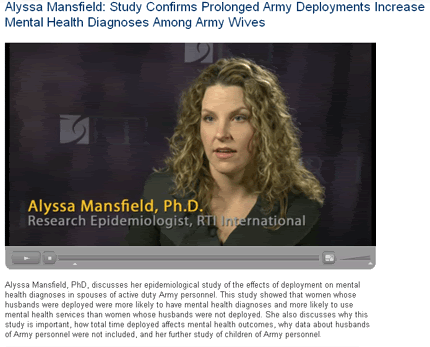
War isn't just tough on soldiers. Army wives whose husbands were deployed have higher rates of depression, anxiety, sleep disorders and other mental health issues than the wives of soldiers who stayed home, a new study shows.
Researchers looked at the medical records of more than 250,000 wives, accounting for most women married to active-duty U.S. Army personnel. Between 2003 and 2006, about 34 percent of the women's husbands deployed for one to 11 months, 35 percent deployed for longer than 11 months, while 31 percent of soldiers were not sent overseas.
Among wives of soldiers deployed for up to 11 months, researchers found almost 3,500 more diagnoses of depression, anxiety, sleep disorders and other mental health issues than among wives who[se] husbands stayed home.
A look at some of this month's news on returning Afghanistan and Iraq veterans. First up, from Gregg Zoroya, USA Today:
About one in four soldiers admit abusing prescription drugs, most of them pain relievers, in a one-year period, according to a Pentagon health survey released Wednesday.
The study, which surveyed more than 28,500 U.S. troops last year, showed that about 20% of Marines had also abused prescription drugs, mostly painkillers, in that same period. ... The survey showed that pain relievers were the most abused drug in the military, used illicitly at a rate triple that of marijuana or amphetamines, the next most widely abused drugs.
About 15% of soldiers said they had abused prescription drugs in the 30 days before they were questioned for the survey. About 10% of Marines said the same thing. Prescription drug abuse is "an issue for American society as well, and we're looking at it from every possible angle," McGuire said.
Painkiller abuse among troops has soared since 2005, the last time a similar study was conducted. The 2005 survey showed that 4% of soldiers had abused painkillers in the previous 30 days, compared with 13% in 2008. Abuse within the previous year was 10% in 2005 compared with 22% in 2008.
A couple of weeks ago, a facebook contact drew my attention to an exciting university study tapping into Ft. Hood's returning troops and aiming to comprehensively determine their risk factors for combat PTSD. I read the article, and then filed it away, hoping to have time to pass it along to you here.
Considering last week's shooting, the study may increase in interest for some; but, the work conducted by Dr. Michael Telch's team deserves attention on its own merits. An introduction by Jeremy Schwartz, American Statesman:
Are some soldiers more likely than others to develop post-traumatic stress disorder, a malady that affects nearly one in five service members returning from Iraq and Afghanistan? Is there anything in their genetics, brain structure or ability to handle stress that might make them more or less prone to PTSD? And if researchers can pinpoint risk factors for the disorder, is it possible to "inoculate" service members before they deploy to a war zone?
A study at the University of Texas, called the Texas Combat PTSD Risk Project, is seeking to answer some of those questions using methods that researchers say haven't been tried before. The study put 183 Fort Hood soldiers through a battery of tests before and after their first yearlong deployment to Iraq and had them fill out a monthly "stress log" over the Internet while they were on the battlefield. The result is one of the more comprehensive studies to search for risk factors for the illness, which, along with traumatic brain injury, military leaders call the signature disease of the current conflicts.
Lead investigator Michael Telch, a UT professor of psychology and the director of UT's Laboratory for the Study of Anxiety Disorders, said the research could lead to prevention programs for PTSD.
"Just like with the prevention of heart disease or many other medical conditions, the first critical step in addressing the problem of combat PTSD and other combat-stress disorders is to identify the factors that increase soldiers' risk for developing them," Telch said in an e-mail. "We hope that this study will ultimately provide important new insights into the causes of combat PTSD and ways to prevent it."
 A whole range of programs are springing up across the country, pairing returning troops and veterans with the great outdoors.
For some of these efforts, reintegration support and/or PTSD therapy are the main goal; providing jobs or forming social networks is the main catalyst for others. But, no matter what the driving factor or framework, these offerings provide military families a way to reconnect with the land they so truly have sacrificed so much for.
In extended, a brief look at a handful of such programs. Please share others you may know of in your area in comments.
Earlier today, Congressman Joe Sestak (PA-07) took to the floor of the House of Representatives to talk briefly about 2009's Brain Awareness Week, which began Monday and continues through March 22.
 Over the course of the past years, with a notable uptick in tempo over the past few months, we've been witnessing a distressing rise in military suicides. We outside observers haven't been alone in taking note. The military has as well.
The Army, for instance, has been undergoing a month long "stand down" meant to put renewed focus on suicide prevention. They now enter the "chain teaching" phase, which will run through July 15. (In 2007, a 90-day PTSD/TBI education chain teaching program was initiated.) In addition, last week Army Vice Chief of Staff Peter Chiarelli held a blogger's roundtable [audio-mp3], "assuring those on the line that the Army understands the severity of the problem, and is doing everything it can to prevent even a single suicide from happening."
"The culture of the Army is that of a team," said Chiarelli. "And anytime one of our own feels so lost that he or she sees no other option than to take their own life, then we've failed as an organization." And so, the real work begins.
The Army is also introducing a new fitness program, set to launch in May, that will combine physical and mental strength and resiliency training. Army Chief of Staff Gen. George W. Casey Jr. said it is "designed to move mental fitness up to the level we give to physical fitness" and will "give more soldiers coping skills so they can deal with the difficult challenges of combat and come back stronger."
It's good to see the Army (and other military branches) responding as they are. While a small element, kudos to their using blogger's roundtables to engage more intimately and directly with us. [I was invited to take part in one last summer, but was unavailable; I mention it, though, because it does show that they are trying to reach out to more of us in ways that they never had before.]
Many, many Americans care about this issue, and wish to ensure that our military families have the resources they need when they serve, and when they return home, too.
From EurekAlert:
Veterans with post-traumatic stress disorder (PTSD) are more likely to have metabolic syndrome than veterans without PTSD. New research [pdf] published in the open access journal BMC Medicine has shown that after controlling for other factors such as depression or substance abuse, there is a significant association between metabolic syndrome and PTSD.
Metabolic syndrome is composed of a cluster of clinical signs including obesity, high blood pressure and insulin resistance. It has been associated with diabetes, cardiovascular morbidity and mortality.
Any traumatic event or series of events can cause PTSD. According to the UK National Institute for Clinical Excellence (NICE), up to 30% of people who have experienced a traumatic event may go on to develop PTSD and it may affect about 8% of people at some point in their lives.
Pia Heppner, of the Veterans Affairs of San Diego, VA Center of Excellence for Stress and Mental Health (CESAMH) and the University of California San Diego, with a team of researchers from the VA, analyzed clinical data from 253 male and female veterans. They found that those with a higher severity of PTSD were more likely to meet the diagnostic criteria for metabolic syndrome.
Dr. Heppner said, "This line of research suggests that stress and post-stress responses are related to long-term health outcomes. Studies show that veterans, prisoners of war and individuals exposed to severe trauma have higher rates of physical morbidity and mortality and increased health care utilization. Our findings suggest that metabolic syndrome provides a useful framework for assessing and describing the physical burden of PTSD and can be used prospectively to evaluate health risks that may be associated with combat exposure and PTSD."
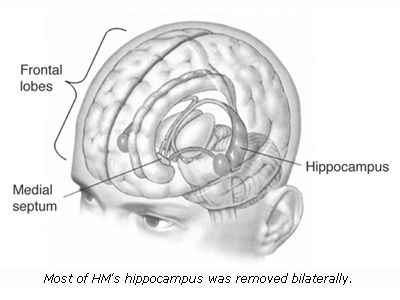
Last week, Henry Gustav Molaison -- a name most would not recognize even though he was the neuroscience field's most famous of patients -- passed away at the age of 80. Since 1953, when experimental brain surgery to alleviate severe epileptic seizures severely damaged his ability to lay down new memories, Molaison was known simply as "H.M."
From Wikipedia:
Henry Gustav Molaison (February 26, 1926 – December 2, 2008), better known as HM or H.M., was a memory-impaired patient who was widely studied from the late 1950s until his death. His case played a very important role in the development of theories that explain the link between brain function and memory, and in the development of cognitive neuropsychology, a branch of psychology that aims to understand how the structure and function of the brain relates to specific psychological processes.
Before his death, he resided in a care institute located in Windsor Locks, Connecticut, where he was the subject of ongoing investigation. Audio recordings from the 1990s of him talking to scientists were released in early 2007. Henry loved to do crossword puzzles, play bingo, watch TV, and socialize with the people who took care of him.
From Health Day News:
The brain mechanism that turns off traumatic feelings associated with bad memories has been identified by researchers at the University of California, Irvine, who said their finding may lead to the development of new drugs to treat panic disorders.
When a person suffers a traumatic experience, environmental cues often become associated with the bad experience. Subsequent exposure to the same cues can cause fear or even panic attacks, according to study author Rainer Reinscheid, an associate professor of pharmacology and pharmaceutical sciences.
The UCI team, along with colleagues from the University of Muenster in Germany, found that a protein called neuropeptide S (NPS) eliminates traumatic responses to bad memories by working on a group of neurons inside the amygdala, the brain region where negative memories are stored.
From Science Daily:
More than 80 percent of a sample of Air Force women deployed in Iraq and other areas around the world report suffering from persistent fatigue, fever, hair loss and difficulty concentrating, according to a University of Michigan study.
The pattern of health problems reported by 1,114 women surveyed in 2006 and 2007 is similar to many symptoms of Gulf War Syndrome, the controversial condition reported by veterans of the 1991 Persian Gulf War.
"It is possible that some unknown environmental factor is the cause of current health problems and of Gulf War Syndrome," said U-M researcher Penny Pierce.
"But it is also possible that these symptoms result from the stress of military deployment, especially prolonged and multiple deployments."
Recently received the following request:
We are currently recruiting research subjects to participate in either of three federally funded research protocols conducted in Manchester, NH and Boston, MA. Is there a way that we might solicit participation from your readership?
From ScienceDaily:
Most patients have moderately severe pain resulting from their injuries one year after sustaining major trauma, according to a new article. "Pain is a natural accompaniment of acute injury to tissues and is expected in the setting of acute trauma," according to background information in the [JAMA Archives of Surgery] article.
Recent studies have shown that most patients with pelvic fractures and lower extremity injuries continue to experience chronic pain five to seven years after injury. Pain after injury can lead to disability, post-traumatic stress disorder and depression.
In addition to the expected physical drawbacks of suffering combat-zone hearing injuries (now being called the "the silent epidemic"), I wonder what, if any, psychological effects these persistent wounds have on our soldiers.
Are returning vets with ringing or buzzing ears, also known as tinnitus, at a disadvantage when it comes to putting the war behind them? What effect does the constant reminder of the IED blast or RPG attack they survived have on them?
From AP:
Large numbers of soldiers and Marines caught in roadside bombings and firefights in Iraq and Afghanistan are coming home with permanent hearing loss and ringing in their ears, prompting the military to redouble its efforts to protect the troops from noise.
Hearing damage is the No. 1 disability in the war on terror, according to the Department of Veterans Affairs, and some experts say the true toll could take decades to become clear. Nearly 70,000 of the more than 1.3 million troops who have served in the two war zones are collecting disability for tinnitus, a potentially debilitating ringing in the ears, and more than 58,000 are on disability for hearing loss, the VA said. ...
For former Staff Sgt. Ryan Kelly, 27, of Austin, Texas, the noise of war is still with him more than four years after the simultaneous explosion of three roadside bombs near Baghdad.
"It's funny, you know. When it happened, I didn't feel my leg gone. What I remember was my ears ringing," said Kelly, whose leg was blown off below the knee in 2003. Today, his leg has been replaced with a prosthetic, but his ears are still ringing.
"It is constantly there," he said. "It constantly reminds me of getting hit. I don't want to sit here and think about getting blown up all the time. But that's what it does."
While not PTSD-related, quite interesting information on how combat is changing the physical body of troops. From the St. Paul-Minneapolis Pioneer Press:
After 16 months in Iraq, Minnesota National Guard members who came home this summer expected aches and pains. They did not expect to shrink.
Brian Hesse figures he lost an inch or so - a consequence of the heavy body armor and the gear he toted on convoy and security missions. The armor alone weighed more than 30 pounds. And then there was the 4-pound helmet, the 7.5-pound loaded M-4 rifle, the 10 pounds of extra ammunition and other necessities.
"I shrunk," the 25-year-old from Minnetonka said, "and got a bit wider. It's like my body said, 'OK, I need a wider base.' "
It's no myth. Some returnees and their doctors agree they did get shorter - if at least temporarily. The 60 to 90 pounds of gear around their torsos, shoulders and heads likely caused their spinal discs to compress, making the soldiers shorter and causing back pain.
Guard officials expected the 2,600 members of the state's returning 1st Brigade Combat Team to suffer from a host of physical ailments. While less dramatic than gunshot wounds or brain injuries caused by blast exposures, musculoskeletal injuries are easily the most common health problems for Iraq returnees.
"A good chunk of what we're seeing is actually overuse that we would really anticipate would get better in a short period of time," said Dr. Michael Koopmeiners, who directs community clinics for the Minneapolis VA Medical Center.
The key question , now that returnees have been home for three months, is how many are in fact developing chronic problems and how many are getting better.
Beginning at about 19 minutes into the video, you'll catch Charlie Rose and guests exploring the science of anxiety and stress and fear on the brain. With Dr. Bruce McEwen, Professor of Neuroendocrinology, Rockefeller University; Dr. Joseph Ledoux, Professor of Neural Science & Psychology, NYU; Dr. Dennis Charney, Chief, Mood & Anxiety Research Program, National Institute of Mental Health.
Click on 'Article Link' below tags for related posts...
Related Posts
 Last Friday, PBS NewsHour with Jim Lehrer aired a program on the emotional and physical factors of combat [listen/view via real audio :: mp3 download :: streaming video]. Before night vision goggles and modern war machinery equipped with radar and heat-seeking missiles, battles were fought during daylight hours. At night, generally, things quieted down somewhat, leaving troops to get at least a bit of a break from the fighting. Not so today...
Click on 'Article Link' below tags for details and video...
From the introduction [program transcript]:SPECIALIST LAKE, U.S. Army: You've got grenades going off. You've got an IED blowing up your vehicle. And then you're expected to go back in those four to five hours and relax, to come back out and do another six hours. You just don't have time to do it. Your body never gets to come down. You're always on that heightened sense of alertness; you just don't have that rest.
Discussing the role physical exhaustion and sleep deprivation -- the norm for today's combat troops -- play in a soldier's ability to deal with the stress of warfare and related issues:
Caution: Contains some mature/graphic content.
Part 1
Part 2
ABC World News also had a compelling report on combat stress last week. Kudos to them both for their focus on this issue.
And, finally, a related quote by Iowa Rep. Ray Zirkelbach, who returned with a Purple Heart in July springing from service in Iraq with the Iowa National Guard's 1st Battalion, 133rd Infantry:In addition to a few physical impairments, Zirkelbach is dealing with emotional scars that have caused troubled sleep. He hasn't been diagnosed with post-traumatic stress disorder - commonly known as PTSD - but will see a specialist this month to help him with his problems. Part of the problem may simply be readjusting to civilian life, he said.
"We had long days and short nights of sleep, were constantly busy, and we were used to being in the heat and constantly under stress," Zirkelbach said. "Then you come back here, in a nice environment, and your body doesn't physically know how to react. Your mind doesn't know what to do. You're used to having chaos."
Former state Sen. Chuck Larson Jr., a Republican from Cedar Rapids, said he can relate to Zirkelbach's situation. Larson, who did not seek re-election in 2006, missed the 2004 legislative session and part of the 2005 session while he was stationed in Iraq. "There's no question that it takes time to adjust," Larson said. "To go from the combat environment to not just the civilian world but the world of an elected official clearly takes time to adjust."
PTSD is an anxiety disorder that can occur after someone has experienced a traumatic event. The disorder can be debilitating as people relive trauma or suffer from anxiety. Between 12 percent and 20 percent of American soldiers who have served in Iraq have PTSD, according to the National Center for PTSD, which is affiliated with the U.S. Department of Veterans Affairs.
A thoughtful feature on the representative. Read the rest.
Related Posts
From the Bryan-College Station [TX] Eagle:
Over the next year and a half, a team of Texas A&M professors and other researchers are expected to follow troops who recently returned from Iraq and Afghanistan - trying to gain insight into why some people seem to be more susceptible to post-traumatic stress disorder than others.
The team, led by associate professor Keith Young, received $3 million from Congress earlier this year to start the study. And if the current incarnation of the 2008 fiscal year budget is approved by the Senate, the group will receive an additional $3.4 million.
The idea for the project - which will include ongoing interviews with 1,400 troops from Fort Hood set to begin this winter - was sparked by research Young completed in 2004. During that study, researchers were surprised to find that the brain's thalamus was abnormally large in people who had experienced major depression, he said.
They then detected a gene variant that caused the enlargement in some people.
The thalamus is used by the body to interpret threatening visual stimuli, facial expressions and fearful emotions, Young said. So those with the heightened "automatic threat detection system" could be more vulnerable when dealing with stressors that lead to PTSD, the team has theorized.
In 2004, Drs. Young and Hicks, along with collaborators at The University of Texas Southwestern Medical Center at Dallas, published a paper that described substantial changes in the anatomy of the brain in people suffering from major depression.
“It was the first time that findings like this were shown,” Dr. Young said. “In the brains of people that experienced major depression, the thalamus was larger. At the time, most scientists were focusing on neurochemical reasons for depression, not anatomical factors, and almost all of those studying anatomy were looking for brain defects, not enlargements.”
Based on their findings, Drs. Young and Hicks followed up with a study that sought to discover if a genetic alteration was responsible for the change. What they found was remarkable.
The inheritance of a common serotonin transporter (SERT) gene variant was found to be involved in enlargement of the pulvinar nucleus of the thalamus, which is involved in interpreting threatening visual stimuli, facial expressions and fearful emotions. The enlarged pulvinar may enhance the brain’s “automatic threat detection system,” making some people more vulnerable when exposed to stress and trauma.
The study is critical, Young said, "because we really don't understand what brain changes predispose people" to PTSD. "Once we understand, I think we're going to do a much better job at treating and determining which people are at risk for PTSD," he said.
In addition to the in-depth interviews, the study will include brain scans to look for possible post-combat changes in the brain structure and examination of cadaver brains from donors who had PTSD. Young said the group also plans to develop an animal model to test new ways of treatment. Rats can be subjected to extreme stressors using a "forced swim test." Trauma from the procedure tends to cause changes in the rats' neurochemistry that make the animals look like they're depressed, Young said, explaining they can become more easily startled and have an exaggerated response to loud noises.
Troops returning from combat zones often report similar responses.
The group also hopes to conduct a large clinical trial for fluoxetine, a drug commonly known as Prozac that has been widely used for depression. It's also used somewhat for PTSD, but it has never been tested on active-duty troops, Young said. "Particularly, we're looking to see if we can intervene very early after PTSD symptoms appear," he said, explaining that researchers hope early use of the drug could help prevent onset of the disorder.
The study isn't expected to result in people being screened or barred from combat, Young said. "Perhaps what we can do is identify a profile of someone, [and] if they become initially ill we can know how to treat them," he said. "Maybe we can know someone needs to be watched more carefully."


Archives
2011: Jan Feb