Showing posts with label sleep issues. Show all posts

Saturday, January 16, 2010

Combat Clips: A Selection of OEF/OIF Veteran Study Statistics, January 2010

News clips examining recent PTSD, TBI and other combat trauma or deployment-related study insights. First, Jennifer Thomas for HealthDay via BusinessWeek:

War isn't just tough on soldiers. Army wives whose husbands were deployed have higher rates of depression, anxiety, sleep disorders and other mental health issues than the wives of soldiers who stayed home, a new study shows.

Researchers looked at the medical records of more than 250,000 wives, accounting for most women married to active-duty U.S. Army personnel. Between 2003 and 2006, about 34 percent of the women's husbands deployed for one to 11 months, 35 percent deployed for longer than 11 months, while 31 percent of soldiers were not sent overseas.

Among wives of soldiers deployed for up to 11 months, researchers found almost 3,500 more diagnoses of depression, anxiety, sleep disorders and other mental health issues than among wives who[se] husbands stayed home.
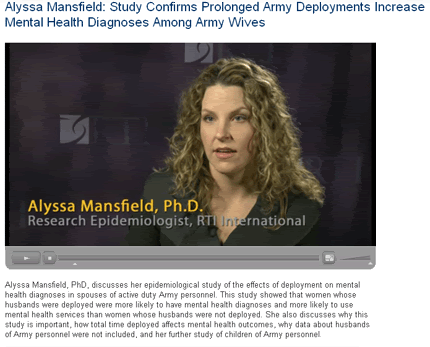

Click on image above to see Mansfield discuss study.


Monday, January 19, 2009

PTSD, the VA and Suicide: Massachusetts Family Settles Government Lawsuit

On the heels of last week's news that the U.S. Marine Corps suicide rate is the highest seen since 2003, came the close of a chapter on one of the Iraq War's first such casualties. It was a case that received national exposure and made many stand at attention, wondering how the system that was meant to take care of our returning troops could fail so desperately.

Kevin and Joyce Lucey were at the leading edge of military families coping with the loss of a loved one returning home forever changed following deployment to the Middle East. Their pain moved them to go public, shining a light on the grave consequences of shortfalls at the VA at the time.

By sharing the story of their son Jeffrey's 2004 suicide, they went far to drag post-combat suicide out of the darkened corners of our military family homes and into the lap of the civilian population, asking if what was happening to our returning troops was right or just. The verdict to the family's 2007 VA lawsuit came last Friday.


Tuesday, August 26, 2008

New York Times Reports on the Unique Characteristics of Combat TBI

Lizette Alvarez of the New York Times writes of the special blast category that is combat-related traumatic brain injury (TBI). The entire piece is well worth a read, but I'd like to share a few of the more statistics-heavy grafs:

As many as 300,000, or 20 percent, of combat veterans who regularly worked outside the wire, away from bases, have suffered at least one concussion, according to the latest Pentagon estimates. About half the soldiers get better within hours, days or several months and require little if any medical assistance. But tens of thousands of others have longer-term problems that can include, to varying degrees, persistent memory loss, headaches, mood swings, dizziness, hearing problems and light sensitivity. ...

Little is known medically by doctors or scientists about what happens to a brain as a result of a powerful bomb blast, as opposed to car crashes on a highway, blows to the head on a football field or a bullet wound. These are the first wars in which soldiers, protected by strong armor and rapid medical care, routinely survive explosions at close range and then return to combat.

The bomb blasts, which throw off energy waves — atmospheric overpressures and underpressures — that are absorbed by the body, add a little-studied dimension to the trauma. Scientists are only now beginning to study the extent of the damage.


Sunday, August 10, 2008

Can Local Anesthesia Knock Out Anxiety of PTSD?

William Hageman of the Chicago Tribune reports today on an area doctor using a novel approach to treating the anxiety that surfaces in many PTSD sufferers.
Estimates of how many veterans suffer from PTSD range as high as 50 percent. What's not disputed is that most of them are undiagnosed. Dr. Eugene Lipov refers to the growing problem as "the reverse surge."

Lipov is the president and medical director of Advanced Pain Centers, with offices in Hoffman Estates and Westmont. He believes he has found a way to combat the feelings that come with PTSD through a seemingly simple injection that calms the section of the brain that becomes overactive in PTSD patients.

The treatment is called a stellate ganglion block [more info: general | clinical], an injection of the local anesthetic bupivacaine around a group of nerves in the neck.

"The medication we're using is the same numbing medication that has been used for decades for pregnant women during labor and delivery," explains Dr. Jay Joshi, director of research at Advanced Pain Centers. But using it against PTSD is a new idea. Lipov made another connection between the medication and the body's reaction.

"I found that one part of the brain that works on hot flashes and PTSD is the same ... the insular cortex," he explains. The injection, he says, "reboots" the insular cortex. "It resets the nerve system the way God built it," he says.

View the procedure, and learn of the experience of the first Iraq veteran to receive this new treatment in extended.


Monday, August 04, 2008

DoD's $300M PTSD/TBI Research Push, Ft. Hood Presidential Candidate Debate?, Online Sleeplessness Chat

  • Congress and the Pentagon are in the midst of funding a record $300 million military PTSD/TBI research push this summer. With approximately 1.4 million Americans diagnosed with TBI annually, civilians will benefit from the groundbreaking drive, too. "The Pentagon also will target new ways of delivering therapy to PTSD victims living in remote areas of the USA and reducing the stigma that can keep victims from seeking help."

  • Since last November, Military Spouses for Change has been on a mission to bring our presidential candidates together for a Fort Hood, Texas, debate and discussion of issues important to military families. Founder Carissa Picard has so far succeeded in securing a date (August 11); getting CBS to agree to broadcast the event live; and received candidate John McCain's OK. As for Barack Obama? He says that due to scheduling difficulties he can't be there. Maybe something will change by then and the conversation will get underway. If not, a tip of the hat to MSC for their effort.

  • Don't forget Tuesday's LA Times online chat on the sleeping difficulties of combat veterans diagnosed with PTSD. The chat begins at 9:00 am Eastern/noon Pacific, but the accompanying article is already online. Some stats: "About 36% of Army troops who have been back from Iraq for a year said they struggled nearly every day with feeling tired. About 34% said they had difficulty falling asleep, staying asleep or sleeping too much nearly every day... About 70% of veterans being treated for [PTSD] have sleep problems."

  • And if you're looking for more stats on the mental health and well being of our OEF/OIF troops and veterans, "The military's invisible wounds" by David Isenberg would be well worth a read.


Sunday, August 03, 2008

War and Sleep: LA Times Offers Story, Live Chat on PTSD Sleep Disorders

An invitation from the Los Angeles Times Booster Shots blog asking us to join in on an upcoming exploration -- both in print and online via a live chat this Tuesday, August 5 -- of the difficulty many combat veterans face in getting a fitful night's sleep. (Heaven knows writers and other creatives like myself generally fall into the night owl category, too, but our lack of sleep is obviously of the less mentally draining and certainly less alarming sort.)

First, details from the Times, and below the fold you'll find a number of recently related reports that have turned up in the news and clinical journals:

Mitch Hood, 25, spent two tours in Iraq with the Marines. Now, like many other veterans, he faces a new enemy: sleep.

Hood has nightmares nearly every night, many like the one above, laced with the fear he felt when he was in Iraq. Most nights, he battles his own body's need to sleep, opting to stay awake so he doesn't fall into nightmares.

Hood knows he is not the only one with these problems. Sleep and wakefulness issues are the most common health problems described by recently returned soldiers, researchers at Walter Reed Army Medical Center found in a study published last year.

A Times reporter and videographer stayed up all night with the former Marine and his fiancee to witness his struggles. The print story will appear in Tuesday's newspaper. A video of the vigil, plus interviews with Hood and other veterans, accompany the story on the Web.

Join us for a live Web chat at noon Tuesday to discuss the influence of war on sleep and how physicians try to treat the problems. We will be doing a question-and-answer session with Dr. Thomas C. Neylan, director of the Posttraumatic Stress Disorders (PTSD) Program at the San Francisco Veterans Affairs Medical Center, and Steve Woodward, director of the Sleep Research Laboratory at the VA's National Center for Posttraumatic Stress Disorder in Palo Alto.

Mark your calendars and set your bookmarks -- the chat happens right here Aug. 5 at noon Pacific time.


Friday, July 18, 2008

New England OEF/OIF Veterans Needed for PTSD Treatment Studies

Recently received the following request:

We are currently recruiting research subjects to participate in either of three federally funded research protocols conducted in Manchester, NH and Boston, MA. Is there a way that we might solicit participation from your readership?

Specific details, contact info in extended.


Thursday, April 03, 2008

Unknown Allies: School Shooting Victims and Combat Veterans

Back in September, I sat down with Diane Strand, a reporter for DeKalb's MidWeek News, to discuss combat PTSD and other issues covered in my book, Moving a Nation to Care.

Those of you who read PTSD Combat regularly know I'm currently a student at Northern Illinois University and shared my experiences the day of the shooting and beyond.

Just this past Wednesday, I posted here on my column that ran in the Northern Star, relfecting on the fact that veterans are a dazed school shooting student's natural ally; they understand the pain and trauma of being in danger and in the vicinity of extreme violence (on an entirely different level than those of us on campus that day, however). Another commonality is an increased risk for post-traumatic stress disorder.


Tuesday, April 01, 2008

Military OneSource Offers Complimentary Combat PTSD Comic Book

Jackie Eckhart of the Virginian-Pilot is one of the lucky few to have had the opportunity to review a copy of a free comic book, "Coming Home: What to Expect, How to Deal When You Return from Combat," now being offered to service members at Military OneSource. Well, the way she tells it, the men in her life understood the value of the magazine better than she did at first:
"Coming Home: What to expect, how to deal when you return from combat" is a new project by Military OneSource. Created by comic book masters Sid Jacobson and Ernie Colon, who formerly worked at Harvey and Marvel comics, it is aimed at service members who have worn combat gear every day for a year. It's aimed at people who see potential IEDs at every intersection. It is aimed at guys who come back to the States to feel fury at traffic, and women who find that half the world thinks they're bad mothers because they had to serve overseas, and family members who can't understand why their returning soldier or Marine is drinking so darned much.

This comic is aimed to help folks who need to learn about post-traumatic stress disorder. Because I wasn't one of those people, and I wasn't sure how I felt about treating a subject as serious as combat and operational stress response in a comic book, I threw "Coming Home" into a stack of reading material to look at later.

Not a minute later my 14-year-old picked it up. Then the kindergartner. Then our houseguest, a 48-year-old former Navy helicopter pilot. "What kind of aircraft is that?" he asked, holding the cover up to the light from the sliding glass doors. Then he read the whole thing.


Tuesday, February 19, 2008

Comforting, Yet Discomfiting, New Clue Found in Florida Missing Iraq Veteran Case

From ABC News:

The discovery of a military-style "spider hole" that may have been used by a missing ex-Marine who is likely suffering from post-traumatic stress disorder has restored hope for the combat veteran's family that he is alive.

Eric Hall, 24, disappeared on Feb. 3 in Port Charlotte, Fla. He was staying with his grandmother when he experienced what his family and authorities have described as a "combat flashback." The Marine, who was left with a permanent limp from a 2005 bomb blast in Iraq, began walking around the house shooting an imaginary gun at imaginary enemies.

Hall then took off on his motorcycle, which later was found with engine running lying in the middle of a road in Deep Creek, near Fort Myers, on Florida's west coast.

The local sheriff's office called off its search more than a week ago, but Hall's mother, Becky, and a cadre of volunteers led in part by retired members of the military continue to look for the former Marine in an area densely covered with trees and shrubs. [pictures of the search and the spider hole they found]


Wednesday, December 19, 2007

WWII, Korean, Vietnam, Desert Storm and OEF/OIF Vets Chime in on Combat

An interesting look at the experiences of war veterans over the decades ran earlier this month and is still well worth a reading.

From the Kansas City Star:

Q. Did you have any problems readjusting after you returned from war?

Joseph L. Dickerson (Korean War): I was in several pretty strong firefights, and I was wounded — shrapnel from mortar fire at night in left chest. It’s still there, close, by my heart. They see it every time they take an X-ray. I had a hard time adjusting because I saw a whole lot of dead bodies in the short time I was there. And blood. Head blown off, arm blown off.

When I got discharged I never did talk too much to anyone about it. I kept it to myself. But I knew something was wrong, because I had problems holding jobs. I think I was 21 when I got out. Battle fatigue, that’s what they called it then. I had dreams, and you become touchy sometimes.

I went in at 17, and I used to be a happy-go-lucky guy. When I got out I was a little different. I wouldn’t go to work as I was supposed to. I couldn’t take orders till after about three or four years. And dreams. I still have the dreams. I sleep with a weapon. I always have slept with a weapon after I came out of the service. You just feel safer.

Maj. Jason “Tank” Sherman (Iraq and Afghanistan): I came back, still in the reserves, and didn’t really go through anything. I didn’t see what some other people have seen.

Gary Shepard (Vietnam War): I’m still not adjusted. I mostly stay with my friends. I’m still not comfortable in restaurants, and my kids still know they don’t let me get my back to the wall, and they watch out for me. I try not to let that bother me so much anymore, but sometimes it does. I still go to sleep with a loaded pistol most of the time.


Saturday, November 24, 2007

Two Years in the Life of a Soldier

A detailed piece from the Dayton Daily News:

For two years Elizabeth Bowen watched her husband, Ryan, endure more than 40 surgeries, frequent nightmares and the devastating effects of Post Traumatic Stress Disorder. ...

It was Oct. 26 and Ryan already had been in Georgia for six weeks, much of it spent waiting for word from the Army medical board that would determine his level of disability for injuries he received when a roadside bomb exploded under his tank in Baghdad during his second tour.

The 24-year-old Army specialist had just said goodbye to friends heading to Iraq for a third tour. "Some of these guys I've known since the first time," he said. Back in his hotel room, his mind began racing. He started pacing, hyperventilating.

Then he began to cry.


Wednesday, November 21, 2007

Poem: PTSD -- 1st Person

Recently, I came across the following poem by a blogger who goes by the name of Universal. The lines were written after talking with a friend coping with combat PTSD, and the links are the original ones created by the author. Thank you for letting me reprint and share it here with others, Universal.

I can't sleep, can't feel
Anything.
Time passes in chunks now --
A month passes for me
Like someone else's day.

Zombies don't have rhythms;
I go wherever my trance
Takes me.
Today I panic in a store,
Where danger doesn't lurk.


Friday, November 16, 2007

Study: Asthma-PTSD Link Found

From HealthDay News via Forbes:

A study of male twins who served in Vietnam has uncovered a strong link between asthma and post-traumatic stress disorder (PTSD). Columbia University researchers, reporting in the Nov. 15 issue of the American Journal of Respiratory and Critical Care Medicine, found that those who suffered the most from PTSD were more than twice as likely to have asthma.

"This is very good data," said Keith A. Young, co-director of the Central Texas Veterans Health Care System Neuropsychiatry Research Program. "One of the things that is very clearly delineated by this study is that there truly is an association. This association has been seen with other anxiety disorders before, and there were some hints with PTSD, but this is the best. This kind of sets it in stone."

The challenge now is to find out whether this is a cause-and-effect relationship. Previous studies have indicated a more general link between anxiety disorders and asthma, but this study focused specifically on PTSD, a disorder that involves nightmares, flashbacks and panic attacks linked to "triggers" that develop after exposure to combat or other extremely disturbing events.


Thursday, November 15, 2007

Another Fort Drum Soldier, AWOL to Seek PTSD Care, Arrested

From the Associated Press:

A soldier who served two combat tours in Iraq was arrested Wednesday for leaving the Army without permission more than a year ago to seek treatment for post traumatic stress disorder.

At a news conference hours before his arrest, Sgt. Brad Gaskins said he left the base in August 2006 because the Army wasn't providing effective treatment after he was diagnosed with PTSD and severe depression. "They just don't have the resources to handle it, but that's not my fault," Gaskins said.

Tod Ensign, an attorney with Citizen Soldier, a GI rights group that is representing Gaskins, said the case is part of a "coming tsunami" of mental health problems involving Iraq and Afghanistan vets. Last month, the Veterans Administration said more than 100,000 soldiers were being treated for mental health problems, and half of those specifically for PTSD.


Sunday, November 11, 2007

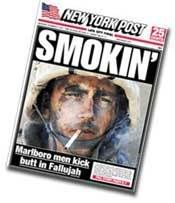
Los Angeles Times Photographer Offers Update On Marlboro Marine

At the end of April 2006, I returned home from a few days of down time with my husband to a surprising email from a small New York publishing firm. Ig Publishing said that they were interested in putting out a book on combat PTSD. Would I write it?

The following month I set about fashioning a proposal for what would eventually become Moving a Nation to Care and began reaching out to possible interview subjects for the project.

It didn't take me long to know without any hesitation whose story I needed to open the book with: James Blake Miller, aka the Marlboro Marine. I'd begun covering the issue of combat PTSD and our returning troops in September of 2005 and Miller made a deep impression on me when he came forward only a few short months later, in January 2006, to tell the world of his struggle with PTSD.
He was so honest about his experience in the many interviews he gave, and so clearly carried no other agenda than simply wanting to help destigmatize the diagnosis he'd been given. Dr. Robert Roerich, who eventually contributed Moving's foreword, was in touch with Miller at the time that I was working on my proposal and contacted him on my behalf.

Miller agreed to an interview, writing, "I'm interested only if it's going to be a positive outlook on PTSD and it is aimed at helping our veterans, and others, who have it. I want to tell the story, not for the sake of telling it, but to try to change how things are perceived and maybe to alter the labeling."

That was at the end of May 2006.


Thursday, August 30, 2007

Jonathan Schulze "I Can't Hear You" Foundation Established in Honor of Minnesota Veteran

From the Associated Press:

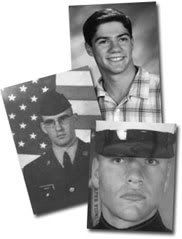
Robert Herubin knew his friend Jonathan Schulze [in the bottom front photo of the three to the left; Joshua Omvig is in the middle, Jeffrey Lucey at top], after a tour of combat duty in Iraq, was on a downward spiral. Depressed, drinking heavily and suffering from post-traumatic stress disorder, nobody was able to reach the troubled Marine before he killed himself in January.

Herubin and others close to the Purple Heart recipient wondered what more could have been done. An answer has since emerged in the form of the Jonathan Schulze "I Can't Hear You" Foundation, which aims to pair veterans returning from combat with other veterans who have experienced war. ...

The group is launching its first chapter at a VFW post in suburban Prior Lake, where Herubin first met Schulze after he returned from Iraq and a grueling tour that included door-to-door combat in the city of Fallujah.

Schulze died at his New Prague home, at the age of 25, on Jan. 16, about two years after he came home. His family has said that in the days prior to his death, Schulze was placed on a waiting list after telling workers at the St. Cloud Veterans Administration Medical Center that he was suicidal, a claim the VA denied after an investigation.

Click on 'Article Link' below tags for more...

In the interest of education, article quoted from extensively.

From the foundation's website:

Through charitable donations and various support organizations, we will move forward to establish this mentoring program with veterans service organizations. We will continue to explore partnerships with other organizations to serve our veterans and active and reserve service members. ...

The Jonny's Lounge Mentoring Program [pdf] will be part of the process.

Jonny's Lounge will be a discreet place that combat veterans and active duty service members may go for support, without any duty of disclosure
. Mentors will also provide a comprehensive listing of viable options: private and public sector assistance programs.


Continuing from AP:

[T]he foundation believes mentors would provide veterans with a long-standing personal connection that the VA or most social services can't provide. Moreover, such an approach would encourage communities -- through their VFW or American Legion posts -- to care for their own veterans, Herubin said.

The initial mentors are being recruited through the Prior Lake VFW, with plans to reach out to veterans at their service organizations in other cities across Minnesota. The mentors will be trained to be confidants as well as guides who can navigate the complex social services network and make sure the veterans are following through with the care they need. Sometimes, they'll just be there for dinner or a movie.

The Rev. John Morris, a chaplain who oversees the [Minnesota National] Guard's reintegration program, called the idea behind the Schulze foundation "a neat synergy." "When they first started, the VFWs and Legions were sort of doing this by bringing veterans together, but before we knew much about the psychology part of it, before we knew much about what returning soldiers are dealing with," he said.

In Schulze's case, he was OK for a few months after returning to Minnesota in January 2005 (his 10-month tour in Iraq ended in the fall of 2004). But flashbacks, nightmares and depression began to take their toll, and Schulze began drinking more than he should, said his mother, Eileen Carlson.

He found a measure of solace at the VFW, where he attended some weekly meetings and served on the post's honor guard for funerals. He also met several times with VA health workers for help with PTSD, but he remained troubled, she said, with his family unsure how to break through. "I was his mother, so I wasn't over there when his buddies were killed beside him and he was killing people, so it's hard to understand what he was going through and dealing with," she said. "Just to have someone who has been in something like that to talk to, that's important."

My greatest admiration to military families like the Schulzes who have worked so hard to improve benefits and services for returning troops.

Contact "I Can't Hear You" to offer or receive support.


Related Posts


Thursday, June 28, 2007

A Discussion on PTSD

WPSU-FM's "To the Best of My Knowledge" discussed PTSD w/guests Thomas Uhde, chair of the Department of Psychiatry at Penn State College of Medicine and Philip Bressler, a psychologist with the James E. Van Zandt Veterans Affair Medical Center in Altoona this past Tuesday. The program is now available in WPSU's archives. Listen now. Details:

Exposure to a severely traumatic event can cause nightmares, flashbacks and difficulty sleeping. For most people, these post-traumatic symptoms disappear over time. For others, the symptoms become chronic and lead to PTSD.

More audio discussions on PTSD.


Wednesday, April 11, 2007

Study: Drug May Ease Combat PTSD Nightmare Incidence

From Veterans Affairs Research:

A generic drug already used by millions of Americans for high blood pressure and prostate problems has been found to improve sleep and lessen trauma nightmares in veterans with posttraumatic stress disorder (PTSD).

"This is the first drug that has been demonstrated effective for PTSD nightmares and sleep disruption," said Murray A. Raskind, MD, executive director of the mental health service at the Veterans Affairs Puget Sound Health Care System and lead author of a study appearing April 15 in Biological Psychiatry.

The randomized trial of 40 veterans compared a nightly dose of prazosin (PRAISE-oh-sin) with placebo over eight weeks. Participants continued to take other prescribed medications over the course of the trial.

At the end of the study, veterans randomized to prazosin reported significantly improved sleep quality, reduced trauma nightmares, a better overall sense of well being, and an improved ability to function.

"These nighttime symptoms are heavily troublesome to veterans," said Raskind, who also is director of VA’s VISN 20 (Veterans Integrated Service Network #20) Mental Illness Research, Education and Clinical Centers program (MIRECC). "If you get the nighttime symptoms under control, veterans feel better all around."

Click on 'Article Link' below tags for more...

The press release is quoted in full for educational purposes.

Raskind, also a professor of psychiatry and behavioral sciences at the University of Washington, estimates that of the 10 million U.S. veterans and civilians with PTSD, about half have trauma-related nightmares that could be helped with the drug.

Participants were given 1 mg of prazosin per day for the first three days. The dose was gradually increased over the first four weeks to a maximum of 15 mg at bedtime. The average dose of prazosin in the trial was 13.3 mg. By comparison, typical prazosin doses for controlling blood pressure or treating prostate problems range from 3 mg to 30 mg per day in divided doses.

The drug did not affect blood pressure compared to placebo, though some participants reported transient dizziness when standing from a sitting position during the first weeks of prazosin titration. Other occasional side effects included nasal congestion, headache, and dry mouth, but these were all minor, according to the authors. "This drug has been taken by many people for decades," said Raskind. "If there were serious long-term adverse side effects, it is likely we would know about them by now."

The relatively small size of the study was due to the easy availability of this generic drug, Raskind said. "If you are doing a study with a new drug, the only way people can get it is to be in the study. With prazosin, we have approximately 5,000 veterans with a PTSD diagnosis taking it already in the Northwest alone. So we had to find veterans with PTSD who were not [taking it]."

For treating PTSD, prazosin costs 10 to 30 cents a day at VA contract prices. It is not a sedating sleeping pill, emphasized Raskind. "It does not induce sleep. But once you are asleep, you sleep longer and better." And better sleep can make a big difference. "This drug changes lives," Raskind said. "Nothing else works like prazosin."

Trauma nightmares appear to arise during light sleep or disruption in REM sleep, whereas normal dreams — both pleasant and unpleasant — occur during normal REM sleep. Prazosin works by blocking the brain’s response to the adrenaline-like neurotransmitter norepinephrine. Blocking norepinephrine normalizes and increases REM sleep. In this study, veterans taking prazosin reported that they resumed normal dreaming.

One dose of prazosin works for 6 to 8 hours. Unlike similar drugs, prazosin does not induce tolerance; people can take it for years without increasing the dose. But when veterans stop taking it, Raskind said, the trauma nightmares usually return.

Aside from the VA-funded study he just published, Raskind is working on three larger studies of prazosin. One, a VA cooperative study slated to start this month, will enroll about 300 veterans at 12 VA facilities. The second, a collaborative study with Walter Reed Army Medical Center and Madigan Army Medical Center, will enroll active-duty soldiers who have trauma nightmares. The third study, funded by the National Institute of Mental Health, will look at prazosin in the treatment of civilian trauma PTSD.


 Related Posts


Tuesday, April 10, 2007

Reintegration Tips for Returning Vets

From the Utica Observer-Dispatch:

Fred Bush, a clinical social worker with the Veterans' Administration hospital in Syracuse, said he has seen many returning soldiers who exhibit a wide range of feelings and reactions as they try to readjust to their old home lives. "Everybody will have some sort of readjustment issues," he said. "Whatever a person has experienced will never go away, and we should never forget what we've done," he said, "But if you can learn to live with them, and symptoms are not stopping you from having a productive life, (it's alright)."

It's when the symptoms don't go away or start to interfere with relationships or the soldier's ability to function professionally or in other ways that the returning soldier should seek help. ... It's estimated many as 30 percent of those may need clinical intervention at some time, he said. Each returning veteran must readjust to life in the United States after experiencing things most American civilians can't fully comprehend.

Click on 'Article Link' below tags for his reintegration tips...

•Readjustment issues are normal, but if they persist, the returning soldier should seek help from a mental health professional.

•Watch for acute changes to behavior, like excessive drinking, social isolation or high levels of anxiety.

•It's normal for a person returning from a combat situation to sleep lightly for a while, but continued problems sleeping, or repeated bad dreams could be a sign help is needed.

•A readjustment period in a marriage after being in a war zone is common. Home-life patterns may have shifted in the soldier's absence. It helps to let the returning spouse feel needed and have them take on responsibilities they used to perform, even if the spouse who stayed home had been doing them.

•It's helpful if a returning soldier can find at least one person to talk to about their experiences. Family and friends should let soldiers know, without badgering or pressuring, that they're willing to listen.

•Returning soldiers shouldn't be afraid to share their experiences with people close to them. It can help to talk. Also, some soldiers think they shouldn't tell their loved ones about dangerous or disturbing situations they faced, because they don't want to hurt or upset them. It can still be important to share those stories with the right person and to reach out for support.

•Returning soldiers may have been near explosions, and could have undiagnosed brain injuries. Behaving out of character can be a sign of such an injury.

•No matter what your view of the politics surrounding the war, be sensitive when talking about them to a returning veteran. A "thank you" or a pat on the back can go a long way.

•For information about readjustment issues faced by returning soldiers, or to find out how to get help, call the Veterans' Administration's TelCare information line at 1-888-838-7890. To ask Veterans Administration Clinical Social Worker Fred Bush to speak at your organization, call 425-4400 ext 52719.

Source: Veterans Administration Clinical Social Worker Fred Bush


 Related Posts


Previous/Older Posts Return Home

Archives
2011: Jan Feb
2010: Jan Feb Mar Apr May Jun Jul Aug Sept Oct Nov Dec
2009: Jan Feb Mar Apr May Jun Jul Aug Sept Oct Nov Dec
2008: Jan Feb Mar Apr May Jun Jul Aug Sept Oct Nov Dec
2007: Jan Feb Mar Apr May Jun Jul Aug Sept Oct Nov Dec
2006: Jan Feb Mar Apr May Jun Jul Aug Sept Oct Nov Dec
2005: Sept Oct Nov Dec

Legal Notice

The information presented on this web site is based on news reports, medical and government documents, and personal analysis. It does NOT represent therapeutic prescription or recommendation. For specific advice and information, consult your health care provider.

Comments at PTSD Combat do not necessarily represent the editor's views. Illegal or inappropriate material will be removed when brought to our attention. The existence of such does not reflect an endorsement.


This site contains at times large portions of copyrighted material not specifically authorized by the copyright owner. This material is used for educational purposes, to forward understanding of issues that concern veterans and military families. In accordance with U.S. Copyright Law Title 17 U.S.C. Section 107, the material on this site is distributed without profit. More information.