Showing posts with label rape. Show all posts

Thursday, May 24, 2007

Military Sexual Assault: 'The Other PTSD'

Sharing a couple of reports that I didn't have a chance to share earlier; want to ensure they're available here for future searches. First up, NBC Nightly News (May 4) explores what they call 'The Other PTSD:' military sexual trauma. Then grafs from a Salon piece that appeared back in March, The private war of women soldiers.


Click on 'Article Link' below tags for more...

From Salon:

Comprehensive statistics on the sexual assault of female soldiers in Iraq have not been collected, but early numbers revealed a problem so bad that former Defense Secretary Donald H. Rumsfeld ordered a task force in 2004 to investigate. As a result, the Defense Department put up a Web site in 2005 designed to clarify that sexual assault is illegal and to help women report it. It also initiated required classes on sexual assault and harassment. ...

Unfortunately, with a greater number of women serving in Iraq than ever before, these measures are not keeping women safe. When you add in the high numbers of war-wrecked soldiers being redeployed, and the fact that the military is waiving criminal and violent records for more than one in 10 new Army recruits, the picture for women looks bleak indeed.

On the task force, from June 2004's APA Psychiatric News:

The eight-member Task Force on Care for Victims of Sexual Assault found a limited number of programs on sexual assault that address education and training, prevention, reporting, and victim support. These "pockets of excellence" contrast sharply with the military's policies and programs regarding sexual harassment, according to the task force report.

The task force defined sexual assault as alleged rape, forcible sodomy, assault with intent to commit rape or sodomy, and indecent assault or an attempt to commit any of these offenses. If the military finds the alleged perpetrator guilty of any of these charges, a commander can choose from several disciplinary actions including separation from the military resulting in a loss of pay and benefits and imprisonment for up to several years, according to the task force report [pdf].

The task force recommended several actions [pdf] to Rumsfeld including that he establish an office in the Department of Defense (DoD) to implement the task force's recommendations. Rumsfeld began initiating some of the more urgent recommendations last month when he met with the military commanders to discuss how they handle sexual assault complaints and what can be done to fix problems they discovered, according to a DoD press release.

But the Iraq War is proving to be a unique challenge for women and men serving side-by-side (collocating) in similar roles. Back to Salon:

Not everyone realizes how different the Iraq war is for women than any other American war in history. More than 160,500 American female soldiers have served in Iraq, Afghanistan and the Middle East since the war began in 2003, which means one in seven soldiers is a woman. Women now make up 15 percent of active duty forces, four times more than in the 1991 Gulf War. At least 450 women have been wounded in Iraq, and 71 have died -- more female casualties and deaths than in the Korean, Vietnam and first Gulf Wars combined. And women are fighting in combat.

Officially, the Pentagon prohibits women from serving in ground combat units such as the infantry, citing their lack of upper-body strength and a reluctance to put girls and mothers in harm's way. But mention this ban to any female soldier in Iraq and she will scoff.

"Of course we were in combat!" said Laura Naylor, 25, who served with the Army Combat Military Police in Baghdad from 2003-04. "We were interchangeable with the infantry. They came to our police stations and helped pull security, and we helped them search houses and search people. That's how it is in Iraq." ...

All the women I interviewed held dangerous jobs in Iraq. They drove trucks along bomb-ridden roads, acted as gunners atop tanks and unarmored vehicles, raided houses, guarded prisoners, rescued the wounded in the midst of battle, and searched Iraqis at checkpoints. Some watched their best friends die, some were wounded, all saw the death and mutilation of Iraqi children and citizens.

Yet, despite the equal risks women are taking, they are still being treated as inferior soldiers and sex toys by many of their male colleagues. As Pickett told me, "It's like sending three women to live in a frat house."

Not that sexual assault in the military is anything new. What is new is that women are serving on those front lines -- and are served up a double dose of stress and trauma compared to their male counterparts:

Rape, sexual assault and harassment are nothing new to the military. They were a serious problem for the Women's Army Corps in Vietnam, and the rapes and sexual hounding of Navy women at Tailhook in 1991 and of Army women at Aberdeen in 1996 became national news. A 2003 survey of female veterans from Vietnam through the first Gulf War found that 30 percent said they were raped in the military. A 2004 study of veterans from Vietnam and all the wars since, who were seeking help for post-traumatic stress disorder, found that 71 percent of the women said they were sexually assaulted or raped while in the military. And in a third study, conducted in 1992-93 with female veterans of the Gulf War and earlier wars, 90 percent said they had been sexually harassed in the military, which means anything from being pressured for sex to being relentlessly teased and stared at.

"That's one of the things I hated the most," said Caryle García, 24, who, like Naylor, served with the Combat Military Police in Baghdad from 2003-04. García was wounded by a roadside bomb, which knocked her unconscious and filled her with shrapnel. "You walk into the chow hall and there's a bunch of guys who just stop eating and stare at you. Every time you bend down, somebody will say something. It got to the point where I was afraid to walk past certain people because I didn't want to hear their comments. It really gets you down."

"There are only three kinds of female the men let you be in the military: a bitch, a ho or a dyke," said Montoya, the soldier who carried a knife for protection. "This guy out there, he told me he thinks the military sends women over to give the guys eye candy to keep them sane. He said in Vietnam they had prostitutes to keep them from going crazy, but they don't have those in Iraq. So they have women soldiers instead."

The Salon piece is quite long and well worth a read if you are interested in researching the subject further. One more snippet:

Having the courage to report a rape is difficult enough for civilians, where unsympathetic police, victim-blaming myths, and simple fear prevent 59 percent of rapes from being reported, according to the U.S. Bureau of Justice. But within the military, reporting is even more risky. Military platoons are enclosed, hierarchical societies, riddled with gossip, so any woman who reports a rape has no realistic chance of remaining anonymous. She will have to face her assailant day after day, and put up with rumors, resentment and blame from other soldiers. Furthermore, she runs the risk of being punished by her assailant if he is her superior.

These barriers to reporting are so well recognized that even the Defense Department has been scrambling to mend the situation, at least for the public eye. It won't go so far as to actually gather statistics on rape and assault in Iraq (it only counts reported rapes in raw numbers for all combat areas in the Middle East combined), but in 2006 the DOD did finally wake up to the idea that anonymous reporting might help women come forward, and updated its Web site accordingly.

The Web site looks good, although some may object that it seems to pay more attention to telling women how to avoid an assault than telling men not to commit one. It defines rape, sexual assault and harassment, and makes clear that these behaviors are illegal. The site now also explains that a soldier can report a rape anonymously to a special department, SAPR (Sexual Assault Prevention and Response), without triggering an official investigation -- a procedure called "restricted reporting." And it promises the soldier a victim's advocate and medical care.

On closer scrutiny, however, the picture is less rosy: Only active and federal duty soldiers can go to SAPR for help, which means that neither inactive reservists nor veterans are eligible; soldiers are encouraged to report rapes to a chaplain, and chaplains are not trained as rape counselors; if soldiers tell a friend about an assault, that friend is legally obliged to report it to officials; soldiers must disclose their rank, gender, age, race, service, and the date, time and/or location of the assault, which in the closed world of a military unit hardly amounts to anonymity; and, in practice, since most people in the Army are men, the soldier will likely find herself reporting her sexual assault to a man -- something rape counselors know does not work. Worse, no measures will be taken against the accused assailant unless the victim agrees to stop being anonymous.

Please read the rest.


Related Posts


Sunday, March 18, 2007

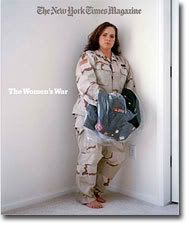
New York Times Magazine Reveals the Double Dose of Danger in The Women's War

Sara Corbett delivers a troubling yet must-not-miss cover feature in today's Sunday magazine: The Women's War. Your journey over will bring you something of great depth and breadth (16 full web pages worth), alongside a rich multi-media presentation introducing you to the unique dangers many women in today's military face. On the cover, former Wisconsin Army National Guardswoman Keri Christensen.

Christensen's story joins that of Suzanne Swift, the Fort Lewis, Wash., specialist who went AWOL as her unit redeployed to Iraq; fellow Wisconsin Army National Guardswoman Abbie Pickett; Keli Frasier, an Army reservist from Colorado; Amorita Randall, a former naval contruction worker; and Kathleen, a 37-year-old Army nurse who had spent her time in Iraq treating badly-injured Iraqis, many of them children.

All have a story to tell. Courageous women and reporting...

Click on 'Article Link' below tags for more...

In the interest of education, article quoted from extensively.

From the NYT:

On the morning of Monday, Jan. 9, 2006, a 21-year-old Army specialist named Suzanne Swift went AWOL. Her unit, the 54th Military Police Company, out of Fort Lewis, Wash., was two days away from leaving for Iraq. Swift and her platoon had been home less than a year, having completed one 12-month tour of duty in February 2005, and now the rumor was that they were headed to Baghdad to run a detention center. The footlockers were packed. The company's 130 soldiers had been granted a weekend leave in order to go where they needed to go, to say whatever goodbyes needed saying. When they reassembled at 7 a.m. that Monday, uniformed and standing in immaculate rows, Specialist Swift, who during the first deployment drove a Humvee on combat patrols near Karbala, was not among them. ...

The weekend before the deployment was to start, however, Swift drove south to her hometown, Eugene, Ore., to visit with her mother and three younger siblings. The decision to flee, she says, happened in a split second on Sunday night. "All my stuff was in the car," she recalls. "My keys were in my hand, and then I looked at my mom and said: 'I can't do this. I can't go back there.' It wasn't some rational decision. It was a huge, crazy, heart-pounding thing."

For two days after she failed to report, Swift watched her cellphone light up with calls from her commanders. They left concerned messages and a few angry ones too. She listened to the messages but did not return the calls. Then rather abruptly, the phone stopped ringing. The 54th MP Company had left for Iraq. Swift says she understood then the enormity of what she'd just done.

She was eventually arrested after a winter and spring on the run, her actions always hanging over her head yet seeing a Eugene therapist at her mother's urging every week. But Swift wasn't just running from combat duty: she claimed she feared returning to the sexual harassment she had experienced at the hands of multiple commanding officers.

In a written statement to investigators, Swift asserted that her station, Camp Lima, outside Karbala, was hit by mortar attacks almost nightly for the first two months of her deployment. She reported working 16-hour shifts, experiencing the death of a fellow company member in an incident of friendly fire and having a close friend injured in a car bombing. What Swift said distressed her most, however, was a situation that involved her squad leader, the sergeant to whom she directly reported in Iraq. She claimed that he propositioned her for sex the first day the two of them arrived in Iraq and that she felt coerced into having a sexual relationship with him that lasted four months - the relationship consisting, she said, of his knocking on her door late at night and demanding intercourse. When she finally ended this arrangement, Swift told me, the sergeant retaliated by ordering her to do solitary forced marches from one side of the camp to another at night in full battle gear and by humiliating her in front of her fellow soldiers. (The sergeant could not be reached, but according to an internal Army report, he denied any sexual contact with Swift.)

As it often is with matters involving sex and power, the lines are a little blurry. Swift does not say she was raped, exactly, but rather manipulated into having sex - repeatedly - with a man who was above her in rank and therefore responsible for her health and safety. (Some victims' advocates use the term 'command rape' to describe such situations.) Swift says that the other two sergeants - one in Kuwait and one back home in Fort Lewis, both a couple of ranks above her - made comments like "You want to [expletive] me, don't you?" or when Swift asked where she was to report for duty, responded, "On my bed, naked."

Following her arrest last summer, there was a large outpouring of support for Swift. Many other female veterans came forward -- their service spanning several decades -- to tell of their own experience of sexual harrassment or rape.

From an August 12, 2006, press conference:


Continuing, from the NYT piece:

In the wake of several sex scandals in the 1990s, the U.S. military has tried to become more sensitive to the presence of women, especially now that they fill 15 percent of the ranks worldwide. There are regular mandated workshops on preventing sexual harassment and assault. Each battalion has a designated Equal Opportunity representative trained to field and respond to complaints. Swift said she initially reported what she characterized as an unwanted relationship with her squad leader in Iraq to her Equal Opportunity representative there, who listened - she claims - but did nothing about it. (According to the internal report, the E.O. representative told investigators that he asked Swift if she had a complaint to make but that she declined at the time.)

Swift made it clear that since enlisting in the Army when she was 19, she'd grown accustomed to hearing sexually loaded remarks from fellow enlisted soldiers. It happened "all the time," she said. But coming from her superiors, especially far away from the support systems of home and against a backdrop of mortar attacks and the general uncertainties of war, the overtones felt more threatening. "You can tell another E-4 to go to hell," she said, referring to the rank of specialist. "But you can't say that to an E-5," she said, referring to a sergeant. "If your sergeant tells you to walk over a minefield, you're supposed to do it."

And so, while the tension may ever exist underneath the surface, the unique conditions in Iraq and Afghanistan -- where drinking is illegal and local women are not sexually accessible to men as they were in past conflicts -- make the tension between men and women serving alongside each other all the more dangerous. For women, this means a "double whammy" of military sexual trauma and combat exposure which can lead to a further increase of PTSD.

More than one-quarter of female veterans of Vietnam developed PTSD at some point in their lives, according to the National Vietnam Veterans Readjustment Survey conducted in the mid-'80s, which included 432 women, most of whom were nurses. (The PTSD rate for women was 4 percent below that of the men.) Two years after deployment to the gulf war, where combat exposure was relatively low, Army data showed that 16 percent of a sample of female soldiers studied met diagnostic criteria for PTSD, as opposed to 8 percent of their male counterparts. The data reflect a larger finding, supported by other research, that women are more likely to be given diagnoses of PTSD, in some cases at twice the rate of men.

Experts are hard pressed to account for the disparity. Is it that women have stronger reactions to trauma? Do they do a better job of describing their symptoms and are therefore given diagnoses more often? Or do men and women tend to experience different types of trauma? Friedman points out that some traumatic experiences have been shown to be more psychologically "toxic" than others. Rape, in particular, is thought to be the most likely to lead to PTSD in women (and in men, in the rarer times it occurs). Participation in combat, though, he says, is not far behind. ...

A 2003 report financed by the Department of Defense revealed that nearly one-third of a nationwide sample of female veterans seeking health care through the V.A. said they experienced rape or attempted rape during their service. Of that group, 37 percent said they were raped multiple times, and 14 percent reported they were gang-raped. Perhaps even more tellingly, a small study financed by the V.A. following the gulf war suggests that rates of both sexual harassment and assault rise during wartime. The researchers who carried out this study also looked at the prevalence of PTSD symptoms - including flashbacks, nightmares, emotional numbing and round-the-clock anxiety - and found that women who endured sexual assault were more likely to develop PTSD than those who were exposed to combat.

Abbie Pickett, whom I had the pleasure to briefly meet last year and who contributed her story in my upcoming book, returns the focus to the tensions that are kicked up a notch in a combat zone between the men and women who are serving:
During her 11-month stint in Iraq, stationed mostly outside Tikrit in a company of 19 women and 140 men, Pickett claimed her male peers thought nothing of commenting on her breast size or making sexual jokes about her. She regularly encountered porn magazines sitting in the latrines and in common areas. None of this behavior was particularly new to her; it was life as she knew it in the military. Yet in a war zone the effect seemed more corrosive. "The real difference is that over there, there's never a break from it," Pickett told me. "At home, you can go out with your girlfriends and get a beer and talk about the idiots who were cracking jokes. Over there, you're a minority 24 hours a day, seven days a week. You never get that 10 minutes to relax or even cry. Sometimes you just need to let it all out."

One night in the fall of 2003, Pickett recalled, her unit endured a mortar attack. Trained as a combat lifesaver, she spent part of the night tending to bleeding soldiers by flashlight in a field tent. Once the experience was over, the memory kept replaying in her mind. "For a long time, I wished I had died that night," Pickett told me, adding that she returned to her home in Wisconsin and was "barely functioning"- unable to sleep or concentrate. She spent days alone inside her apartment, not talking to anyone. "I was draining everyone around me," she says. A year after her deployment, a V.A. clinician formally diagnosed PTSD, which Pickett says she thinks stems from the stress of combat, harassment and the earlier sexual assault. If Vietnam became notorious as a war that combined violence and sex, with Southeast Asian brothels being the destination of choice for soldiers on temporary leave from the war, the sexual politics of the Iraq war are, as of yet, unclear.

Keri Christensen, the National Guardswoman pictured on today's cover, had 13 years of part-time service under her belt before being deployed to Iraq in 2004.

Prior to her deployment in Iraq, she loved her role in the military. "Before we were married, my husband was in awe of it," she said, laughing. "He was like, 'I met this girl and she hauls tanks!'" She added that she was good at what she did, receiving several awards over the years. Beyond commitment to the Guard of one weekend a month and two weeks' training each summer, Christensen spent the previous six years as a stay-at-home mom. Her life, she said, had been a generally happy one.

But the stresses of deployment were surprisingly manifest: she agonized over leaving her daughters, who were then 6 and 2 years old. Stationed in Kuwait, Christensen's unit ran convoys of equipment back and forth from the port to inside Iraq. "It was really scary," she said, explaining that her convoy had been mortared during an early mission. "But it was like, Hey cool, we're on a mission." Then one day in February 2005, Christensen was accidentally dragged beneath a truck trailer and run over, breaking a number of bones in her foot and injuring her knee and back. She was assigned to a desk job in a tent in Kuwait, mostly working the night shift. It was there, she said, that a sergeant above her in her command - a man she'd known for 10 years - began making comments about her breasts and at one point baldly propositioned her for sex.

Something inside of her broke, she said. Christensen claims that she was punished for even mentioning the situation to her company commanders - written up for minor infractions; accused, she says falsely, of being intoxicated (for which she was demoted); and reassigned for duty to an airfield near a mortuary, where she occasionally helped load coffins of dead soldiers onto planes bound for the U.S. (The Wisconsin Army National Guard denied that Christensen was punished for making a sexual-harassment claim and stated that the claim was investigated and dismissed for lack of evidence.) Christensen says that a combination of war stress, harassment and the reprisals that followed were so upsetting and demoralizing that she considered suicide on several occasions. Her military records show that during her deployment, she was given a diagnosis of depression and PTSD. ...

Christensen had been home from war then for just over a year, having returned to her life as a stay-at-home mother, yet she could not shake what the deployment had done to her - the accident, the confusion and shame of her sexual harassment, and then what she felt was an ignominious demotion and marginalization after reporting the incidents. And while there are those whose image of PTSD is still tied to Vietnam War movies - the province of men who earned their affliction only after having their best buddies die in their arms in a gush of blood - Christensen shares the same diagnosis. That is to say that no matter what constituted her war experience, the aftermath was much the same. She suffered from severe headaches and forgetfulness. "I feel like I'm always forgetting something," she said. "I leave the house and I don't know if I've left something on - the stove or a candle. I can't trust my memory." She told me that her 8-year-old, Madison, recently had to tell her the family's new phone number. She'd lost friends and had 'rough spots' with her husband. Afraid of crowds, she started grocery shopping at 6 in the morning and was having her mother buy clothes for her children. Driving, too, made her fearful, since she felt 'foggy' and more than once ran a stop sign or a red light with her kids in the car. Though she went for counseling and medical treatment at a local V.A. while living in Illinois after she returned from Iraq, Christensen had not yet found her way to the Denver V.A. for treatment. The thought of getting in her car and making the 20-minute drive petrified her.

CBS Evening News interviewed Chistensen back in January. Click on the image to the left to access the video player on the CBS page for her interview. Please read the whole NYT piece for additional stories told by the featured women. Unbelievably, I've only scratched the surface.

Additional OEF/OIF PTSD stats

- Female OEF/OIF troops who have served since 2001: 160,500
- Female-to-male ratio: 1-in-7
- Portion of female troops in military: 15%
- OIF WIA: at least 450
- OIF KIA: 75 (as of Mar. 7, 2007)
- OIF females KIA as a percentage of total count: 2.18%
- Cases of reported military sexual assaults, 2005: 2,374


 Related Posts


Wednesday, December 13, 2006

Female Fort Lewis AWOL Soldier Has PTSD

From the Eugene Register-Guard:

Suzanne Swift, the soldier who faces a summary court-martial for being absent without leave for 123 days, is suffering from post-traumatic stress disorder, according to a document spelling out the facts that both she and the military prosecutor agree on.

Swift is the 22-year-old military police specialist from Eugene who said she dodged a second tour of duty in Iraq and went absent without leave last January because she couldn't face the possibility of a second round of the sexual harassment that dogged her first overseas tour. ... The preliminary agreement includes those details under the heading "relevant facts" while noting that the official investigation substantiated only the last incident.

Also under the relevant facts section: "Both the government and the defense agree that the accused has been diagnosed with post-traumatic stress disorder."

Click on 'Article Link' below tags for a couple more grafs...

Continuing:

Swift was in Iraq for a year, from January 2004 to February 2005. She served in Karbala, a city south of Baghdad, as a driver and gunner. An officer who served with her told an Army investigator that Swift saw a great deal of hostile action there and performed well in engagements with the enemy.

A diagnosis of PTSD by an Army doctor means that a soldier is eligible for treatment of that condition, Choates confirmed. The maximum punishment Swift will face is 30 days in jail, forfeit of two-thirds of her pay for a month and reduction in rank from specialist to private. After that, she will finish out the remainder of her military service and be eligible for an honorable discharge.

It's sad to see that a soldier who performed so well in the field should have to cope with sexual harassment, deal with her PTSD, and then still have to serve jail time and have her rank reduced.

Or is that just me thinking this is somehow wrong?


 Related Posts


Monday, December 04, 2006

One-Third of OEF/OIF Women Vets Suffer Psychological Injury

Troubling stats and stories from AP:

[T]he VA reports that slightly more than a third of 23,635 women veterans from Iraq and Afghanistan evaluated from 2002 to last August had a preliminary diagnosis of a mental disorder. Those numbers provide just a partial glimpse into the problem: Many women veterans, like men, don't go to VA hospitals or prefer to seek private help.

A second study released early this year also found that of more than 220,000 Iraq veterans, 23.6 percent of women had a mental health concern -- compared with 18.6 percent for men (an insignificant difference, according to Col. Dr. Charles Hoge, one of the study's authors).

Mental health experts say one of the biggest contributors to psychological problems for women in uniform is military sexual trauma -- a term that covers verbal harassment and physical assault, which is a strong risk factor for PTSD.

Click on 'Article Link' below tags for more...

Another few grafs:

Studies conducted by the VA health system vary, but generally about 20 percent of women report a physical assault during their service, Westrup says. "Unfortunately, a huge aspect of that experience is guilt and self-blame and shame on top of stress," she adds. Last year, the Pentagon announced a new policy of confidentiality, so sexual assault victims can report the incident and get help but law enforcement and senior commanders are not immediately notified.

Compounding the emotional turmoil for women are wounds and ailments that range from life-changing -- the loss of limbs and brain injuries -- to temporary, such as infections and rashes. Some of the short-term health problems are likely tied to the harsh realities of war, where women can go weeks without a shower and spend months hauling gear and lifting heavy weapons in triple-digit heat.

The VA found 29 percent of the women veterans it evaluated returned with genital or urinary system problems, 33 percent had digestive illnesses and 42 percent had back troubles, arthritis and other muscular ailments. More>>


 Related Posts


Wednesday, November 29, 2006

A Look at the VA's Women Veterans Health Program


This month's featured article at the National Women's Health Information Center ("The Federal Government Source for Women's Health Information" and a division of the U.S. Department of Health & Human Services) is by Carole L. Turner, RN, MN, CNAA, and Director of the Women Veterans Health Program.

Entitled The Veterans Administration and the Women Veterans Health Program: Caring for a New Generation of Veterans, I've included it in full here for those interested in learning more.

Click on 'Article Link' below tags for more...

Re-printed in full here for educational purposes:

The July 17, 2006 issue of Business Week declared that the Veterans Health Administration's (VHA) health care system delivers the best medical care in America. The article praised VHA for its lower costs, higher quality and safety, and the computerized medical record system that allows data sharing among all facilities. The article goes on to say, "if you want to be sure of top-notch care, join the military." TIME magazine's August 27, 2006 issue reiterated that theme in "How VA Hospitals Became the Best." The VHA system—made up of 154 hospitals and 875 clinics—is the nation's largest health care system, providing care to millions of eligible veterans nationwide.

Another surprising secret about Veterans Administration's (VA) health care is the Women Veterans Health Program. Women are the fastest growing segment of eligible VA health care users. Women currently represent 15 percent of the active duty force, 20 percent of new military recruits and 17 percent of National Guard and Reserve forces. Presently women represent 5.5 percent or about 1.7 million of the 24.4 million veterans nationwide. This number is projected to increase to 10 percent by the year 2010. Women veterans account for about 1 in every 100 adult female patients in the United States today and the majority are seen outside of the VA health care system. Few clinicians, however, know about women's history of military service or the possible impact of that service on their physical and mental health or quality of life.

Women have participated in every conflict in the U.S., beginning with the War for Independence. Often disguised as males in those early conflicts, women have a long and distinguished record of service to their country and are now a vital and integral component of our military. In the current conflicts in Iraq (Operation Iraqi Freedom) and Afghanistan (Operation Enduring Freedom), about 10 percent of troops are women and they are exposed to combat conditions that earlier generations of women veterans seldom experienced.

Services for women in VA date back to 1982 when a Women Veterans Advisory Committee was appointed to address the inequalities for women veterans. The Veterans Health Care Act of 1992 allowed the VA to dramatically improve its programs for women veterans and move toward a goal of establishing state-of-the-art facilities and programs that focus on women's health. This helped create an environment that is warm, comfortable and private. The legislation authorized VA to provide gender-specific services and general reproductive health care and sexual trauma counseling to eligible women. It also authorized eight Comprehensive Women's Health Centers located in Boston, MA, Southeast PA, Durham, NC, Chicago, IL, Los Angeles, CA, San Francisco, CA, Minneapolis, MN, and Tampa, FL.

Services for women have steadily expanded and improved. VA has responded to the growing number of women veterans by targeting programs and facilities to meet their unique health care needs. Today, the Women Veterans Health Program extends to all VA facilities with comprehensive health care for women veterans as the rule, rather than the exception. The Women Veterans Health Program Strategic Plan guides efforts to ensure that women veterans receive the care they need. As part of the strategic planning process, the program identified and developed our mission and vision. The program mission is: Promote the health, welfare and dignity of women veterans, and their families, by ensuring equitable access to timely, sensitive, quality health care. Our vision is: Improve the health of the Nation by providing the highest quality services for all eligible women who served in the military. The strategic plan, now in its second five-year cycle, has produced outcomes that show success in the quality of care being delivered.

The Women Veterans Health Program provides a full range of medical and mental health care services, including:

* Preventive health screening
* Primary care
* Gynecology services
* Reproductive health care including maternity care and infertility evaluation
* Screening, counseling, and treatment for sexual trauma, substance abuse, post taumatic stress disorder and domestic violence
* Homeless programs
* Vocational rehabilitation
* Patient education
* Research

This most recent war has seen an unprecedented number of women experiencing the same situations as their male counterparts, not only in combat, but also upon returning home. They can face both physical and emotional readjustment. VA operates a variety of specialized outpatient post traumatic stress disorder (PTSD) programs, including seven outpatient Women's Stress Disorder and Treatment Teams. Forty-four Returning Veterans Outreach, Education and Care programs were established in an effort toward early identification and management of stress-related disorders. The National Center for Post Traumatic Stress Disorder has come to be viewed as a world leader in PTSD research. Current research is being done on the unique issues and behaviors specific to women deployed to a war zone so that VA can gear programs accordingly.

For the first time, VA is treating women veterans with multiple traumas, including loss of limbs and traumatic brain injury. These veterans, who most likely would have died in previous wars, face many challenges in their recovery. VA has established "polytrauma centers" to focus on the immediate rehabilitation of these soldiers located in Minneapolis, MN, Palo Alto, CA, Richmond, VA and Tampa, FL.

In addition there are 207 community Veterans Centers nationwide specializing in readjustment counseling for veterans. Started in response to the Vietnam war, many Veterans Centers now have a designated Global War on Terror (GWOT) outreach person whose job is to provide presentations to returning veterans regarding VA and Veterans Center services available to them (particularly counseling for readjustment issues, PTSD, and Military Sexual Trauma (MST)). These outreach workers are GWOT veterans themselves.

Unfortunately, a number of veterans, both male and female, have experienced sexual trauma during their military service. A program, originally established to treat women who were victimized, immediately identified that men have suffered this indignity as well. VA provides priority health services and mental health counseling and treatment for all eligible veterans who have experienced MST. It is important to know that MST counseling is available even if a woman did not report the incident when it took place.

VA is concerned about MST because any type of trauma can have lasting effects on physical and mental health. Trauma counseling can help veterans to better cope with a past experience of MST and to regain their confidence, self-esteem, and hopefully, improve their quality of life.

This MST program is but one example of improvements made as a result of the efforts of the Women Veterans Health Program that have also improved the quality of care for men. As another example, focus on improving privacy for women consumers has resulted in changes that have improved the environment of care for male veterans as well.

Every VA Medical Center has a Women Veterans Program Manager who helps women with establishing their eligibility, understanding their benefits, and getting their health care in the VA system. The VA Women Veterans Health Program continues to recognize the unique needs of those women who have served and strives to provide them the quality care that they so richly deserve.

For more information about the Women Veterans Health Program, please visit us at www.va.gov/wvhp.

Current as of November 2006


 Related Posts


Monday, November 20, 2006

Psychological Bulletin from APA: Females Have Higher Rates of PTSD

From HealthNews-Stats:

Males experience more traumatic events on average than do females, yet females are more likely to meet diagnostic criteria for Posttraumatic Stress Disorder (PTSD), according to a review of 25 years of research reported in the November issue of Psychological Bulletin, published by the American Psychological Association (APA).

The authors reviewed 290 studies conducted between 1980 and 2005 to determine who is more at risk for potentially traumatic events (PTE) and posttraumatic stress disorder (PTSD) – males or females? The results of the meta-analysis found that while males have a higher risk for traumatic events, women suffer from higher PTSD rates. PTSD is defined as an anxiety disorder precipitated by a traumatic event and characterized by symptoms of re-experiencing the trauma, avoidance and numbing and hyperarousal.

From the review, researchers David F. Tolin, PhD of the Institute of Living and Edna B. Foa, PhD, of the University of Pennsylvania School of Medicine found that female study participants were more likely than male study participants to have experienced sexual assault and child sexual abuse, but less likely to have experienced accidents, nonsexual assaults, witness death or injury, disaster or fire and combat or war. Sexual trauma, the authors conclude, may cause more emotional suffering and are more likely to contribute to a PTSD diagnosis than other types of trauma.

Click on 'Article Link' below tags for related posts...


 Related Posts


Previous/Older Posts Return Home

Archives
2011: Jan Feb
2010: Jan Feb Mar Apr May Jun Jul Aug Sept Oct Nov Dec
2009: Jan Feb Mar Apr May Jun Jul Aug Sept Oct Nov Dec
2008: Jan Feb Mar Apr May Jun Jul Aug Sept Oct Nov Dec
2007: Jan Feb Mar Apr May Jun Jul Aug Sept Oct Nov Dec
2006: Jan Feb Mar Apr May Jun Jul Aug Sept Oct Nov Dec
2005: Sept Oct Nov Dec

Legal Notice

The information presented on this web site is based on news reports, medical and government documents, and personal analysis. It does NOT represent therapeutic prescription or recommendation. For specific advice and information, consult your health care provider.

Comments at PTSD Combat do not necessarily represent the editor's views. Illegal or inappropriate material will be removed when brought to our attention. The existence of such does not reflect an endorsement.


This site contains at times large portions of copyrighted material not specifically authorized by the copyright owner. This material is used for educational purposes, to forward understanding of issues that concern veterans and military families. In accordance with U.S. Copyright Law Title 17 U.S.C. Section 107, the material on this site is distributed without profit. More information.