Saturday, May 13, 2006

OEF/OIF Vets: Still Helping Each Other Once You're Home?

Are you an OEF/OIF veteran who's been back in the states, done your time, and wondering what to do with the rest of your life? Are you feeling like your best years are already behind you, and there's no greater mission you can be a part of? Well, if you're one of the majority of our veterans who've been fortunate to have a pretty smooth reintegration process, I have a request for you guys and gals. Have you checked in on your fellow battle buddies lately?

Click on 'Article Link' below tags for more...

Not everyone has the same solid support network in place that you may have had. Not every returning veteran has someone they can talk to when they have questions or concerns...especially if it's about combat experiences. Some people end up having a hard time transitioning, a hard time finding that same support you guys and gals gave each other while you in the military together. Jesus Bocanegra is one such guy. Late last year, he gave NPR's All Things Considered an interview [audio | transcript]. Talking about how hard the transition was, how much he missed that camaraderie, I was struck by the idea that it's too bad he's having such a hard time finding someone to talk to.

So, I have a challenge tonight: for those of you who are honestly doing all right (and I mean you really have to be doing great and feeling like you have enough juice charged up that you can give of yourself to someone who might need some help), can you check in on your battle buddies? Even better, would you consider volunteering with your local VA or perhaps phoning up a veterans group and asking if they need your help?

Who knows? Maybe making yourself available to talk with the newer batch of veterans coming home behind you might work its way around to enhancing your own post-deployment experience. You might even find that it's a great way to put your unique experience and special knowledge to use for a greater good.

In any event, thanks again for your service.

And welcome home!


Friday, May 12, 2006

First Aid for Combat PTSD

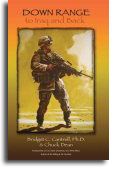
Bridget C. Cantrell, Ph.D. is a leading clinical psychologist specializing in the area of combat-related PTSD, Chuck Dean is a veteran of the Vietnam War. Together they've created a vital little resource for PTSD survival: Down Range to Iraq and Back. I'll share a few helpful tips from Chapter 5 with you tonight.


Wednesday, May 10, 2006

GAO Report: 4 of 5 at Risk for Combat PTSD Not Getting Help

An important draft of a GAO report looking into combat PTSD has surfaced, and the Washington Post's premiere reporter on this issue, Shankar Vedantam, will deliver the news on page A08 tomorrow. Let's take a look at it tonight.

Click on 'Article Link' below tags for more...

From the Washington Post:

Nearly four in five service members returning from the wars in Iraq and Afghanistan who were found to be at risk for post-traumatic stress disorder (PTSD) were never referred by government clinicians for further help, according to a Government Accountability Office report due for release today.

The report says Defense Department officials were unable to explain why only some troops were referred for help. Many veterans groups have accused the government of playing down the risk of PTSD because of concerns over skyrocketing costs.

178,664 service members were screened for PTSD risk via a survey. Of those same 178,664, 9,145 tested postive for PTSD risk. Yet, only 22% were referred to receive medical help. Breaking it down: Army and Air Force each referred 23% for further treatment; the Navy referred 18%; and the Marines about 15%.

The final report will have the formal responses from the Defense and Veterans Affairs departments. In the draft report, Pentagon officials are quoted as saying that not all service members who gave positive responses on the screening test needed help, but the report said the officials could not specify what factors are involved in referring some people but not others.

Asked to comment late yesterday, the Defense Department said only that it has "several comprehensive and proactive programs to deal with PTSD." Spokeswoman Cynthia Smith said the most knowledgeable officials were not available so late in the day.

"You would think that [referrals for treatment] would be the point of the whole screening tool," said Veterans Affairs spokesman Jim Benson. He said that the Defense Department was solely responsible for administering the screening test and making referral decisions.

The article goes on to explain that the PTSD risk questionnaire is administered as the troops return home from combat via their post-deployment health assessment [pdha]. After the form is completed, it's reviewed by the DOD; the DOD then determines who will be referred for further medical evaluation and help.

Deciding whether to refer service members for help involves judgment, the report said, but the Defense Department "cannot provide reasonable assurance that all [Iraq and Afghanistan] service members who need referrals for further mental health or combat stress evaluations receive such help."

Rep. Michael Michaud (Maine), the ranking Democrat on the House Veterans' Affairs subcommittee on health, said screening service members for PTSD was the right thing to do, but questioned the utility of the screening if people at risk did not receive help.

"When 78 percent of the service members who are at risk of developing PTSD do not get a referral for further evaluation, then it's clear the assessment system is not working," he said in a statement. "Early assessment can prevent tragedy. Untreated PTSD can lead to substance abuse, severe depression and even suicide."

We'll wait to see what further response there will be to this information -- which is troubling, to say the least.


 Related Posts


Monday, May 08, 2006

Senate Armed Services Comittee OK's PTSD Funds

It looks as though the Defense Authorization Bill for Fiscal Year 2007 has been approved by the Senate Armed Services Committee as it moves for a vote. Please see the Lincoln Tribune for all the specifics. Here's a snippet:

The bill also includes $17 million for efforts to treat post-traumatic stress syndrome (PTSD), and funds other mental health initiatives, including a pilot program started at Ft. Bragg to provide early diagnosis and treatment of PTSD. “It must be a priority to diagnose and treat service members and veterans who suffer from the psychological traumas of war and help them lead healthy, productive lives,” said Senator Dole. “This care is crucial in helping people through the demands of the on-going Global War on Terror.”


Later/Newer Posts Previous/Older Posts Return Home

Archives
2011: Jan Feb
2010: Jan Feb Mar Apr May Jun Jul Aug Sept Oct Nov Dec
2009: Jan Feb Mar Apr May Jun Jul Aug Sept Oct Nov Dec
2008: Jan Feb Mar Apr May Jun Jul Aug Sept Oct Nov Dec
2007: Jan Feb Mar Apr May Jun Jul Aug Sept Oct Nov Dec
2006: Jan Feb Mar Apr May Jun Jul Aug Sept Oct Nov Dec
2005: Sept Oct Nov Dec

Legal Notice

The information presented on this web site is based on news reports, medical and government documents, and personal analysis. It does NOT represent therapeutic prescription or recommendation. For specific advice and information, consult your health care provider.

Comments at PTSD Combat do not necessarily represent the editor's views. Illegal or inappropriate material will be removed when brought to our attention. The existence of such does not reflect an endorsement.


This site contains at times large portions of copyrighted material not specifically authorized by the copyright owner. This material is used for educational purposes, to forward understanding of issues that concern veterans and military families. In accordance with U.S. Copyright Law Title 17 U.S.C. Section 107, the material on this site is distributed without profit. More information.