x

Saturday, March 04, 2006

PTSD Defined: Dept. of Veterans Affairs Center for PTSD

We've already looked at the VA's official definition of post-traumatic stress disorder; now we'll expand on that by taking a look at the VA's National Center for PTSD definition. The more ways we look at PTSD, the better.

Click on 'Article Link' below tags for more...

Much of the information at the National Center for PTSD website is in the public domain, giving everyone the right to share the information with others elsewhere. The following is from their What is Posttraumatic Stress Disorder? fact sheet:

Posttraumatic Stress Disorder, or PTSD, is a psychiatric disorder that can occur following the experience or witnessing of life-threatening events such as military combat, natural disasters, terrorist incidents, serious accidents, or violent personal assaults like rape. Most survivors of trauma return to normal given a little time. However, some people will have stress reactions that do not go away on their own, or may even get worse over time. These individuals may develope PTSD. People who suffer from PTSD often relive the experience through nightmares and flashbacks, have difficulty sleeping, and feel detached or estranged, and these symptoms can be severe enough and last long enough to significantly impair the person's daily life.

PTSD is marked by clear biological changes as well as psychological symptoms. PTSD is complicated by the fact that it frequently occurs in conjunction with related disorders such as depression, substance abuse, problems of memory and cognition, and other problems of physical and mental health. The disorder is also associated with impairment of the person's ability to function in social or family life, including occupational instability, marital problems and divorces, family discord, and difficulties in parenting.


Understanding PTSD

PTSD is not a new disorder. There are written accounts of similar symptoms that go back to ancient times, and there is clear documentation in the historical medical literature starting with the Civil War, when a PTSD-like disorder was known as "Da Costa's Syndrome." There are particularly good descriptions of posttraumatic stress symptoms in the medical literature on combat veterans of World War II and on Holocaust survivors.

Careful research and documentation of PTSD began in earnest after the Vietnam War. The National Vietnam Veterans Readjustment Study estimated in 1988 that the prevalence of PTSD in that group was 15.2% at that time and that 30% had experienced the disorder at some point since returning from Vietnam.

PTSD has subsequently been observed in all veteran populations that have been studied, including World War II, Korean conflict, and Persian Gulf populations, and in United Nations peacekeeping forces deployed to other war zones around the world. There are remarkably similar findings of PTSD in military veterans in other countries. For example, Australian Vietnam veterans experience many of the same symptoms that American Vietnam veterans experience.

PTSD is not only a problem for veterans, however. Although there are unique cultural- and gender-based aspects of the disorder, it occurs in men and women, adults and children, Western and non-Western cultural groups, and all socioeconomic strata. A national study of American civilians conducted in 1995 estimated that the lifetime prevalence of PTSD was 5% in men and 10% in women. A revision of this study done in 2005, reports that PTSD occurs in about 8% of all Americans.


How does PTSD develop?

Most people who are exposed to a traumatic, stressful event experience some of the symptoms of PTSD in the days and weeks following exposure. Available data suggest that about 8% of men and 20% of women go on to develop PTSD, and roughly 30% of these individuals develop a chronic form that persists throughout their lifetimes.

The course of chronic PTSD usually involves periods of symptom increase followed by remission or decrease, although some individuals may experience symptoms that are unremitting and severe. Some older veterans, who report a lifetime of only mild symptoms, experience significant increases in symptoms following retirement, severe medical illness in themselves or their spouses, or reminders of their military service (such as reunions or media broadcasts of the anniversaries of war events).
How is PTSD assessed?

In recent years, a great deal of research has been aimed at developing and testing reliable assessment tools. It is generally thought that the best way to diagnose PTSD-or any psychiatric disorder, for that matter-is to combine findings from structured interviews and questionnaires with physiological assessments. A multi-method approach especially helps address concerns that some patients might be either denying or exaggerating their symptoms.


How common is PTSD?

An estimated 7.8 percent of Americans will experience PTSD at some point in their lives, with women (10.4%) twice as likely as men (5%) to develop PTSD. About 3.6 percent of U.S. adults aged 18 to 54 (5.2 million people) have PTSD during the course of a given year. This represents a small portion of those who have experienced at least one traumatic event; 60.7% of men and 51.2% of women reported at least one traumatic event. The traumatic events most often associated with PTSD for men are rape, combat exposure, childhood neglect, and childhood physical abuse. The most traumatic events for women are rape, sexual molestation, physical attack, being threatened with a weapon, and childhood physical abuse.

About 30 percent of the men and women who have spent time in war zones experience PTSD. An additional 20 to 25 percent have had partial PTSD at some point in their lives. More than half of all male Vietnam veterans and almost half of all female Vietnam veterans have experienced "clinically serious stress reaction symptoms." PTSD has also been detected among veterans of the Gulf War, with some estimates running as high as 8 percent.


Who is most likely to develop PTSD?

  1. Those who experience greater stressor magnitude and intensity, unpredictability, uncontrollability, sexual (as opposed to nonsexual) victimization, real or perceived responsibility, and betrayal
  2. Those with prior vulnerability factors such as genetics, early age of onset and longer-lasting childhood trauma, lack of functional social support, and concurrent stressful life events
  3. Those who report greater perceived threat or danger, suffering, upset, terror, and horror or fear
  4. Those with a social environment that produces shame, guilt, stigmatization, or self-hatred


What are the consequences associated with PTSD?

PTSD is associated with a number of distinctive neurobiological and physiological changes. PTSD may be associated with stable neurobiological alterations in both the central and autonomic nervous systems, such as altered brainwave activity, decreased volume of the hippocampus, and abnormal activation of the amygdala. Both the hippocampus and the amygdala are involved in the processing and integration of memory. The amygdala has also been found to be involved in coordinating the body's fear response.

Psychophysiological alterations associated with PTSD include hyper-arousal of the sympathetic nervous system, increased sensitivity of the startle reflex, and sleep abnormalities.

People with PTSD tend to have abnormal levels of key hormones involved in the body's response to stress. Thyroid function also seems to be enhanced in people with PTSD. Some studies have shown that cortisol levels in those with PTSD are lower than normal and epinephrine and norepinephrine levels are higher than normal. People with PTSD also continue to produce higher than normal levels of natural opiates after the trauma has passed. An important finding is that the neurohormonal changes seen in PTSD are distinct from, and actually opposite to, those seen in major depression. The distinctive profile associated with PTSD is also seen in individuals who have both PTSD and depression.

PTSD is associated with the increased likelihood of co-occurring psychiatric disorders. In a large-scale study, 88 percent of men and 79 percent of women with PTSD met criteria for another psychiatric disorder. The co-occurring disorders most prevalent for men with PTSD were alcohol abuse or dependence (51.9 percent), major depressive episodes (47.9 percent), conduct disorders (43.3 percent), and drug abuse and dependence (34.5 percent). The disorders most frequently comorbid with PTSD among women were major depressive disorders (48.5 percent), simple phobias (29 percent), social phobias (28.4 percent), and alcohol abuse/dependence (27.9 percent).

PTSD also significantly impacts psychosocial functioning, independent of comorbid conditions. For instance, Vietnam veterans with PTSD were found to have profound and pervasive problems in their daily lives. These included problems in family and other interpersonal relationships, problems with employment, and involvement with the criminal justice system.

Headaches, gastrointestinal complaints, immune system problems, dizziness, chest pain, and discomfort in other parts of the body are common in people with PTSD. Often, medical doctors treat the symptoms without being aware that they stem from PTSD.


How is PTSD treated?

PTSD is treated by a variety of forms of psychotherapy (talk therapy) and drug therapy. There is no definitive treatment, but some treatments appear to be quite promising, especially cognitive-behavioral therapy, group therapy, and exposure therapy. Exposure therapy involves having the patient repeatedly relive the frightening experience under controlled conditions to help him or her work through the trauma. Studies have also shown that medications help ease associated symptoms of depression and anxiety and help with sleep. The most widely used drug treatments for PTSD are the selective serotonin reuptake inhibitors, such as Prozac and Zoloft. At present, cognitive-behavioral therapy appears to be somewhat more effective than drug therapy. However, it would be premature to conclude that drug therapy is less effective overall since drug trials for PTSD are at a very early stage. Drug therapy appears to be highly effective for some individuals and is helpful for many more. In addition, the recent findings on the biological changes associated with PTSD have spurred new research into drugs that target these biological changes, which may lead to much increased efficacy.


Related Fact Sheets

Epidemiology - Information about rates of PTSD in the United States among different populations

Help for veterans with PTSD - Answers to some questions about PTSD and service-connected disability that are frequently asked by veterans and their families

Risk factors - A fact sheet about the risk factors for adverse outcomes in natural and human-caused disasters

Treatment - Information on availble treatments for PTSD

Be sure to spend some time exploring the entire National Center for PTSD website; it will be time well spent.


 Related Posts

Labels: , , , , , , , , , , , , , , , , , , ,

University of Illinois Supports Its Veterans with Free MBA's

[UPDATE December 2, 2007]:

This post has been one of the most contentious on PTSD Combat, and I'm planning (as soon as time can be found) to do a follow-up on the controversy that has erupted re: the program outlined below. For the time being, I have green-lighted every comment, no matter how severe, in the interest of having a forum to air grievances.

I ask that commentors please steer clear from libelous, personal attacks against any of the individuals who may or may not be involved in one way or another. After doing my update, I will return to comments and delete those that are found to be inappropriate.

Well, the fine state of Illinois has just upped the stakes in the 'Best Freebies for Veterans' category. They join Washington State; the towns of Cloquet, Minnesota and Oakridge, Tennessee; and a whole slew of local media outlets who are walking the walk when it comes to talking about, advocating, and supporting our troops. While GI Bill delays are hampering timely veteran tuition payments, the state of Illinios and the University of Illinois have decided to cut out the middle-man for 110 lucky resident veterans.

Click on 'Article Link' below tags for more...

The incredible news was released yesterday:

The College of Business at the University of Illinois at Urbana-Champaign (UIUC) has partnered with the State of Illinois to award up to 110 new academic scholarships for Illinois-based military veterans and active-duty military personnel. The scholarships offer veterans an unprecedented opportunity to receive free tuition while earning an MBA degree from one of the top universities in the US.

By combining the University's Military Scholarship Program with the Illinois Veteran Grant (IVG), the program offers qualified and eligible applicants an opportunity to earn an MBA tuition-free through the College's 20-month Executive MBA Program located at the Illini Center in downtown Chicago or the MBA Programs offered in Urbana-Champaign. ...

"This is a unique opportunity for the citizens of Illinois and our university to honor our men and women in uniform," said van der Hooning. The University wants to help soldiers and veterans put their career on a fast track without the burden of student loans. I recently met with a returning group of marines from the 2/24th Battalion who fought on the front lines in Iraq and Afghanistan. The enemy named them the Mad Ghosts for their fighting prowess and bravery. The experience was overwhelming. At that moment, I realized that saying 'thank you' was not enough. We had to do something tangible and significant, and this program is a step in the right direction." ...

This program builds upon a partial financial scholarship that was first offered to Illinois veterans by UIUC in 2005, and was expanded to cover full tuition based on the demand. "The men and women of our military are the best trained in the world. They can now combine that training with the knowledge that they will receive from this program," said Lt. Governor Pat Quinn. "I would like to salute the University of Illinois College of Business for introducing this program that will make these brave Service members the best in the nation."


Resources and Info to Get You Started:
Or call van der Hooning at 312-575-7905 for more information.

Labels: , , , ,

Upcoming Job Fair for California Vets

MilitaryStars is hosting the Western Regional Career Expo on March 6th from 12pm - 5pm at the Hilton Burbank Airport 2500 Hollywood Way, Burbank, CA. From the website: "Participating employers range from Fortune 500 companies to the nation's fastest growing local businesses with positions available in Management, Operations, Logistics, Sales, Technology, and much more." Registration [pdf] | Agenda

And before you go, you might want to take a look at these job search resources. Good luck!

Click on 'Article Link' below tags for related posts...


 Related Posts

Labels: , , ,

Friday, March 03, 2006

Veterans and PTSD: A Video by Kathie Costos

This one comes entirely from the heart. The video quality may not be straight out of a movie studio, but the information and sentiments expressed are top notch.

The video's creator and author of For the Love of Jack, Kathie Costos, says, "With the figure of veterans from Iraq and Afghanistan already topping 70,000 diagnosed cases, there is no better time than now to unite behind our veterans. This is a new piece I did in an attept to explain PTSD, how it changes the veterans and their families. It also address[es] how so many of them end up homeless. Hope you like it but I hope it helps more. Pass it on at will."

Watch Veterans and PTSD. Then thank Ms. Costos for her work.

Labels: , , , ,

Scientists Racing to Ease Painful PTSD Memories

Scientists are using their growing knowledge of brain chemicals -- and the role they play in saving and accessing memories -- to find ways to help people better cope with one symptom of PTSD: the painful replay of traumatic memories. We'll review today's Chicago Tribune article, Drug Eases Pain of Bad Memories, to get an update on progress in this somewhat controversial area; and we'll take a look at results of studies conducted by the National Institute of Mental Health (NIMH) on the role the brain plays in PTSD.

Click on 'Article Link' below tags for more...

From the Chicago Tribune:

There is no definitive treatment for PTSD and no cure, and the number of cases is only expected to grow as a result of U.S. military action overseas. This week, published research found that 12 percent of soldiers returning from Iraq were diagnosed with post-traumatic stress disorder, depression or another serious mental illness.
Brain scientists think they have found a way to help by using a drug called propranolol to alter traumatic thoughts. It appears that the drug, a beta blocker used to treat high blood pressure, interferes with stress hormones in the brain to defuse the impact of horrific memories.

While use of the drug for this purpose has not been approved, some psychiatrists already have begun to prescribe it to patients with PTSD. (Other beta blockers do not seem to affect the brain the same way.) Researchers emphasize that the drug can lower the intensity of a bad memory--but not erase it. "It's not that people will no longer remember the trauma, but the memory will be less painful," said Alain Brunet, a psychologist at McGill University in Montreal, where experiments on human subjects are under way.

An interesting part of the new research and findings is that it's been a century's old scientific view that memories are fluid only for a matter of a few hours (the article says 6), and then following that period of time become fixed. They're stored in the fixed state, and can't be changed in any way in the future.

But Karim Nader, a pioneering McGill psychologist, was able to show that long-term memories aren't nearly as hardwired as scientists had thought. When we retrieve a memory, Nader found, it again enters a vulnerable state where it could be manipulated or even lost. "It was formerly thought that once a memory is fixed you can't mess around with it," said Nader. "That was scientific dogma for 100 years."

The brain's wiring changes each time something goes into long-term memory, but not all memories are equal, he said. "You remember the day of your wedding better than three Tuesdays ago when there was nothing important going on."

Emotional memories, Nader explained, activate a second process that ups their intensity. This is called a "gain switch" and can be thought of as the volume control on a radio. Studies have shown that emotionally arousing events cause stress-related hormones such as adrenaline to be released by the brain's amygdala, which is involved in emotional learning and memory. PTSD may develop when the event is so emotionally powerful, and so much adrenaline is released, that the "gain switch" is set too high.

As the National Institute for Mental Health (NIMH) explains:

NIMH and the VA sponsor a wide range of basic, clinical, and genetic studies of PTSD. … Studies in animals and humans have focused on pinpointing the specific brain areas and circuits involved in anxiety and fear, which are important for understanding anxiety disorders such as PTSD. Fear, an emotion that evolved to deal with danger, causes an automatic, rapid protective response in many systems of the body. It has been found that the body's fear response is coordinated by a small structure deep inside the brain, called the amygdala. The amygdala, although relatively small, is a very complicated structure, and recent research suggests that different anxiety disorders may be associated with abnormal activation of the amygdala.

What appears to happen each time a memory is retrieved by the brain is that the amygdala releases more hormones, the painful memories being all the more intensified with each recall. This is where the drug propranolol comes to the rescue; it has been shown in lab experiments to desensitize the subject of expected fear-producing memories.

Trials are now underway on men and women and seem to reflect the results of lab research showing that those taking the blood pressure pill propranolol have a milder reaction to traumatic memories than those taking a placebo. Additionally, propranolol may help to ease the painful memories immediately after a traumatic incident, the Chicago Tribune explains:
Dr. Roger Pitman, a professor of psychiatry at Harvard Medical School, wondered if giving propranolol as soon as possible after a traumatic event could prevent indelible, terrifying memories from taking hold.

He tested the idea on 41 people who had experienced car accidents, assaults and other events that brought them to a Massachusetts emergency room. They received the drug within six hours of their mishaps. The results were dramatic. Three months later, 22 of the victims listened to audiotapes on which they had described their traumas. None of those who took propranolol showed strong responses to the tapes, but eight of the placebo patients were obviously shaken by reliving their experiences. Their heart rates increased, their palms sweated, their muscles twitched--all signs of PTSD.

Now Pitman's group is pursuing a study in which patients with chronic PTSD are treated repeatedly with propanolol. "If we get positive results, there are many potential applications for people with PTSD from a variety of sources, including Hurricane Katrina and the Iraq War," Pitman said.

These treatments are not without controversy as some ethicists are concerned that by trying to numb the pain we may be setting ourselves up to be less capable of handling psychological pain in the future. But the brain researchers counter back:
"Many people have thought of these as amnesia drugs: `I would like to get rid of the memory of a horrible experience I had with another person; I'll just take propranolol and get rid of it,'" said James McGaugh, a neurobiologist at the University of California at Irvine whose work on learning and memory paved the way for research by Pitman and others. "Well, propranolol does not remove memories."

The day after Nader's first study was published, a woman called and asked whether she could have the memories of her abusive first husband erased.

"The idea of erasing memory is just silly," Nader said. "We can't do it; nor do we want to. But if we can turn down the intensity of the memory sufficiently that these patients can respond to traditional treatments, that's the goal, I think."

Be sure to read the whole Chicago Tribune piece, and visit the NIMH website if you'd like to learn more on this issue -- and PTSD in general.


 Related Posts

Labels: , , , , , , , ,

Thursday, March 02, 2006

JAMA's Iraq Combat Mental Health Study: A Review

Note: Details on JAMA's Nov 2007 follow-up study here.

A 'perfect storm' of events (Zogby International's poll of Iraq combat troops and a study of today's current military population appearing in the Journal of the American Medical Association) has come together to bring combat-related PTSD into the forefront this week. Both of these barometers of troop health and opinion are ground-breaking. I've already touched upon the Zogby data; here I'll take a look at what the JAMA study reveals.

Click on 'Article Link' below tags for more...


Background

A month following the start of combat operations in Iraq, the Department of Defense (DOD) implemented a post-deployment survey program of its combat veterans. Each service member was (and is still) required to complete the Post-Deployment Health Assessment (PDHA) form. At the same time, troops would also receive a face-to-face assessment by a physician, physician assistant, nurse practitioner, or independent duty corpsman/medical technician.

From the Deployment Health Clinical Center website, the purpose of the screening is to:

  • review each combat veteran’s current health
  • study the mental health or psychosocial issues commonly associated with deployments
  • track special medications taken during the deployment
  • make note of possible deployment-related occupational/environmental exposures
  • discuss deployment-related health concerns
It continues:
Positive responses require use of supplemental assessment tools and/or referrals for medical consultation. The provider will document concerns and referral needs and discuss resources available to help resolve any post-deployment issues. The original completed DD Form 2796 will be maintained in the individual's permanent medical record. A copy (paper or electronic) will be sent to the Army Medical Surveillance Activity (AMSA).

The data collected by AMSA is then integrated into the Defense Medical Surveillance System (DMSS) database – and that database is the source of data for the Hoge study.


Study Authors

The March 1, 2006 Journal of the American Medical Association (JAMA) article outlining the results (Mental Health Problems, Use of Mental Health Services, and Attrition From Military Service After Returning From Deployment to Iraq of Afghanistan) was written by the much respected Charles W. Hoge, MD (Division of Psychiatry & Neuroscience, Walter Reed Army Institute of Medical Research); Jennifer L. Auchterlonie, MS (US Army Center for Health Promotion and Preventative Medicine); and Charles S. Milliken, MD (Division of Psychiatry & Neuroscience, Walter Reed Army Institute of Medical Research).


Value and Goal of Study

The authors explain the reason and value for the unprecedented study (never before has population-based study been possible so immediately or fully after or even during combat ops – today's computer databases now make this possible) stating, “Such studies are an important part of measuring the mental health burden of the current war and ensuring that there are adequate resources to meet the mental health care needs of veterans returning from Iraq and Afghanistan.”


Study Participants and Window

Dr. Hoge and his colleagues used the data available from the records of 303,905 Army soldiers and Marines who’d completed a PDHA between May 1, 2003, and April 30, 2004 and had served in either Operation Iraqi Freedom (OIF), Operation Enduring Freedom (OEF), or other locations such as Bosnia or Kosovo. Of this population of service members, 50,611 have been detached from the military.


Study Questions and Analysis

Two questions were used to determine risk factors for depression: one examining depressed mood (“felt down, depressed, or hopeless”), the other anhedonia (“little interest or pleasure in doing things”).

Four questions were included to screen for PTSD of the key domains of PTSD (re-experiencing trauma; numbing; avoidance; and hyperarousal); an affirmative response to 2 out of the 4 questions was taken to mean the troop was considered to be at risk for PTSD. Additionally, four more questions were proffered exploring suicide, interpersonal relationships, and interest in receiving care. [See the PDHA form for more detail.]


Study Results

Not surprisingly, rates of mental health problems are higher for those deployed to OIF vs. those deployed to OEF or other locations. [One note: All statistics below are for combat soldiers and Marines. The authors explain, “Although Air Force and Navy personnel also serve in the combat environment, the majority of ground combat units are Army and Marine.”]

Soldiers and Marines meeting the risk criteria for mental health concern:

  • OIF: 19.1%
  • OEF: 11.3%>
  • Other: 8.5%
The study states, “The 8.5% compares closely with baseline data from another study of soldiers surveyed before they deployed for the first time to Iraq and Afghanistan.”

Soldiers and Marines scoring 2 or more on the 4-item PTSD scale:

  • OIF: 9.8%
  • OEF: 4.7%
  • Other: 2.1%
Soldiers and Marines referred for a mental health problem:

  • OIF: 4.3%
  • OEF: 2.0%
  • Other:0.9%
The 4.3% translates to 42,506 OIF veterans screening positive. Of these, 18.3% (7,797) were referred for a mental health problem.

Cross-component prevalence of mental health problems (screening positive for 1 of the mental health concerns) in OIF troops:

  • Active: 18.4%
  • National Guard: 21.0%
  • Reserve: 20.8%
Of 14,777 veterans who were hospitalized, 35% reported a mental health problem. Other mental health care stats for our OIF veterans:

  • Documented to have at least 1 outpatient mental health care visit within one year post-deployment: 31%
  • Annualized rate of utilization of mental health services: 35% of persons per year
  • Episodes of care per person per year: 3.4 visits
A few cautionary notes borne out by the data that do not bode well for the current mental health assessment process and our ability to diagnose and treat combat-related PTSD:

  • Among OIF veterans who’d listed mental health concerns on their PDHA form, only 20% were referred for such care.
  • Of those who accessed mental health care within a year after deployment, only 7.6% (5,216) has a referral for such on their PDHA form.
  • 60% who screened positive for PTSD, generalized anxiety, or depression did not seek treatment.
  • Rates of mental health care use has been increasing with each year since 2000, “providing further evidence that the war is burdening the health care system at large.”

Selection of Press Coverage Given Study


Additional Screening Program Implemented by DOD

As already reported at PTSD Combat last month, an additional mental health screening program for our returning troops is being rolled out by the DOD: the Post-Deployment Health Reassessment (PDHRA form). Service members will participate in the health screening three-to six months after arriving home.


Related Posts

Labels: , , , , , , , , ,

Wednesday, March 01, 2006

Join Operation Homefront in Sending Softballs to Our Troops

The Northwest Illinois Chapter of Operation Homefront has launched its Operation Softball program. From the website: "The original goal was to collect 1,016 softballs to build a pyramid of support for our soldiers. For months, softballs were distributed to area businesses, churches, and schools for people to sign and write words of support for our troops. Because of the tremendous outpouring of support, the program has been continued through April 15, 2006 and extended to the national level. The goal has now been raised to collect 10,000 softballs and baseballs for our soldiers.” Signed balls can be mailed to: Operation Homefront, 1204 South Maple, Freeport, IL, 61032. For more information, contact Mike Brinkmeier at (815) 579-8436.

Labels: , ,

Army Field Manual: Combat Stress Control Scope & Definitions

Another exploration of official definitions and standards regarding PTSD. This one comes from the Army, FM 22-51: Leaders' Manual for Combat Stress Control. This post looks at stress terminology definitions provided in the manual, and reviews what the Army considers the scope of combat stress control -- from the battlefield all the way through to post-deployment family and VA support.

Click on 'Article Link' below tags for more...

Chapter 1. OVERVIEW OF COMBAT STRESS CONTROL

1-3. Scope of Combat Stress Control

Combat stress control is much more than just a few stress reduction techniques which busy leaders are supposed to learn from books or mental health workers and use now and then when the stress seems intense. Army combat stress control activities must be a part of everything the Army does. Combat stress control must be a natural part of the three continuums of Army life: responsibility, location, and Army mission. Note that a weakness or gap anywhere in these three continuums can cause weaknesses, overloads, or breakdowns in other aspects of Army life.

a. Responsibility. Responsibility for combat stress control requires a continuous interaction that begins with every soldier and his buddies. It also involves the soldier's family members. The interaction continues through the small team's combat lifesaver (when there is one) and the combat medic. Stress control requires special involvement from direct(small unit) leaders. The responsibility extends up through the organizational leaders and their staffs (both officers and noncommissioned officers [NCOs]) at all echelons. Appendix A describes combat stress risk factors and prescribes leaders' actions to control them. Leaders, staffs, and individual soldiers all receive assistance from the supporting chaplains, the medical personnel, and combat stress control/mental health personnel (see Appendix B for information pertaining to combat stress control units). If any link in the chain of responsibility is weak, it is the responsibility of the other members of the chain to strengthen it.

b. Location. The location for combat stress control extends continuously --

  • From the site of battle, disaster, or rigorous duty.>
  • Through the unit's forward and rearward support areas.
  • Through the communications zone (COMMZ), if present.
  • To the continental United States (CONUS).
  • To the unit's home station.
  • To the rear detachment.
  • To the family support group.
  • To the Army hospitals and medical centers.
The location even extends to the Department of Veterans Affairs and veterans organizations after the soldiers' discharge, medical separation, or retirement. Preventive efforts, and also treatment for stress dysfunction, should be actively accomplished at each location. If stress control is weak at any one location, this can cause stress and breakdown not only there, but elsewhere in other locations.


Section I. STRESS TERMINOLOGY AND THE STRESS CONCEPT

2-1. Introduction

The understanding of the stress process has been refined over time by research and experience, leaving some terms obsolete. This chapter establishes how the Army's combat stress control concept currently defines and interprets stress terminology.

2-2. Understanding of Interactions

a. Stressors. A stressor is any event or situation which requires a nonroutine change in adaptation or behavior. Often it is unfamiliar or creates conflict among motives within the individual. It may pose a challenge or a threat to the individual's well-being or self-esteem. Stressors may be positive or negative (for example, promotion to new responsibilities or threat of imminent death).

b. Combat Stressors. Combat stressors are any stressors occurring during the course of combat-related duties, whether due to enemy action or other sources. Combat duties do not necessarily involve being shot at and may be carried on even in "safe" areas far from the enemy. Many Stressors in combat duties come from the soldier's own unit, leaders, and mission demands. They may also come from the conflict between mission demands and the soldier's home life.

c. Stress. Stress is the internal process of preparing to deal with a stressor. Stress involves the physiological reflexes which ready the body for fight or flight. Examples of those reflexes are increased nervous system arousal, release of adrenaline into the bloodstream, changes in blood flow to different parts of the body, and so forth. However, stress is not synonymous with arousal or anxiety. Stress involves physical and mental processes which, at times, suppress arousal and anxiety. Stress also involves the accompanying emotional responses and the automatic perceptual and cognitive processes for evaluating the uncertainty or threat. These automatic processes may be instinctive or learned.

d. Stress Appraisal. Stress may or may not involve conscious awareness of the threat, but the stressor must be perceived at some level to cause stress. The amount of stress experienced depends much on the individual's appraisal of the stressor and its context, even if that appraisal is wrong. The stress process includes psychological defenses which may filter the perception and appraisal to shield the individual from perceiving more threat than he is ready to tolerate.

e. Physical Stressors Versus Mental Stressors. A distinction can be made between those Stressors which are physical and those which are mental.

(1) A physical stressor is one which has a direct effect on the body. This may be an external environmental condition or the internal physical/physiologic demands of the human body.

(2) A mental stressor is one in which only information reaches the brain with no direct physical impact on the body. This information may place demands on either the cognitive systems (thought processes) or the emotional system (feeling responses, such as anger or fear) in the brain. Often, reactions are evoked from both the cognitive and the emotional systems.

f. Stress Behaviors. These are stress related actions that can be observed by others; for example, moving or keeping still, speaking or not speaking. The behaviors may be intended to overcome and turn off a stressor, to escape it, or to adapt to it. They may simply reflect or relieve the tension generated by the internal stress process. Any of these different types of stress behavior may be successful, unsuccessful, or not influence the stressful situation at all. They may make the stressor worse. They may resolve one stressor but create new stressors.

g. Combat Stress. This is the complex and constantly changing result of all the stressors and stress processes inside the soldier as he performs the combat-related mission. At any given time in each soldier, stress is the result of the complex interaction of many mental and physical stressors.


I'll have more bits and pieces from the Army Leader's Manual for Combat Stress Control in future posts. Feel free and take a look at it yourself if you'd like to learn more.


 Related Posts

Labels: , , ,

Military Families: Preparing for Your Troop's Return Home

Hearts Toward Home International is the brainchild of Bridget C Cantrell, Ph.D. She is a leading clinical psychologist specializing in the area of combat-related PTSD, and has set up a workbook/counseling program which supports families supporting returning troops. A free chapter of the Turning Your Heart Toward Home program is available online. I'll share some of the ideas found in this excellent resource with you today.

Click on 'Article Link' below tags for more...

From the Hearts Toward Home website:

Perhaps we now have the opportunity to make up the ground we lost when our troops came home from previous wars. “Turning Your Heart Toward Home” is a course that utilizes many lessons learned from the past. It provides tools for warriors to reintegrate with their loved ones upon returning from their military assignments.

The combination of educational skills and experiences have structured this powerful course entitled “Turning Your Heart Toward Home”. This vital information addresses and resolves many of the destructive issues surrounding relationship reintegration when soldiers return home from war. During the course, war veterans and family members alike are directed to the core concerns that work against healthy reconnections. Using step-by-step inventories participants are guided toward rebuilding healthy relationships.

The excerpt that I'll share with you today answers the question every military family member struggles with: What can I do to prepare for the return of my troop?
The very first thing you need to do is prepare yourself mentally for the changes and differences that will prevail for a while in your relationship. As much as we all want things to go back to the way they were before deployment, realize this is an unreal expectation. To think that you and your loved [one] can go back to square one and pick up where you left off is setting yourself up for a loss. Time has passed, lives have changed. Be progressive and stay focused in the here and now.

Here are some ways to prepare. Discuss them as a group and list out productive coping methods:

  • For marriage partners: Plan to start the dating process all over again. Rekindle the friendship and romantic aspects of your relationship, and sort out the responsibilities afterwards.
  • For family members: Plan to view the relationship in the present and avoid trying to re-live childhood activities, remembrances, and/or dreams. (After engaging in wartime activities, dreams and innocent notions of life may have been shattered and most likely the furthest thing from their mind. Bringing [up] the memories of their past life can remind them too much of what they have lost.)
  • Plan for ways to be sensitive to your loved one's idiosyncrasies. For example, it is considerate to ask them where they would like to sit in a restaurant. Refrain from demanding that they go shopping in crowded malls. Do what you can to keep the kids from crawling on them too much (remember the 'perimeter wire'?). Do not take it personal if your loved one does not hug as much as you would like. If you give them space by understanding and respecting the 'wire' principle, hopefuly they will draw closer in time.
Download your own copy of the first chapter to find more helpful advice. And be patient with your troop -- and yourself.


Related Posts

Labels: , , , ,

Tuesday, February 28, 2006

Veteran PTSD Makes Washington Post's Page One

Just saw this come up online. The article Veterans Report Mental Distress will run tomorrow on Page One, written by the WaPo's excellent Shankar Vedantam (you may remember he wrote a couple months ago on the VA's desire to review 75,000 PTSD cases because costs were going through the roof; the public backlash put an end to the idea right quick). Though the news is not good, the prominent coverage is heartily welcomed.

Click on 'Article Link' below tags for more...

Veterans Report Mental Distress
About a Third Returning From Iraq Seek Help

By Shankar Vedantam
Washington Post Staff Writer
Wednesday, March 1, 2006; Page A01

More than one in three soldiers and Marines who have served in Iraq later sought help for mental health problems, according to a comprehensive snapshot by Army experts of the psyches of men and women returning from the wars in Iraq, Afghanistan and other places.

The accounts of more than 300,000 soldiers and Marines returning from several theaters paint an unusually detailed picture of the psychological impact of the various conflicts. Those returning from Iraq consistently reported more psychic distress than those returning from Afghanistan and other conflicts, such as those in Bosnia or Kosovo. ...

in questionnaires filled out after their deployment, more than half of all soldiers and Marines returning from Iraq reported that they had "felt in great danger of being killed" there, and 2,411 reported having thoughts of killing themselves, the report said. It did not have comparable data from earlier conflicts.

Earlier research has suggested that 12 to 20 percent of combat veterans develop post-traumatic stress disorder (PTSD), which produces flashbacks, nightmares, and intrusive thoughts that disrupt work and home life. The new study found that Iraq veterans are being diagnosed with mental disorders at the rate of 12 percent per year.

Read the whole piece here.

Labels: , , , , , , , , , , , , ,

Zogby Conducts First Poll of Iraq Troops

Zogby International, tracking public opinion since 1984 in North America, Latin America, the Middle East, Asia, and Europe, has just completed a first-ever opinion poll of our combat troops serving in Iraq. The results are absolutely stunning. The poll, conducted in conjunction with Le Moyne College, is touched upon today in Nicholas Kristof's New York Times Op-Ed column, The Soldiers Speak. Will President Bush Listen? (subscription) . For those who don't subscribe to the NYT, I have all the details explored there (and more) for you here.

Click on 'Article Link' below tags for more...

From today's Zogby press release:
A new poll to be released today shows that U.S. soldiers overwhelmingly want out of Iraq -- and soon. The poll is the first of U.S. troops currently serving in Iraq, according to John Zogby, the pollster. Conducted by Zogby International and LeMoyne College, it asked 944 service members, "How long should U.S. troops stay in Iraq?"

Only 23 percent backed Mr. Bush's position that they should stay as long as necessary. In contrast, 72 percent said that U.S. troops should be pulled out within one year. Of those, 29 percent said they should withdraw "immediately."

  • Le Moyne College/Zogby Poll shows just one in five troops want to heed Bush call to stay “as long as they are needed.”
  • While 58% say mission is clear, 42% say U.S. role is hazy.
  • Plurality believes Iraqi insurgents are mostly homegrown.
  • Almost 90% think war is retaliation for Saddam’s role in 9/11, most don’t blame Iraqi public for insurgent attacks.
  • Majority of troops oppose use of harsh prisoner interrogation.
  • Plurality of troops pleased with their armor and equipment.
  • While 89% of reserves and 82% of those in the National Guard said the U.S. should leave Iraq within a year, 58% of Marines think so.
  • 7 in 10 of those in the regular Army thought the U.S. should leave Iraq in the next year.
  • About 3/4 of those in National Guard and Reserve units favor withdrawal within six months, just 15% of Marines felt that way.
  • About 50% of those in the regular Army favored withdrawal from Iraq in the next six months.
  • 58% of those serving in country say the U.S. mission in Iraq is clear in their minds.
  • 42% said the mission is either somewhat or very unclear to them, that they have no understanding of it at all, or are unsure.
  • 85% said the U.S. mission is mainly “to retaliate for Saddam’s role in the 9-11 attacks.”
  • 77% said they also believe the main or a major reason for the war was “to stop Saddam from protecting al Qaeda in Iraq.”
  • 93% said that removing weapons of mass destruction is not a reason for U.S. troops being there.
  • 68% believe the real mission became to remove Saddam Hussein.
  • 24% said that “establishing a democracy that can be a model for the Arab World" was the main or a major reason for the war.
  • 11% see the mission there as securing oil supplies.
  • 6% believe we are there to provide long-term bases for US troops in the region.
  • 80% said they did not hold a negative view of Iraqis because of insurgent attacks.
  • 2 in 5 see the insurgency as being comprised of discontented Sunnis with very few non-Iraqi helpers.
  • Less than 1/3 think that if non-Iraqi terrorists could be prevented from crossing the border into Iraq, the insurgency would end.
  • 53% said the U.S. should double both the number of troops and bombing missions in order to control the insurgency.
  • 4 in 5 said they oppose the use of such internationally banned weapons as napalm and white phosphorous.
  • 55% said it is not appropriate or standard military conduct to use harsh and threatening methods against insurgent prisoners in order to gain information of military value.
  • 3/4 of the troops had served multiple tours and had a longer exposure to the conflict:
  • 26% were on their first tour of duty.
  • 45% were on their second tour.
  • 29% were in Iraq for a third time or more.
  • 30% of troops said they think the Department of Defense has failed to provide adequate troop protections, such as body armor, munitions, and armor plating for vehicles like HumVees.
  • 35% said basic civil infrastructure in Iraq, including roads, electricity, water service, and health care, has not improved over the past year.
  • 3 of 4 were male respondents.
  • 63% of those surveyed were under the age of 30.
The troops have drawn different conclusions about fellow citizens back home. Asked why they think some Americans favor rapid U.S. troop withdrawal from Iraq, 37% of troops serving there said those Americans are unpatriotic, while 20% believe people back home don’t believe a continued occupation will work. Another 16% said they believe those favoring a quick withdrawal do so because they oppose the use of the military in a pre-emptive war, while 15% said they do not believe those Americans understand the need for the U.S. troops in Iraq.

A stunning poll.

Labels: , , , , , , , , , ,

Washington State Takes Reins to Support Returning Troops

Just as local media outlets have been cleaning national media clocks in post-traumatic stress disorder [PTSD] reporting, it looks like the States are giving the Feds a run for their money, too.

More money is turning up in state budgets for PTSD treatment programs for our returning veterans. Although the reason is clear -- federal funding is drying up as the escalating costs of the war drain the national budget -- it couldn't be happening soon enough.


Click on 'Article Link' below tags for more...

From the Everett, Washington Daily Herald:

The effects of the war in Iraq are beginning to reverberate in the state Legislature. A state-funded treatment program for veterans suffering from post-traumatic stress disorder could receive an extra $170,000 this year, enough to serve another 130 soldiers should they need help when they return from Iraq. The funds are in a $500,000 package for the Department of Veterans Affairs in the budgets proposed by Gov. Chris Gregoire, the House of Representatives and state Senate.

Only Washington and New Jersey have state-funded PTSD treatment programs. Washington is the only state with an increasing number of veterans, said Tom Schumacher, who runs the Everett-based program. Other states rely solely on federal funding to maintain their PTSD programs and for helping soldiers readjust to civilian life, though many emotionally wounded veterans shy away from them, Schumacher said.

Of the 10,000 National Guardsmen and reservists already returned from combat duty to Washington state, Schumacher estimated that 4,000 of them will have readjustment issues or full-blown PTSD. "Can we ever do enough? Probably not," Schumacher said. Nevertheless, "It's up to us to be the example of what should be done."

The Daily Herald introduces the reader to the story of a female civil affairs officer (and grandmother) who served in Afghanistan. She's had to cope with nightmares and guilt ever since returning stateside.

The article continues:

In war, the challenge is staying alive. Back home, it's figuring out how to live. Returning soldiers tend to be hyperalert, suspicious and tense. It's a normal reaction in combat situations, said Arlington resident Ernie Butler, a Vietnam veteran. "They're living each day of their life in fear of the next step," Butler said.

In Vietnam, it was walking through the jungle. In Iraq, it's fighting door to door, he said. Most veterans will not want to face up to PTSD symptoms, Schumacher said. When he helped set up Washington's PTSD program in 1984, he found veterans suffering from the disorder living in remote areas "just to get away from society," he said.

"They're going to be the last ones yelling about PTSD," Butler said. "You're a young Marine, you're not going to admit to PTSD. It's a sign of weakness."

That's OK. You don't want to yell about your PTSD? I'll do it for you, then. But let me -- and others -- reach out to help, OK?

If you're struggling with sleeplessness, uncontrollable and sudden rage, anxiety, or feelings of guilt or fear, please know you have a lot of places to turn to. And if you're afraid you might harm yourself, please get help immediately.

Monday, February 27, 2006

APA: Get Your 'Just the Facts' PTSD Brochure

The American Psychiatric Association has a 4-page PTSD brochure available now for download at their Healthy Minds website. The Let’s Talk Facts series "was developed for educational purposes for the general public to provide answers to commonly asked questions on mental health issues and disorders." Get your copy.

Combat PTSD: Incident Database for Reporters, Researchers

What is the PTSD Timeline?

It's a collection of online news reports listing incidents related to returning combat veterans coping with PTSD. It also includes self-reported incidents of combat PTSD.

Click on 'Article Link' below tags for more...

The purpose of the PTSD Timeline is to:

  • Aid in our understanding of the magnitude of this all-encompassing problem
  • Record the incidents for future study and evaluation
  • Allow reporters and researchers to find OEF and OIF PTSD incident data quickly and easily
Editor's note, 10/23/06: When I began recording these incidents in September 2005, there wasn't much national attention on the matter. And so I began gathering and recording some of them myself, with ePluribus Media now collaborating to collect, fact-check, and present them online as the PTSD Timeline.

Fortunately, since March 2006 (the 3rd anniversary of the invasion of Iraq), coverage of combat PTSD has vastly improved over the previous years' reporting. Let's keep the spotlight going on this issue...unfortunately, it's going to continue to need it.

Over the past summer and fall I've been writing a book to be published by Ig Publishing in May 2007, Moving a Nation to Care: Post-Traumatic Stress Disorder and America's Returning Troops. The Timeline work has suffered for the lost focus, but in November 2006 through the winter I'll be updating the PTSD Timeline, which continues to be used by organizations and individuals far and wide (Sen. John Kerry's office the latest among them).

Thanks for your support and patience as the database itself also undergoes a face lift in the coming months. And if you know of an incident, please email me. Thank you, again, to those who have been supporters of this work.

houseva_cspan7Editor's Note, 12/23/07: The work of collecting suicide data has indeed picked up steam, with CBS News finally doing some heavy data collection lifting last month. The attention led the House Veterans Affairs Committee to convene a hearing on December 12, 2007, Stopping Suicide: Mental Health Challenges Within the Department of Veterans Affairs, and invited me to testify. [Notes on my experience; view hearing.]

houseva_cspan16Being lauded by Congress (that's my Congressman, Rep. Don Manzullo [R-IL] holding a copy of my book) for my work was the greatest of nods and the culmination of two years of steady work on this issue. It was also a welcome affirmation that the issue is indeed of great consequence and that our attention to it is needed and our action in light of the data continues to be vital and long overdue.


Related Posts

Labels: , , ,

Today, Thank Those Working for Our Veterans

Let's start the week off on a good note. Let's write or call those who are working tirelessly to ensure our vets have the benefits they were promised. Take a moment today to cheer Rep. Lane Evans, Sen. John Kerry, Rep. Bob Filner, Rep. Steve Buyer, and Rep. Marty Meehan on -- and ask them what we can do to help them in their work. Click on 'Article Link' below tags for more...

There are many I left off (if you know of a legislator who is working tirelessly on veterans' issues, please drop that info in comments). Click on name to arrive at the person's contact page:

  • Rep. Lane Evans [D-IL #17] introduced the Comprehensive Assistance for Veterans Exposed to Traumatic Stressors Act of 2005. The legislation was crafted with the aim of improving the mental health benefits given our returning veterans. Tell him you have his back!

  • Sen John Kerry [D-MA] introduced the Strengthening America's Armed Forces and Military Family Bill of Rights Act of 2005. The legislation will expand TRICARE, allow military widows to stay in base housing for one year, and expand PTSD programs and outreach among other things. Tell him you have his back!

  • Rep. Bob Filner [D-CA #51] supports the GI Bill of Rights for the 21st Century, a comprehensive package of legislation to improve benefits for our men and women in uniform and for the nation's military retirees and veterans. Tell him you have his back!

  • Rep. Steve Buyer (R-IN #4), Chairman of the House Comitte on Veterans' Affairs, is a strong proponent of modernizing the GI Bill enabling members of the Guard and Reserve to continue their education after they are discharged.  In addition, increasing the flexibility of benefits would enable veterans to prepare for a wider variety of good jobs and careers.  Tell him you have his back!

  • Rep. Marty Meehan [D-MA #5], a senior member of the House Armed Services Committee, introduced the Help Extend Respect Owed to Every Soldier (H.E.R.O.E.S.) Act, which would create a peer support program to educate military personnel about PTSD, a DOD mass media campaign to raise awareness, as well as require that service members undergo a thorough mental and physical examination before being sent home. (If an examination reveals the need for treatment, it would be provided when the service member is back with his or her family.) Let him know who has his back!

And if you're still inspired, contact your local and national media outlets and ask them when their next PTSD report will be.

Small Town Learns How to Support Returning Troops

Little Cloquet, MN -- population 11,201 -- is making a name for itself. Last week, community members and leaders gathered at the National Guard Armory in Duluth. The reason? They wanted to learn how to help 120 Iraq vets from the local Guard unit transition successfully back into the community. Little Cloquet is on the cutting edge. Click on 'Article Link' below tags for more...

The local paper, the Pine Journal, does a great job of touching authentically on many of the most serious issues facing the returning veteran. In the interest of education, I'll quote from it extensively:

Event facilitator Chaplain John Morris, himself a two-time combat veteran, referred to the session as a “nation-leading effort” because it was one of the first in the entire country to extensively deal with the re-integration of National Guard soldiers back into the community. In fact, the event was considered so ground-breaking that a television crew from ABC News was on hand to record it.

“The adjutant general of the state of Minnesota has committed the state’s resources to helping our combat veterans reintegrate,” said Morris. “I am here to ask for your help, because there is no way they can make a healthy integration without your help and support. We’re in this as a community, and everyone has a role to play. You have a chance to be a part of something no other state has done.” The program is part of a series of reintegration sessions designed to help the 120 soldiers from the local Guard unit make the necessary psychological and emotional adjustments after returning to the United States last month.

Morris went on to introduce Minnesota National Guard Sgt. First Class Keith Huff, a veteran of 18 years in the military who spent a year during 2003-2004 performing route clearance missions along 144 miles of roadway in central Iraq. “Basically, we went out every day looking for roadside bombs,” explained Huff, who displayed a piece of razor-sharp shrapnel similar to those used in the lethal homemade devices. “I went over there with 35 men under me, and I am proud to say I came home with 35 – though one had his arm blown off and another had his ear shaved off.”

Huff said when he returned home from the harrowing experience in Iraq, “I had no clue what I was getting into.” “I got off the plane, got in the car with my wife, and they told me, ‘See you in 90 days.’ I had no warning of how different the world seemed. That night I left the airport, I made it to my house in Litchfield in only an hour. I was king of the road in Iraq. There were no tickets to be issued and no one in our way. We were the law. My wife was really scared that night.” ...

“The younger guys are even worse,” he added. “Five of them have been involved in serious car accidents since they got back, and they have had countless charges of driving under the influence and reckless driving because they are constantly pushing the envelope for speed.”

Pushing the envelope and blowing up in anger are two markers of combat PTSD. The rage is often directed at loved ones.

Huff explained that combat veterans also experience a great deal of anger – much of it admittedly groundless – and their tempers are a lot shorter than most.
“My tolerance for things that upset me is a lot less,” he said. “If my wife leaves something in the wrong place, I jump all over her.” ...

“After an initial honeymoon period of three or four days,” he related, “there was instant friction between us. I was used to an immense amount of power, and I had to learn to communicate with her all over again. I was downstairs one day watching television, and I had it turned up really loud because after being in combat, my hearing is shot. My wife came up and stood beside me, and since I didn’t hear her coming, I actually squealed. Now, she has learned to announce herself when she moves through the house so she doesn’t startle me. We still struggle with things like that today. It’s a long road and process.”

He's not the only one having a hard time of it. Huff says 4 of his 35 'boy's under him are having a hard time holding down jobs or navigating a return to school. He reflects on their struggles, and then returns to his:

Huff said he found he, personally, was still not doing well last Christmas so he reached out for help. The social worker made him go through 45 minutes of explaining what he was going through and them “came at me with words I didn’t like,” he said. “I was hurt, felt talked down to, and didn’t connect.” He tried again in January, and the counselor suggested he try “closing his eyes and do deep breathing.” When he finally met with a doctor, he was frustrated and scared, but the man achieved an immediate connection with Huff when he told him he was experiencing “a normal response to an abnormal situation.”

“He made me feel accepted and understand that I wasn’t going crazy,” Huff summed up.
Huff told the audience at Tuesday’s event that what they were doing there that day was “a huge step for the community and yourselves.”

“If I had had the benefit of something like this when I came back,” he continued, “it would have made a huge difference.”

Next week, the paper presents Part Two of their new series. The Long Road Home will discuss the 5 leading challenges each troop faces when they arrive stateside, again. I want to applaud the little town of Clouquet, MN and its Pine Journal for their great work on behalf of PTSD education -- and the soldiers who've returned home to them.

More and more, local media is pummeling the national outlets when it comes to PTSD reporting. If you'd like, email the Pine Journal a quick thank you for their coverage; being a small paper, they'll probably really appreciate hearing that their efforts are being recognized. Perhaps consider contacting your local officials to ask if your community has any plans to organize something like this, too (especially if you live near a base).


Read Part II in the Pine Journal PTSD series. Then read a few more examples of the stellar PTSD reporting happening on the local level in communities all around the country.


 Related Posts

Labels: , , , , , ,

Sunday, February 26, 2006

Combat Stress: A Look Back at the New England Medical Journal Study

In the summer of 2004, the New England Medical Journal published the results of a ground-breaking study on the after-effects of a war still in progress. It remains the definitive report on the combat stress levels found in our troops returning from Afghanistan and Iraq.

Click on 'Article Link' below tags for more...

Only days before the report was published, CNN Health reported on the study's conclusions:

The first-ever wartime study of the mental health of combat troops appears in Thursday's edition of the New England Journal of Medicine. Previous studies of war veterans have been conducted years after combat ended.

Four combat units -- three Army infantry units and one Marine unit -- that fought either in Iraq or Afghanistan participated in the new study. The 6,201 troops filled out anonymous questionnaires before, during and after deployment.

The study found 17 percent of those who served in Iraq met the criteria for major depression, anxiety or post-traumatic stress disorder -- or PTSD. Eleven percent who served in Afghanistan met the criteria. But even worse, the study found, was that less than 40 percent of those afflicted by PTSD sought help.

A few examples of combat PTSD were reported. One case, that of Staff Sgt. Georg-Andreas Pogany, looks now to be Lariam-related. The other example offers a positive example of what post-deployment PTSD care should be:

In [Sgt. Danny] Facto's case, a positive attitude toward treatment displayed by his commanding officers, family and fellow troops helped him overcome any stigma and get into the group therapy he needed. [He] benefited from treatment for post-traumatic stress disorder after returning from Iraq. "When I go to group and I talk with guys who are just like me it helps a lot, because I can discuss with guys that have been in combat, guys that have been shot at, guys who have lost friends in combat, guys that have killed other people," he said.

Facto said therapy has made him a better father, soldier and husband.

"When I came back, I was me, but I was different because of my experiences," Facto said. "Mental health and therapy really helps to understand everything I've been through." Despite the military's efforts, legitimate concerns about stigmatization and loss of career advancement remain -- a great price to pay, especially for career military officers.

"Soldiers are concerned that coming to see us might harm their careers," said Maj. Paul Morrissey, chief of mental health services at Fort Drum in New York. "I can say to them sincerely, honestly that not coming to get some assistance will harm their careers."

If you're having difficulty with your downshift into civilian life, please reach out and ask for the help you and your family need...and deserve.

There are many resources ready for the taking.


 Related Posts

Labels: , , , , , ,

Saturday, February 25, 2006

PTSD and the Military Family: Recommended Reading

Have a troop serving overseas? You're probably wondering what you can do to ease their transition back to civilian life once they're home. You probably also want to do all you can to prepare yourself for that long-anticipated reunion.

Click on 'Article Link' below tags for more...

Well, there are a number of great books that have been written to help those looking to do just that. Some of the following are also available as books-on-tape/cd, if you prefer that format:

Please add any of your own recommendations in comments. I'll be happy to add them to the list.


Related Posts

Labels: , , , , ,

Friday, February 24, 2006

House Reps, Dems Demand More for VA than Bush Budgets

Not nearly enough, but it's good to see the Congress demanding more funds be provided for the Veterans Administration (VA) than the President's 2007 budget would wish to give.

Click on 'Article Link' below tags for more...

From the the Navy Times:
The Republican chairman of the House Veterans’ Affairs Committee is asking for an extra $1.9 billion in the 2007 budget. He also is rejecting the Bush administration’s call to increase prescription drug co-payments and establish enrollment fees for veterans receiving care from the VA.

Rep. Steve Buyer, R-Ind., is asking for the money on top of $80.2 billion the Bush administration already requested for the 2007 budget. It would cover unmet expenses in medical programs and cemetery administration. Included in the extra money is $600 million to pay for improvements in GI Bill educational benefits, according to a statement provided by his staff.

Buyer’s lack of support for the proposed increase in prescription drug co-payments and creation of a new $250 enrollment fee for Priority 7 and 8 veterans, which are those with moderate incomes and without service-connected disabilities, makes it unlikely Congress would approve the Bush administration plans. Not doing the increase requires an almost $800 million increase in the budget request. ...

Democrats on the veterans’ committee agree the VA is underfunded, but they are asking for far more. In a separate request, they are asking the budget committee for a $6.8 billion increase in the Bush budget request for the Department of Veterans Affairs. This includes $3.6 billion for health care and $2.3 billion for new benefits.

Most of that latter increase would be for a large educational benefits package, aides said.

We are a nation at war. And proper and realistic funding for the VA is a moral imperative. The President's 2007 budget proposal falls far short of meeting the commitment we have to our troops. Let's contact our elected officials and ask them to support our veterans returning from combat.


 Related Posts

Labels: , , , , , , , , ,

Combat Stress/PTSD Data Resources for Students, Researchers and Reporters

Below, a collection -- hardly comprehensive -- of links that may help you in researching combat stress or post-traumatic stress. I will add to this list occasionally. Please drop a comment and share other sources of data that you feel would be a good addition.

Click on 'Article Link' below tags for more...

The ePluribus Media PTSD Timeline is a database of
press- and independently-reported OEF/OIF PTSD-related incidents. I first began tracking these incidents in September 2005, and in December of that year was asked to partner with ePluribus Media to house my research.

At the time, ePluribus Media, a citizen journalism initiative, was the only group tracking cases of possible, probable or confirmed reports of post-combat reintegration difficulties, making them publicly available for further research, study and reporting.

Since then, the data has been requested and/or accessed by government bodies such as the House Veterans Affairs Committee and Senator John Kerry’s office, dozens of media outlets, researchers, journalists and veterans organizations.

For the past two years, the timeline research (which is pro bono work donated by everyone involved with the project) has been sporadic due to my class load and the writing of my book; still, there is some valuable data to be found in it. More details.

Combat Stress/PTSD-related Data


---

Combat Stress/PTSD-related del.icio.us Tags

The links below will take you to the del.icio.us bookmarking resource I've been using since September 2005 to organize the links I've come across as I've been doing my research.

The tagged webpages include my posts here at PTSD Combat as well as elsewhere; but, it also includes off-site combat stress and PTSD-related articles and websites that I think you might find useful in your own research.


---
PTSD Combat: Winning the War Within Labels List

Finally, a list of the most important tags used here at PTSD Combat. These links will return all posts under that label, so the pages may take some time to download (depending upon how many posts the label has to return), so it may require some patience if you're working on dial-up.

2008elections : 9/11 : Access : Advocacy : Afghanistan : Akaka : Anger : Anxiety : Army : Art : Audio : Authors : Avoidance : AWOL : Benefits : Biological : Blagojevich : Bond : Boswell : Boxer : Burr : Bush : Buyer : Byrd : Caregivers : Casey : CCN : Charity : Cheney : Civilian : Citizen Journalism : Claims : Clark : Cleland : Clinical : Clinton : Cognitive Coleman : Combat : Community : Conferences : Contractors : Counseling : Craig : Debate : Definition : Deployment : Depression : Diagnosis : Disabled : Discharge : Disillusion : DoD : Dodd : DoJ : Dole : Domenici : Donations : Drives : Duckworth : Durbin : Editorial : Educational : Edwards : EMDR : Enzi : ePluribus Media : Equipment : Evans : Events : Exposure : Fallujah : Family Fear : Filner : Flashbacks : Foreign : Freebies : Funding : GAO : Gates : Geren : Graham : Grassley : Grief : Guard : Guilt : Gulf : Haditha : Hagel : Hare : Harkin : Harvey : History : Homecoming : Homelessness : House : Hoyer : Humor : Hutchison : Hypervigilence : IAVA : Incarceration Incidents : Injustice : Iraq : IRR : Jobs : Kennedy : Kerry : KIA : Kiley : Korea : Kucinich : Kuwait : Kyl : Legal Legislation : Levin : Lieberman : Linklists : Lobbying : Local : Marines : McCain : McCaskill : MEB : Media : Medication : Meehan : Memory : MIA : Michaud : Mikulski : Mind & Body : Morale : Morale : Moran : Moving a Nation : Murphy : Murray : Music : Nature : Navy : Nicholson : Nightmares : NIU : Nonprofits : Numbing : Obama : Opinion : Outreach : Oversight : Pace : Pawlenty : Peake : PEB : Pelosi : PD [Personality Disorder] : Petraeus : Physical : Plays : Poetry : Politics : Psychology : Rape : Reading : Recruitment : Redeployment : Reintegration : Reserve : Resources : Rice : Roosevelt : Rumsfeld : Schoomaker : Schumer : Screening : Self Medication : Senate : Shalala : Shortfalls : Sleeplessness : Snowe : Society : Spirituality : State : Stats : Stigma : Stress : Studies : Suicidal : Talk : TBI : Tempo : Tierney : Timeline : Training : Trauma : Treatment : Tribute : Triggers : VA : VFA : Video : Vietnam : Violence : Virtual : Warner : Waxman : Webb : Weightman : Winkenwerder : Women : Workshops : Wounded : WRAMC : Writing : WWI : WWII

Labels: , , , , , ,

War Stress: Not Only for Those in Combat

USA Today reports on the strange uptick in workplace injuries at Robins AFB in Georgia. The base is responsible for repairing military aircraft. As the war raged onward, and the Defense Department demanded a leaner, meaner and more efficient military, the strain of meeting these demands resulted in a witches' brew of problems.

Click on 'Article Link' below tags for more...

The situation at Robins, where thousands of workers repair military aircraft, is a case study on how the war overseas has affected those serving on the home front. Here, a different kind of strain and battle fatigue has surfaced, often in startling ways.

The wounded came not from engaging the enemy, but from scores of workplace injuries that increased as the war intensified. The low morale was measured in rises in drunken driving and domestic abuse, discrimination complaints and lost productivity. Most dramatic were the suicides — double the national rate in 2004 — and murders on the base, the first in Robins' 65-year history. "We do have the rigors of a wartime mission," explains Lt. Col. Dan Mokris, the base safety officer. "We just have to do it right here." ...

After U.S. forces invaded Afghanistan and Iraq, the demands of war exacerbated the challenges of trying to modernize and streamline the military, Collings says. As a consequence, he says, the needs of those at Robins were neglected, and the troubles at the base began to swell.

"Whether you're talking about the soldier in the field who's getting ready to take the next bunker, the fighter pilot, the maintainer who is turning wrenches on the flight line, the engineer doing software development here or Ronnie who works in the paint shop," Collings says, "if you don't have their heart and their belief that you are leading them in the right direction, it's a non-starter."

The events at the Robins AFB form a cautionary tale. More...

Labels: , , , , , , , ,

Free PTSD DVD for Service Members and Providers


From Triwest, a freebie for those is the Western region:
TriWest Healthcare Alliance, the TRICARE Contractor in the West Region has developed a post-deployment DVD to help ensure that America’s Global War on Terrorism veterans suffering from combat stress get the help they need and deserve.

“Getting Home: All the Way Home” features advice and resource information from behavioral health experts and tips for TRICARE beneficiaries in the West Region. Family members, spouses, and friends will also benefit from understanding the effects of combat stress on their loved one. Anger, detachment, sleeplessness and night sweats, are some of the symptoms discussed in this DVD with an emphasis on seeking help quickly.

Labels: , , , , , ,

Thursday, February 23, 2006

Combat, Women, and PTSD: Details and News on Upcoming VA Retreat


Click on 'Article Link' below tags for more...

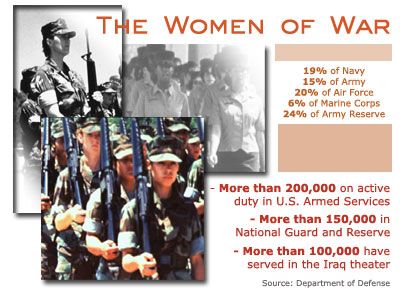
According to the Department of Defense (DoD), 11% of those serving in Operation Enduring Freedom (OEF) and Operation Iraqi Freedom (OIF) are women. Officially, they are restricted to non-combat roles; however, in wars such as that being waged in Iraq, there are no front lines. Danger lurks at every turn.

Find out how they're faring. More...


And for the women who've served (or support a family member who's served), this news from Military.com's Veteran's Report:
The Specialized Outpatient/Post Traumatic Stress Disorder treatment program of the VA Black Hills Health Care System is hosting its semi-annual Women's Retreat April 28-30, 2006 at the Fort Meade VA Medical Center, two miles east of Sturgis. The program is intended for women veterans (all eras) and collaterals (wives, significant others, mothers, etc.) of male veterans traumatized by experiences during military service. The weekend retreat begins at 12 Noon on Friday and ends at approximately 1:00 p.m. on Sunday. Those wishing to participate must pre-register by phoning 605.720.7449 or 1-800-743-1070, extension 7449. Prior to registration, a brief telephone screening is required.


 Related Posts

Labels: , , , , , , , ,

DOD Launches Post-Deployment Health Reassessment Program

A new program for our returning troops is being rolled out: the Post-Deployment Health Reassessment. Service members will participate in the health screening three-to six months after arriving home. Click on 'Article Link' below tags for more...

From the DOD's Force Health and Readiness website:
The Post Deployment Health Reassessment program will be implemented on all military installations and will include active duty members as well as the armed services reserve components.

Research indicates that many deployment-related health problems may not arise until three- to six-months after a servicemember returns from deployment. Defense Department officials stated that the program will allow servicemembers and healthcare providers the opportunity to identify potential health issues before they become chronic conditions and treat known health problems before they affect a servicemembers deployment status or career.

The PDHRA also empowers servicemen and women to proactively take charge of their health so that they receive the DoD and Department of Veteran’s Affairs sponsored health services they have earned through their service.

Each member of the Armed forces who has been deployed since September 11, 2001, will have the opportunity to complete the PDHRA and identify and address any post-deployment health concerns they may have.

The following fact sheets [pdf files] are available:

Labels: , , , ,

PTSD Clinical Study: A Call for Therapists, Veterans, and Police

I've been contacted by Psychiatrist Robert M. Roerich, M.D. regarding the need for therapists, veterans, and police officers to participate in a controlled clinical trials study on the effects of senticon (mental imagery) therapy on PTSD.

Click on 'Article Link' below tags for more...

From the Senticon.us website:
Haunting memories, thoughts, or images are found in Post-Traumatic Stress Disorder (PTSD), a major mental health problem affecting millions worldwide. A new clinical trials study by mental imagery researcher Robert Roerich, M.D. seeks to explore the mind’s ability to heal memory of stressful life experiences.

Roerich has coined the term senticon for mental imagery. From the Latin “sentire”, meaning to feel and the Greek “icon”, a symbolic representation, this word encompasses all sensory perception, not just visual. PTSD is a whole body reaction that may include sound, smell, touch, and taste besides visual memory of the original trauma. “What appears to record the original trauma is the presence of strong emotion associated with a life threatening event,” Roerich states.

“The mind captures emotion as a primary reaction to severe stress. That is something no one has to think about beforehand, we feel it. A senticon is produced as a result, which serves a useful purpose in remembering what is threatening us, but can
by itself be painful over time if it persists in people who develop PTSD.”

“PTSD is a normal reaction to an abnormal situation. Many people will not seek professional help because of the fear of being perceived as weak or psychotic. Only 5% of people see a psychiatrist out of fear of doing so, seeking instead to confide in friends, loved ones, or their family doctor.”

Roerich’s clinical trials study seeks police officers and veterans who are in therapy for PTSD. A new mental imagery treatment, Senticon Therapy, is being compared to whatever therapy the patient is receiving, with pre and post treatment testing to gauge severity of PTSD.

Protocal and eligibility information. Interested parties may contact:

Robert M. Roerich, M.D.
820 North Fourth Street, Suite 2
Steubenville, Ohio 43952
Phone: 740-283-4520
Fax: 740-283-3010

E-mail: roerich@senticon.us

Labels: , , , , ,

15 Year Anniversary of Start of first Gulf War, Desert Storm


15 years ago today Desert Storm was launched. It ended 100 hours later -- on February 27, 1991. Currrent Gulf War (Operation Iraqi Freedom): 25, 700+ hours and counting...

Click on 'Article Link' below tags for more...


Related Note: Zogby International, in conjunction with Le Moyne College, has just completed a first-ever opinion poll of our combat troops serving in Iraq. The results are absolutely stunning.

This past Thursday, February 23rd, was the 15th anniversary of the start of the first Gulf War's ground war: Desert Storm. It lasted, incredibly, from start to finish 100 hours. We celebrate the end of that war tomorrow.

March 19th will be the 3rd anniversary of the start of the second Gulf War: Operation Iraqi Freedom. Although it was said that we destroyed 80% of the Iraqi army in 1991, OIF has now run 25,800+ hours and counting. We don't know when we'll be able to celebrate the end of this war. As we pay our respects to those who served, those who died, those who suffered - and suffer still - a review of the two wars is in order. Though facts and figures and numbers and stats are sterile and dry for some, they no less have a tale to tell...

DS = Desert Storm (February 23, 1991 - February 27, 1991)
OIF = Operation Iraqi Freedom (March 19, 2003 - ?)

  • DS: # of coalition member countries: 34
  • OIF: # of coalition member countries: 48 (at least 16 no longer participating)

  • DS: # of US Troops at start of war: 500,000+
  • OIF: # of US Troops at start of war: 240,000 (125,000 of that on the ground)

  • OIF: # of US Troops currently deployed: 157,000

  • DS: # of non-US coalition forces at start of war: 160,000+
  • OIF:# of non-US coalition forces at start of war: 49,4000+ (of this 26,000 were British ground forces)

  • DS: Total # of US Troops who served: 696,661
  • OIF: Total # of US Troops who served: 360,000 (ground), 1,000,000 total [see note]

From Merriam Webster dictionary:

"Casualty: a military person lost through death, wounds, injury, sickness, internment, or capture or through being missing in action."


From Sourcewatch.org: Both the Pentagon and many media reports exclude wounded from their "casualty statistics". They may refer to some wounded soldiers, but then don't have a tally for them. In addition, soldiers injured in "non-hostile" circumstances aren't tallied either. Non-DOD US Government employees, e.g., State Department, aren't tallied either.


  • DS: # of US killed in action casualties: 148 combat, 145 nonbattle
  • OIF: # of US killed in action casualties: 2290+ [98% male. 89% non-officers; 76% active duty, 15% National Guard; 74% white, 10% African-American, 11% Latino. 22% killed by non-hostile causes. 52% of US casualties were under 25 years old. 69% were from the US Army.]

  • DS: # of US wounded in action: 467 WIA
  • OIF: # of US wounded in action: 16,742+ [20% of which are serious brain or spinal injuries (total excludes psychological injuries); 30% of US troops develop serious mental health problems within 3 to 4 months of returning home]

In the Persian Gulf War, about three troops were wounded in action for every fatality. In Iraq, about seven are being wounded for every one killed. - Alan Bavley in New technology and medical practices save lives in Iraq. Knight Ridder Newspapers, 17 Dec 2003.


  • DS: # of US missing in action: 37 MIA
  • OIF: # of US missing in action: 8 (all rescued)


  • DS: # of French casualties: 2
  • OIF: # of French casualties: 0
  • OIF: # of Non-US/Non-British casualties: 103

  • DS: # of Allied Arab casualties: 39
  • OIF: # of Allied Arab casualties: 0


  • DS: # of Iraqi POWs held by coalition: 80,000
  • OIF: # of Iraqi POWs held by coalition: 13,000+ (as of 9/2005)

"Iraq went from the fourth-largest army in the world to the second-largest army in Iraq in 100 hours." - Lieutenant General Tom Kelly on Desert Storm

  • DS: # of Allied combat air sorties flown: 116,000+
  • OIF: # of combat air sorties flown (using 1,801 aircraft): 20,753 (initial invasion using 18,467 smart bombs and missiles; 9,251 dumb bombs; 153 air launched cruise missiles; 98 gps/laser-guided bombs; 408 anti-radar missiles; 908 guided cluster bombs; and other missiles)

  • DS: # coalition aircraft losses: 75 (63 US/12 Allied)
  • OIF: # coalition aircraft losses: 105

The oil revenues of that country could bring between $50 and $100 billion over the course of the next two or three years. Now, there are a lot of claims on that money, but...we are dealing with a country that can really finance its own reconstruction, and relatively soon. -- Former Deputy Secretary of Defense, Paul Wolfowitz, testimony to the US House Appropriations Committee, March 27, 2003


  • DS: Portion of war cost financed by non-US sources: $53 billion (DOD)
  • OIF: Portion of war cost financed by non-US sources: (looking for figure)

  • DS: Total cost of war financed by Gulf States: $36 billion
  • OIF: Total cost of war financed by Gulf States: (looking for figure...is this 0?)

  • DS: Total cost of war financed by Germany and Japan: $16 billion
  • OIF: Total cost of war financed by Germany and Japan: (looking for figure)

According to the Department of Defense, by 1999, the military revealed of the Gulf War:

  • As many as 100,000 U.S. troops were exposed to repeated low-levels of chemical warfare agents, including sarin, cyclosarin, and mustard gases;

  • More than 250,000 received the investigational new drug pyridostigmine bromide (PB pills) the Pentagon "cannot rule out" as linked to Gulf War illnesses;

  • 8,000 received the investigational new botulinum toxoid (Bot Tox) vaccine;

  • 150,000 received the hotly debated anthrax vaccine;

  • 436,000 entered into or lived for months within areas contaminated by more than 315 tons of depleted uranium radioactive toxic waste possibly laced with trace amounts of highly radioactive Plutonium and Neptunium, almost all without any awareness, training, protective equipment, or medical evaluations; and

  • Hundreds of thousands lived outdoors for months near more than 700 burning oil well fires belching fumes and particulate matter without any protective equipment.

  • Each of these exposures took place while troops were either engaged in combat, serving in a war zone, or stationed in the volatile region for a number of months.

  • DS: # Separated from service, eligible for VA benefits:504,047 (as of 3/01)
  • OIF: # Separated from service, eligible for VA benefits: 166,334 (OEF figures included, as of 4/2005)

  • DS: # Sought medical care at the VA:263,000 (as of 3/01)
  • OIF: # Sought medical care at the VA: 120,000

  • DS: % Filed claims against the VA for service-related medical disabilities:36% (as of 3/01)
  • OIF: % Filed claims against the VA for service-related medical disabilities: 16% (as of 4/2005)

  • DS: # Filed claims who are considered disabled:149,094 (as of 3/01, with 13,902 still pending at the time)
  • OIF: # Listed as WIA/not RTD (Wounded in Action/Not Returned to Duty): 7,529
  • OIF: # of Seriously wounded who require amputations: 6%

  • DS: # Who've died following combat:9,600 (as of 3/01)
  • OIF: # Who've died following combat: (undetermined)

  • DS: # of Potential `reproductive toxicants' soldiers were exposed to:21 (GAO)
  • OIF: # Returned from combat showing symptoms of mental health disorder: 40,000

  • DS: # of Veteran children born with serious congenital defects or serious illness:67% (Dept. of Veterans Affairs)
  • OIF: # of Vets already homeless: 500


 Related Posts

Labels: , , , ,

Wednesday, February 22, 2006

Who's the Government Helping? Not Oak Ridge, TN Vets.

Another inspiring (yet frustrating) local story has hit the wires this afternoon. We can add it to the fine job local media outlets are doing covering the PTSD issue.

Click on 'Article Link' below tags for more...

From The Oak Ridger (Oak Ridge, TN):
Volunteer workers are moving dirt and raising funds, hoping to complete by July a $100,000 meeting hall and claims benefit center for disabled veterans in Morgan, Anderson and Roane counties.

The Disabled American Veterans, Tri-County Chapter 26, broke ground last spring on the 6,000 square-foot building on 13 acres off Kingston Avenue, just past Oliver Springs High School.

By last week, the workers, mostly volunteers, had cleared and moved trees, installed drains on the former swampland, and laid gravel where they hope to pour the building's six-inch concrete slab, possibly this week. On Thursday afternoon, four men were at the site, operating an assortment of construction equipment, including bulldozers and long-bed dump trucks.

"It's been a tremendous amount of work," said John Lambert, senior vice commander of DAV Tri-County Chapter 26, which has about 400 members. So far, Anderson County officials have donated $20,000 for the new DAV building, Anderson County Mayor Rex Lynch said. Morgan County officials have made a commitment to contribute, although they have not said how much or when, Lambert said.

The DAV chapter is out to help the area's Knoxville-based National Guard 278th Regimental Combat Team who are returning home with PTSD and other needs.
"We've got a major group coming back right now that our government is turning their backs on," [Lee] Cantrell[, the chapter's service officer,] said. "We need to take care of these troops when they come home."

Lambert said disabled veterans are not getting enough help from county, state and federal officials. In some cases, the disabled Vietnam veteran said, they are not even aware they are eligible for benefits. The new DAV building will be used to help process claims with the U.S. Department of Veterans Affairs, Lambert said. ..

Like Cantrell, Lambert said troops returning from war zones like Iraq and Afghanistan are struggling with PTSD, even as veterans of past wars continue to deal with it. "There's a lot of that coming out now," Lambert said. "That's one of the reasons we need this building." Lambert said being around others should help returning troops deal with the "tremendous change" of leaving a war zone.

"It's a tremendous mental stress," he said. "If you've never experienced it, it's hard to explain."

Can someone please remind me why it is that volunteers and local communities with no help from federal, state, and little from local governments are having to build a meeting hall and claims benefit center for our disabled veterans? Although admirable to say the least from these fine DAV individuals, why on earth is our government not doing this themselves?

Please consider supporting the work of this group:
Though they have had help [$20,000 of the needed $100,000] from county officials, as well as Oliver Springs officials, DAV officials say they are in "desperate need" of donations.

Those interested in helping can send tax-deductible contributions to the non-profit DAV at: Building Fund, Disabled American Veterans, Tri-County Chapter 26, P.O. Box 533, Oliver Springs, TN, 37840.

Also, interested parties can call:
  • Lambert at (865) 435-0925
  • Cantrell at (865) 882-3838
  • Adjutant/Treasurer Elbert "Red" Strickland at (865) 435-1660
  • Commander Fred Jackson at (856) 789-4525
The men said they are willing to do what they can for veterans. "We're doing what we're supposed to do - help," Lambert said. "If there's a veteran out there that needs help, I'm going to help him," Cantrell said.

A tip of the hat to these wonderful indviduals.

Labels: , , , , , , ,

GI Bill Delays Hamper Education Payments

From the Philadelphia Enquirer:
A surge in veterans using the GI Bill to pay for college is increasing delays for students in getting their money from the Department of Veterans Affairs.

For students attending colleges in the central United States, it has been taking nearly eight weeks on average for a first-time applicant to start receiving VA college funds. That is more than twice as long as it it supposed to take, according to the VA's standards.

"For some of these VA guys, that's all they live on when they're in school," said Rowdy Pyle, financial aid counselor at Ozarks Technical Community College in Springfield, Mo., where about 30 students have raised concerns about delays. "They're getting a little worried when they hear they may not get their check until sometime in March."

This week the VA began taking what it called "extraordinary measures" to reduce the backlog at its St. Louis claims-processing center, including diverting all incoming calls to an office in Oklahoma for two weeks to free 20 employees to process claims. St. Louis is the slowest of the VA's four education claims-processing centers. ...

Nationwide, more than 118,000 VA education claims were waiting to be processed as of Feb. 4. Students in 16 central states have been hit with the greatest delays because of an influx of incoming claims and backlogs at the St. Louis Regional Processing Center.

Having problems, too? Contact your school's benefits counselor or the VA at 1-800-827-1000. Information and applications.

Click on 'Article Link' below tags for related posts...


Related Posts

Labels: , , , ,

Washington's Birthday: Happy 274th, George!

As Mankind becomes more liberal, they will be more apt to allow that all those who conduct themselves as worthy members of the community are equally entitled to the protections of civil government. I hope ever to see America among the foremost nations of justice and liberality. - George Washington

Labels:

Moving a Nation to Care: Latest News

Latest news on Ilona Meagher's Moving a Nation to Care: Post-Traumatic Stress Disorder and America's Returning Troops.

Click on 'Article Link' below tags for full list...

Javascript must be enabled to view this page properly.


Related Posts

Labels:

PTSD: Veterans Administration Definition

Knowledge is power. And so, I'll be sharing a variety of offical definitions for post-traumatic stress disorder [PTSD] with you. The first one up: the Veterans Administration's version.

Click on 'Article Link' below tags for more...

The following is taken from the most useful Military Veterans PTSD Reference Manual.

01-07. Department of Veterans Affairs Definition, The Short Version. The VA Home Page on the Internet says:

In order to establish service connection for PTSD, the evidence must establish that during active duty a veteran was subjected to a stressor or stressors that would cause characteristic symptoms in almost anyone. Evidence of combat or having been a prisoner of war may be accepted as conclusive evidence of a stressor incurred during active duty. Evidence of combat includes receipt of the Purple Heart, the CIB, or other similar citation. The medical evidence must establish a clear diagnosis of PTSD and must link the current symptoms to the claimed stressor. (www.va.gov/benefits/ptsdwhat.htm)

01-08. Department of Veterans Affairs (VA) Definition, The Technical Versions. The following, issued by the Department of Veterans Affairs (VA) in the Code of Federal Regulation (CFR), part 38, offers the "official" definition you will be most concerned with:

a. "Post-Traumatic Stress Disorder. 3.304 (f) Service connection for post-traumatic stress disorder requires medical evidence establishing a clear diagnosis of the condition, credible supporting evidence that the claimed inservice stressor actually occurred, and a link, established by medical evidence, between current symptomatology and the claimed inservice stressor. If the claimed stressor is related to combat, service department evidence that the veteran engaged in combat or that the veteran was awarded the Purple Heart, Combat Infantryman Badge, or similar combat citation will be accepted, in the absence of evidence to the contrary, as conclusive evidence of the claimed inservice stressor. Additionally, if the claimed stressor is related to the claimant having been a prisoner-of-war, prisoner-of-war experience which satisfies the requirements of 3.1(y) of this part will be accepted, in the absence of evidence to the contrary, as conclusive evidence of the claimed inservice stressor."

Much, much more brimming over in the Military Veterans PTSD Reference Manual. Go...

Labels: , , ,

The President's Budget: Through the Veteran Lens

Let's get right down to it.

First off some good news for our troops: if the President has his way, they'll be getting a 2.2% raise. That translates to $1,188 per year for an Army captain. It doesn't quite keep up with inflation, but an increase is an increase.


Click on 'Article Link' below tags for more...

Although the President's $2.77 trillion budget (VA portion: $80.6 billion) would add about $3 billion in real appropriations for veterans health care over that of last year's, it "relies on $1.1 billion in cost-saving 'efficiencies' -- the subject of a Government Accountability Office report released earlier in the month that criticized past VA health-care projections from the president's Office of Management and Budget."

With projections of 109,000 new VA patients entering the system (from the Iraq and Afghanistan theaters), the American Legion says the current budget is more realistic than that seen in 2005:

"The under-estimated number of VA patients from the ongoing war contributed mightily to the $1.5 billion budget shortfall for VA health care in 2005," [National Commander Thomas L.] Bock said. "This appears to address that." He also applauded a requested increase in mental-health-care funding, from $2.8 billion to $3.2 billion.

So, the news within the budget's 2,400 pages isn't entirely bad.

But with veterans returning suffering with post-traumatic stress disorder [PTSD], an increase in mental health funding is required and is better than what we find in the rest of Bush's budget plans.

The President wishes to:

We'll have to keep our attention on this as it moves forward. Let's make sure our returning troops and veterans have the resources they need.


 Related Posts

Labels: , , , , , , , , , ,

Tuesday, February 21, 2006

Local Media Outlets Cover PTSD Stories

When it comes to PTSD education, the locals get it right. They may not have the big budgets the major media outlets do, but they do have one important resource: returning troops who have a story to tell.


Click on 'Article Link' below tags for more...

Here's a quick run-down of a few local outlets doing their best to inform their communities on the effects of combat-related PTSD:

Keep it up, locals. You show the big boys how reporting is really done!

Labels: , , ,

A Soldier's Voice: Iraq Vet Tells Of His Struggle with PTSD

NPR's All Things Considered program broadcast the recollections of one soldier coping with PTSD. Jesus Bocanegra spent 4 1/2 years in the Army and 1 year in Iraq as a cavalry scout. "You know, it's hard to come from a combat environment to a civilized environment," he says. He was having trouble sleeping and processing his emotions, so he sought counseling through the VA.

Listen to his experience here.

Labels: , , , , , , , ,

Poetry Therapy for the Veteran Soul

I'd like to thank leftvet for sharing this poem yesterday:
To My Lover

I lie awake
Rigid, like a body stiffened by death
Staring
You knuckle your eyes and yawn
Are you all right?

Woman, do not ask me for my nightmares
To tender away
They slither from a black hole in my conscience
You cannot fill the hole with love
It is bottomless

I fumble for my mask
It is nothing
Sleep

If you're a writer and a veteran, I've got a resource to share that will help you cultivate and celebrate your inner author.

Click on 'Article Link' below tags for more...

Writing to process combat experiences is a highly valuable tool in coping with PTSD. The Hospitalized Veterans Writing Project (HVWP) offers "a therapeutic writing program designed to acknowledge veterans’ experiences and build self-esteem through creative expression and possible publication. Veterans are encouraged to submit their manuscripts (prose, poetry and artwork) for national publication in Veterans' Voices Veterans’ Voices, the only publication dedicated solely to veterans’ writings."


 Related Posts

Labels: , ,

Doonesbury: B.D.'s Counseling Continues


If you're a Doonesbury fan, you've probably been following the saga of B.D. He's this award-winning comic strip's hard-nosed wounded-in-Fallujah Iraq combat vet. He left a leg in Iraq and came home with PTSD.

Click on 'Article Link' below tags for more...

This week, creator Gary Trudeau picks the storyline back up again as we find B.D. feeling more and more comfortable with his Vet Center counselor, Elias. That's a big accomplishment; because -- just like most rough and tumble soldiers -- he wasn't too keen on having to ask for anyone's help. If you'd like a refresher, I've written twice before on B.D.'s post-deployment trials and tribulations:

  • B.D. scopes out his local vet center ('reconnoiters' is more like it) but doesn't want to make an appointment.
  • B.D. finally does a bit more than just kick the tires in his first counseling session.
Get your Doonesbury fix in this week. It's a good one...

Labels: , ,

Monday, February 20, 2006

DefenseWatch: Post-Deployment Stressful for Many Veterans

Currently found online at Military.com, the following excerpts are taken from DefenseWatch, the official magazine for Soldiers For The Truth (SFTT).

Click on 'Article Link' below tags for more...

In the interest of education, article quoted from extensively.

Soldiers who fought on the front lines during World War II often returned home by ship, giving them two weeks to decompress and reflect upon their combat experience before they returned to their family and friends. Thanks to the speed of modern air travel, today's combat veterans often don't have that time to readjust.

"Now, they are in a war zone one day and they are back here the next day," said, Carolee Nisbet, a public affairs specialist at Fort Dix, N.J., one of several military bases where National Guard and Reserve soldiers out-process after serving in Iraq and Afghanistan.

"When you were in Baghdad you were going all the time, all day and half the night, the fatigue catches up with you. There are times when I've had problems concentrating, I'll have the 1000-mile stare," said Joseph Sharpe, a reservist who recently returned from a year-long deployment to Baghdad.

For soldiers who are injured in battle and sent home to recover, the need for emotional support is obvious. But tens of thousands of soldiers returning home appear physically the same as they did when they left, but emotionally are very different people. "I felt like I wasn't the same person I was when I left and I didn't like it," said Liz Kamps, a National Guard soldier, explaining why she sought counseling after returning from Iraq. ...

Of the service members Hoge identified as having a mental disorder, less than half sought help. Service members reported a fear of being stigmatized for being unable to deal with their problems on their own.

Carroll Williams, a Vietnam veteran who promotes veterans programs at the American Legion, urges soldiers returning from combat to get help. "I would tell them, if they have concerns, to share them with other people, talk about it, and if you find yourself falling by the wayside, seek professional help," said Williams.

Studies of Vietnam veterans, which were not conducted until 10 to 20 years after the war, reported 15 percent of male soldiers still had symptoms of PTSD years later and 30 percent reported having symptoms at some point after the war.

The lack of sleep, high levels of stress, long deployments, and 24-hour-a-day operations are very stressful on a soldier, even those not in regular firefights. The mental strain of living in a combat environment, referred to as combat stress, doesn't immediately subside when a soldier returns home. Instead, it is often compounded with the realization that an entire year has gone by and a lot has changed while the soldier was deployed.

"It has taken a while to re-adjust," said Sharpe, the returned reservist. "You're still thinking of the way things were when you left, and you come back and realize the people have moved on, you know, it's not the same. Sometimes, you wonder where your place is." ...

Active-duty soldiers returning from combat go through a seven-day re-integration program immediately after they arrive at their home station. During this period, soldiers work a half-day schedule where they can set up medical appointments, take care of finances, and receive training on dealing with the stresses they may be facing trying to adjust to life at home. This schedule also enables the commanders to observe their soldiers for three or four hours a day and identify soldiers who are having difficulty adjusting or who show signs of depression.

National Guard and Reservists receive the same classes, but because in many instances the demobilization stations are often not in their home state, a number of them are unable to go home at night and ease into family life.

Deployments are also very stressful on the families who've had to create a daily routine without their deployed soldier. During the deployment, a soldier's spouse takes on additional responsibilities in the home such as finances, household repairs, disciplining of children, and other day-to-day activities. Some spouses feel overwhelmed by the responsibility, causing anxiety, stress and occasionally, substance abuse. Others thrive on the additional responsibility and are not eager to relinquish it when the deployed soldier returns home, experts say.

Even though family members are excited to see their loved one home safe, reunions can often be awkward and tense as everyone adjusts to the changed family dynamics. Having the service member home 24 hours a day after being gone for 12 months can be extremely stressful even in the most loving families. That is why counselors say that having three or four hours apart at the outset helps with the adjustment period. Family members are also encouraged to attend classes offered by the unit's Family Support Groups to prepare them for the adjustments that will need to be made when the soldier returns home, Nisbet said.

National Guard and Reserve soldiers face one challenge their active-duty comrades usually avoid: When part-time soldiers do return home, they may have little interaction with other soldiers and sometimes feel like they are the only ones going through the emotional adjustments.

Single soldiers face an additional strain because they have no set support structure, said David Keith, the director of military service at Military OneSource, an independent agency contracted by the Department of Defense to provide counseling and other assistance to soldiers and their families. Single soldiers, especially those in the Guard or reserves, who may not return to civilian jobs right away, may have little social interaction with others, feeling that they no longer fit in.

"I felt a bit isolated, like the rest of the world around me went on with their lives the past year," said Kamps. "I felt like I was sent to another planet and lost a year of my life." Isolation, loneliness, and culture shock are common experiences for single soldiers after extended deployments. ...

The 24-hour news cycle can put an additional strain on soldiers and their families both during and after the deployment. Soldiers who want to move on are faced with images of Iraq and soldiers dying everyday on television.

"One of the biggest challenges is the fact that news coverage is live," said Keith, the One Source director. "Family members seeing events unfold are often worried that their loved one could be involved in the latest set of attacks. With instant e-mail and cell phones, soldiers and their families can be in constant communication, which can lead to additional stress and expectations, he added. ...

Most of the symptoms of combat stress that soldiers experience are emotional responses, but nearly everyone interviewed shared the same physical response to loud noises.

"We missed getting blown up a couple of times, so when I hear a loud noise I jump," said Sharpe, explaining that his compound in the Green Zone was bombed regularly. "We had one [mortar round] that landed right outside our area, the building shook and all the windows broke," he added, recounting his experience in Baghdad. Davis thought that he was doing okay until the Fourth of July. "I couldn't listen to the fireworks," Davis said. The repetitive explosions were overwhelming and Davis said he had to leave the festivities.

In Iraq, the explosions became so constant that many soldiers were eventually conditioned to ignore them unless they were extremely close. Kamps experienced explosions on a weekly and sometimes daily basis. "I became used to hearing the explosions to the point which it didn't bother me as much. However, I have had a great deal of trouble dealing with loud noises since returning."

Most soldiers with minor combat stress will feel more "normal" over time, experts say. But for soldiers and family members who need counseling, the Department of Defense has contracted with Military OneSource to provide counseling. Soldiers and family members can call a toll-free number and speak with a councilor, 24 hours a day, or schedule up to six free counseling sessions with a social worker in their community through the program. (The Military OneSource toll-free number is 1-800-342-9647 in the United States, and for international calls, toll-free at 1-800-3429-6477.)

The soldiers interviewed all expressed confidence that things would get easier but added they realize that their long deployments have had an impact on their mental health. "It interrupts your life," Davis said.

Read the entire article here.


 Related Posts

Labels: , , , , , , , ,

PTSD: The Hidden War, The Hidden Enemy

We are fighting a hidden war with a hidden enemy.

Our leaders and most media outlets refuse to show the full face of this war. We're barely able to make out the form of our veiled enemy. Or even that of our supposed friends. We see no coffins. We see none of the wounded. We're shown none of the grief taking place at military bases across the country as loved ones return from combat in various states of disrepair.

Yet, another enemy lurks just beyond our gaze.

Click on 'Article Link' below tags for more...

It's a brutally personal, deeply buried adversary. You and I may know very little about its existence, but many of our returning combat veterans are intimately acquainted with this interloper. Its name is post-traumatic stress disorder [PTSD], and currently at least 19,000 OEF and OIF soldiers have been diagnosed with this debilitating brain condition which overloads the nervous system.

GLORY AND REALITY

From the advent of war, the warrior has been a mythic figure in the public realm.

Honored and glorified, a nation's soldiers are larger than life (and often even larger in death). Think WWI's Daniel ("Dan") Daly. Or WWII's Audie Murphy. Even the Hollywood version of `soldier' (in the form of John Wayne or Gregory Peck) reinforces for us what a real war hero should look and act like. These stoic protectors and heroic battles are given a special place in the national consciousness - especially during a time of war. Unfortunately, as noble a cause these notions may (or may not) serve, a few important details are conveniently discarded from view.

War is hell.

Pulled into battle by geopolitical forces much larger than themselves, the cross-section of soldiers in our military is as varied as that found in the general population. Each individual, though highly trained, is no less mortal or human. The diverse personal experiences they bring to the military; their physical nature; their genetic make-up, and their psychological strengths and weaknesses - all of these characteristics influence a soldier's wartime experience creating unique responses and outcomes for each man or woman serving in uniform.

The Department of Veterans Affairs Iraq War Clinician Guide [Chap. III, p.31] states:
"[O]ver time, soldiers develop a belief system (schema) about themselves, their role in the military, the military culture, etc. War can be traumatizing not only because of specific terrorizing or grotesque war-zone experiences but also due to dashed or painfully shattered expectations and beliefs about perceived coping capabilities, military identity, and so forth. As a result, soldiers who present for care in VA Medical Centers may be disillusioned in one way or another."

The answer to this is in proper post-deployment attention and care.  And good medical care doesn't come for free. A properly funded military health care budget should be a top priority of our government; yet, with a federal budget in disarray and an administration that continues to talk the talk -- but not walk the walk -- ensuring our veterans receive the very best care upon their return home becomes much more elusive. And much more scandalous.

We must take this issue on ourselves, then. We must become more vocal. We must be the defenders of our nation's defenders. We, the People must do right by our troops.

Senator John Kerry recently had this to say regarding this issue on Daily Kos:
Of all the things I've thought most about over the last year since the election, what's most disgusting to me is how ignored and forgotten and discarded the people I fought for have been by Washington. I'd love to have a debate about whether patriotism is giving speeches about veterans and then having a 1.2 billion dollar hole in our veterans budget, or whether it's actually going out and providing for veterans who come home from a war with all kinds of scars from the battlefield, visible or invisible.

There's a lot more we need to do, but it will only happen if we raise hell about it and organize around it. I intoduced a Military Family's Bill of Rights as legislation in this Congress and I've been able -- piece meal -- to pass parts of it to do things like improve housing benefits and death benefits for military families. But talking about PTSD and funding treatment programs and counseling programs is something Washington remains pathetically incompetent at really getting done. It requires pressure -- real pressure -- to do it. Please follow what I'm doing on it, and what people like Rep Lane Evans and others are doing on it because we really need your voice on it. 2006 will be a moment of accountability on this issue if we make it so, and we can especially with so many Iraq War vets running as Democrats.

by John Kerry on Sat Jan 21, 2006 at 12:38:56 PM CST

Our brave fighting men and women give their all to the nation they serve. They come from Nebraska, and Pennsylvania, New Mexico, and New York. All 50 states -- as well as from foreign shores -- to fight as one in the greatest military force on earth. After the warrior completes his mission, however, it's easy for them to fade out of our view. There are no more parades. No more speeches on bravery and sacrifice given in their honor. The task of folding back into society and home life is solely their own. Yet, veterans suffering from post-traumatic stress disorder are still in battle, though the battlefield is no longer visible to us.

As veterans from previous wars have borne out, those suffering from shell shock or PTSD end up fighting a private, personal war on their return to us. The consequences are enormous, as the effect is felt in entire families and communities across the country. The PTSD battle may be private and personal, but it should never be solitary. A nation has a responsibility of supporting its troops - be they actively fighting overseas in our name, or returned to us to live out their days in the peace and freedom they so valiantly fought to preserve.

History has shown societies may be unkind to their returning veterans. Often, their sacrifices are too quickly forgotten. Their needs not fully met. Let's refuse to make that unpardonable mistake.


WHAT CAN YOU DO?

Representative Lane Evans and Senator John Kerry have introduced legislation favorable (yet slow-moving) to help with PTSD and veterans' health care in general. Please consider contacting their offices (click on their names) and thank them. And consider asking your own district/state leaders to support their work.

Labels: , , , , , , , , , , ,

Call for Veterans: Join in on National Art Project

Columbia University, NYC professors and fine artists Eric Chan and Heather Schatz invite all military personnel to participate in a collective art project honoring our American Troops. All service personnel – both stateside and abroad – are encouraged to participate in this unique opportunity via the project website. Ongoing through February 28, 2006.

Are you a vet looking for more activities and events? Check out Returning Veteran News + Events - Feb2006. Let me know if you have any events you'd like included in next month's issue!

Click on 'Article Link' below tags for related posts...


 Related Posts

Labels:

Clinician Guide: The Stress of Preparing, Journeying to Battle

This is the first in a series of small chunks of information I'll be sharing with you from time to time to help arm yourself with as much combat PTSD knowledge as possible.

Click on 'Article Link' below tags for more...

You can find this passage in the Executive Summary of the Department of Veterans Affairs Iraq War Clinician Guide [p.7-8]:

During missions such as Operation Iraqi Freedom there are multiple stages and types of conflict. Throughout an operation, these stages can overlap depending on the location and mission of assigned forces. Each form of conflict may contribute to different forms or expressions of stress. It is therefore valuable to determine precisely the nature and duration of exposures for returning troops.

Pre-deployment phase. During pre-deployment phase military members face uncertainty and worry. Deployment orders change routinely, sometimes with multiple revisions of deadlines and locations. Service members worry about the safety of themselves as well as their family members. They struggle to ensure that finances, healthcare, childcare, and pets all will be managed in their abscence. In the current climate, deploying service members may have additional concerns about terrorist activities in the United States during the period of deployment. Pre-deployment can be extremely stressful on single parents, reserve forces, and military members who have not previously deployed. It is often difficult during this phase to determine the difference between reasonable anxiety and an excessive reaction or the development of recurrence of psychiatric illness.

Deployment phase. The deployment phase carries many additional pressures. The stress of traditional, high-intensity warefare leads to fear and uncertainty. Operational plans change constantly; knowledge of enemy capabilities is unclear; equipment breaks down; and logistical supply lines are uncertain. Combatants face the threat of their own death or injury and also witness the death, wounding, and disfigurement of their companions, enemy forces, and civilians. During this heightened physiologic state, the high level of emotion, and the intensity of sensory exposure may lead to heightened levels of arousal, attempts to avoid emotion, and intrusive recollections of events. The novelty of the situation may also contribute to symptoms of dissociation. The severity and duration of symptoms will vary among individuals. This phase of combat is highly conducive to acute stress disorder and posttraumatic stress disorder in military members.

Labels: , , , , , , , , , , , ,

Sunday, February 19, 2006

Our First Week Comes to a Close


Thanks to every single one of you for making PTSD Combat's first week a successful one. We had 273 visitors kind enough to give the place a once-over. Please keep checking back as I improve and add to the site in the coming weeks.

Week #2, here we come!

Labels:

Thousand Yard Stare? Who, Cheney?

In wrapping up the week's big media event, Joe Klein of Time magazine (online edition) muses over VP Dick Cheney's state of mind following last weekend's ill-fated quail-hunting trip.

Not pretty. Click on 'Article Link' below tags for more...

Cheney's Thousand-Yard Stare: Did the Vice President's behavior exhibit a disdain for accountability or a reaction to emotional trauma? compares the VP to a battle-weary combat veteran:
He seemed stunned, uncertain for once. And the haunted look in his eyes reminded me of what soldiers in Vietnam used to call the Thousand-Yard Stare—the paralytic shock that comes from seeing the impact that even low-caliber weaponry can have on human flesh. ...[Y]es, the Vice President's behavior did seem to be another manifestation of his well-known disdain for accountability. But Cheney's stubborn diffidence may have been something else entirely: a consequence of the incoherence and confusion that come with emotional trauma, as well as an understandable desire to protect oneself and one's friends from the ravening horde at a moment of personal anguish.

The possibility of vice-presidential anguish was barely mentioned by most commentators at first. Cheney is a tough customer; Oprahfied "sharing" isn't his way. But then, there he was, with that haunted look in his Fox News interview, saying, "[T]he image of him falling is something I'll never be able to get out of my mind. I fired, and there's Harry falling ..." Hunting had given him "great pleasure" in the past, but he wasn't so sure now. In fact, he sounded a lot like the combat veterans I've spoken with over the years, for whom the living nightmare of firing a weapon under questionable circumstances is a constant theme.

So, what do you think? Did Mr. Klein get it right or go too far? Feel free and email Time your answer.

Labels: , , ,

Veterans: Job Search Resources

Now that you're home and transitioning back into civilian life, you're probably preparing to dust off your resume. Do I hear a groan? Well, I've got some online resources to help ease the pain.


Click on 'Article Link' below tags for more...

The Uniformed Services Benefit Association (USBA) and TAO Online both work to connect corporations with the military community.

Resources include:

Another resource, VetJobs, "is the leading Internet niche job board for reaching the 14 million military veterans currently in the work force, as well as the 250 thousand active duty military personnel who transition each year, and their family members." They have a good selection of job search articles.

More solid veteran job search resources:

Nothing stopping you now. Good luck!


 Related Posts

Labels: ,

20 Years Old and Destroyed By War and PTSD

Well, the latest PTSD incident (which occurred this past Thursday) has been added to the PTSD Timeline project housed at ePluribus Media.

Allow me to introduce you to a 20-year old Army private based out of Fort Hood, TX. His name is Jacob Hounshell. His story will be viewable in the PTSD Timeline tomorrow (it's currently being fact-checked). If the past is any indication, the national media won't spend too much time telling you about the tailspin this young man's life has taken ever since he returned home from a year's deployment in Iraq.

Read his story and then follow me over to Daily Kos and my latest posting to see the breakdown of the 69 other incidents now preparing for this young soldier's arrival...

Labels: , , , , , , , ,

Saturday, February 18, 2006

PTSD Combat Tagroll

Labels:

PTSD Treatment Options - A Quick Overview

Here's a quick overview of a few treatment options presently being used to help PTSD coping mechanisms. You'll find these programs used in military facilities, VA Centers/Hospitals, and civilian treatment centers.

Click on 'Article Link' below tags for more...

Cognitive Behavioral Therapy (CBT):
Not to be used within a month of trauma. Therapists work with you to help change/overcome crippling and/or irrational beliefs and thought processes, such as:
  • survivor guilt
  • self-blame
  • irrational/uncontrollable anger
  • fear
Systematic Desensitization/Exposure Therapy:
Increasing escalation and exposure to things that trigger a traumatic memory in order to desensitize you to it.

Medication:
Drug treatment options include anti-anxiety and anti-depression medications.

Group Therapy:
A way to encourage discussion of traumatic memories and symptoms with others who have been there, too.

Labels: , , , , ,

Insurance Information Institute Study: Employers May Not Be Ready for the Wounded

From Reuters:
Most employers are "unprepared" for the return of wounded veterans of the wars in Afghanistan and Iraq and will have difficulty meeting their needs, according to a study released on Wednesday by the Insurance Information Institute (III).

At least 16,600 U.S. soldiers have been wounded, and many more of the 2 million who may serve in those arenas before the conflicts end could be traumatized, according to Robert Hartwig, chief economist for the III and author of the study. Nearly a third of those troops are reservists and National Guard, who will be going back to their previous jobs. Hartwig said his survey shows that most employers don't understand their needs or the special benefits they're entitled to.

"These soldiers put their lives on the line and deserve the utmost respect," said Hartwig. "But even big companies haven't thought about their obligations to these people." Veterans are entitled to lifelong benefits, including mental health benefits. In addition, there are worker compensation issues for those wounded in battle or accidents, or have been traumatized by being in a war zone.

Wounded veterans are protected against discrimination under the Americans with Disabilities Act (ADA). More than half a billion dollars in fines has been levied on companies since 1992 for their failure to comply with this law.

Click on 'Article Link' below tags for more...

More information from Bankrate.com:

A study by the Insurance Information Institute, or III, reports that the average soldier in Iraq has a 1-in-300 chance of being wounded in action. Department of Defense statistics reveal that nearly 500 personnel are wounded in action in any given month. Extrapolating from these figures, the III study estimates that, absent a significant drawdown of troop strength in the near future, 60,000 to 80,000 troops may ultimately end up wounded.

Government programs and facilities are overwhelmed, and civilian employers and health-care providers also must prepare to deal with wounded and traumatized vets in the years to come.

"While the vast majority of military personnel will enjoy a relatively seamless re-entry to civilian life and employment, following a pattern established by veterans of past conflicts, reintegration of the physically and psychologically injured will likely present unexpected challenges to a generation of employers with no experience in dealing with such large numbers of returning veterans," says Robert Hartwig, author of the III study and the institute's chief economist.

Read the rest of the piece for some solid information on how the military handles injuries and links for veteran legal and financial support and assistance.


 Related Posts

Labels: , , ,

Friday, February 17, 2006

Weekend Australian: PTSD Affects the Entire Family

Australia is said to be one of the trailblazers in PTSD diagnosis and treatment (The Australian Centre for Posttraumatic Mental Health is one especially good resource to check out).

Learn a bit more about what their PTSD research is turning up.

Click on 'Article Link' below tags for more...

This, from The Weekend Australian:

Sons and daughters of Vietnam veterans are three times more likely to commit suicide than those of similar age in the general population (Australian Institute of Health and Welfare 2000, Suicide in Vietnam veterans' children: Supplementary report no.1).

They are also more likely to die of accidental death, experience depression and abuse alcohol or other drugs. Since these alarming figures were discovered by accident during a 1998 Department of Veterans Affairs study into the health of Vietnam veterans (AIHW 1998, Morbidity of Vietnam Veterans, Vol 1), momentum has been building for a wider investigation into the mental and physical health of their children.

A government-funded feasibility study recommending this should be done is about to land on the desk of new Veterans Affairs Minister Bruce Billson ...stressful familial environments could be behind the children's mental health problems, already highlighted by existing research. While many people with mental illness have a genetic predisposition to their condition, veterans were screened for mental illness before they went into the service, making stress a more likely factor in the children's ill health.

"In studies done by clinical psychologists running PTSD clinics for Vietnam veterans, children have reported a high level of dysfunction in families," he says. "When we focused on Agent Orange so much in the past we missed the bigger picture. We are seeing the same sorts of problems in veterans of the Iraq and Gulf Wars, and fighters in World War II are now saying they suffered from the same problems. It is not due to any specific war, it is the generic effect of combat."

The Australian Gulf War Veterans Health Study, conducted in 2003 by researchers at Monash University, supports this view. The research found that Gulf War veterans had a greater risk of PTSD, other anxiety disorders, depression and substance abuse compared to a comparison group – similar problems to those found in Vietnam veterans. This means wide ramifications for the results of a study finding conclusive links between war service and the health of veterans' offspring. The Government could be looking at a major overhaul of the way it deals with returning soldiers. ...

"If we are going to get involved in military activities as a country either in a peacekeeping role or whatever, we have got to realise that the impact of sending young people to war is not just going to be on the person who goes to war," [professor Hedley] Peach [who is advising the Government on the feasibility study] says.

Making sure that we provide support and care for all members of a PTSD family is crucial if we're to ensure a better future for everyone involved.


Related Posts

Labels: , , , , , , , , , ,

Unutterable: For Reagan it Was AIDS. For Bush, PTSD?

How many times has the Bush Administration uttered the phrase 'post-traumatic stress disorder' in speeches or remarks archived at Whitehouse.gov? I did a search this afternoon and found not even one document returned.

Why is a disorder that afflicts tens of thousands of our Iraq and Afghanistan veterans unutterable by this administration? And are Democrats also silent on this issue?

Click on 'Article Link' below tags for more...

To head off any confusion, the question I'm proffering here is: Is PTSD as radioactive to the Bush administration as AIDS was to Reagan's? I'm not comparing the two illnesses with one another.

Since Vice President Dick Cheney is currently the big buzz in news these days, I thought I'd be clever and come up with a post-traumatic stress disorder [PTSD] angle to the story.

As I began my search for that PTSD angle, I found Cheney to be as accommodating to me as he was to the local Texas authorities last weekend. It seems our Vice President, who proclaims to support our troops, has apparently never gone on record uttering the term `post-traumatic stress disorder.'

Even though it is now reported that 40,000 troops have returned from combat showing symptoms of mental health disorder, Cheney's made absolutely no acknowledgement of the problem in any of his speeches or remarks. As a matter of fact, neither has our President:


The Reagan administration had a problem uttering the deadly acronym: AIDS. Do our leaders try to banish that which makes them uncomfortable?

Perhaps I'm not being fair.

Perhaps my opinion of what constitutes authentic support of our troops differs from that held by our Vice President. One look through his speeches and remarks, we quickly learn that he sure does talk a lot about supporting our troops:


No lack of found articles there. So, supporting the troops appears to be as important to him as it is to me. Why then the silence on PTSD? If we advocate for better diagnosis and treatment of PTSD for our troops (along with the funding of the Veterans Administration (VA) to be able to meet its soaring needs), isn't that one way we can show our honest support of them?

Apparently, Dick Cheney doesn't think so.

::

OK, fine. I don't want to beat on a guy who's already down - even if it's Dick Cheney.

Let's take a look at other leading political figures. Are they as silent as our Vice President -- this administration -- is on this issue? Or do others speak out more on PTSD? Maybe we'll find there's an across-the-board silence on this issue -- that should go a ways towards absolving Dick Cheney, won't it?

How about Senator John Kerry. Is he silent on this issue?


Nope. 67 articles found including:

And there are 63 more to choose from. So, John Kerry doesn't seem to have a problem talking about PTSD. Why does Dick Cheney?

::

Now, John Kerry's just one man.

Are there other examples of Democratic officials unafraid of talking about PTSD, too? You bet there are. Feel free and take a look over at ePluribus Media where I've collected a number of choice quotes. One examination of them, and you'll see that the Democratic party walks the walk vs. just talking the talk when it comes to supporting our troops. Because if we're not willing as a nation to support those troops that are hurting the most, then who are we exactly protecting?

Our silence on the plight of our soldiers and marines returning with post-traumatic stress disorder only protects the very people most directly responsible for sending them to the battlefield. They deserve better than silence from our leaders.

So, if Cheney and Bush aren't talking about PTSD, what are they talking about?


1,422 speech and remark results for the search term: Terror.

And that's just Dick Cheney.

Labels: , , , , , , , ,

40,000 OEF and OIF Troops Show Symptoms of Mental Health Disorders

From UPI, Health Business:
Nearly 19,000 veterans of the conflicts in Afghanistan and Iraq were treated for post-traumatic stress between 2002 and 2005 in the administration's network of 160 specialized programs. The VA says it plans for 2006 a $29 million expansion of its post-traumatic stress services for veterans returning from Iraq and Afghanistan.

In addition, 14,000 of the veterans diagnosed with PTSD were also treated for drug dependencies -- although the mix of drugs differs somewhat from the Vietnam era -- and 11,000 were treated for depression. Although all three of these most common problems were present in past wars, the administration has had to adapt its treatments to changing circumstances, Zeiss said.

The veterans of these most recent wars are older, because the military has relied more heavily of National Guard and National Reserve units. About half of the troops are between 20 and 29, and another half are older than 30. Thirteen percent of the veterans receiving treatment are women, higher than in any past conflict.

Read more on the experience of women at war in a recent post of mine, Women of War: Female Combat PTSD.

Labels: , , , , , , , ,

National Salute to Hospitalized Veterans Week, Feb. 12-18

========================================
See 2007 National Salute Week info here
========================================

Well, the week may be winding down, but it's never too late to help a veteran. Here's one way:

From the VA Watchdog website: "Get out this week and visit a veteran in a VA hospital. Take some books or magazines. Take some toiletries. Or...take a Valentine. It's also known as Valentine's for Veterans Week. Maybe sneak in some chocolate with the card." Locate a VA Vet Center near you and ask them how you can help. More Details | Volunteer Sign-up Online

Look for more ways to tangibly support our troops here.

Labels: , , , ,

Thursday, February 16, 2006

Today's Combat PTSD More Acute Than Vietnam

From AP [via the Burlington Free Press]:

U.S. service members returning home from Iraq and Afghanistan are more likely to suffer from post-traumatic stress disorder than soldiers did when they returned from Vietnam, a mental health expert at the veterans hospital said Tuesday.

The problem is more acute for returning National Guard soldiers, most of whom never expected to be sent into sustained combat, and who lack the support available to active duty personnel, said Dr. Andrew Pomerantz, chief of mental health at the Veterans Affairs Medical Center in White River Junction.

"In most wars there are safe places somewhere. In Iraq there are no safe places," Pomerantz said.

Labels: , , , ,

Valuable PTSD Resource: Expert Clinical Guidelines Series

The Journal of Clinical Psychology offers its Expert Clinical Guidelines Series to those seeking to understand PTSD diagnosis and treatment. The guides "present practical clinical recommendations based on a wide survey of expert opinion. ... Each publication includes quantified results of [this] survey on which the recommendations are based, so readers can examine the experts' responses to the questions."

Knowledge is power. Increase yours by downloading:

Labels: , , , , , , ,

British Troop PTSD Stats Revealed

From Reuters:
At least 1,333 British servicemen and women have developed mental health problems after serving in Iraq, the Ministry of Defence said on Thursday, as veterans' groups warned the number could be higher. ...

Of the 1,333 cases, 182 had the symptoms of "post-traumatic stress disorder," 601 of adjustment disorder and 237 of mood disorder. The MoD did not give any details on the remaining soldiers. ...

Shaun Rusling, a veteran of the first Gulf war and vice chairman of the National Gulf Veterans and Family Association, was not surprised by the numbers. "I would imagine they are actually higher, due to soldiers not coming forward due to the fact it would possibly affect their promotion or the ability to stay within the armed forces," he told Reuters. "As a Gulf War One veteran, I had hoped that for any future conflict there would be a better set-up but very sadly ... the same thing is happening now that happened 14 years ago," he said.

Some 6,000 troops reported suffering from an array of illnesses after serving in the first Gulf war. Veterans and their supporters suspected vaccines given to troops or other environmental factors made thousands sick. The government said no direct link was ever established.

Labels: , , ,

Resources at VA's National Center for PTSD

Take a quick look at the column to your right. You'll find a selection of PTSD Resources -- links that are worth a look. Let me introduce you to one organization you're probably already familiar with: The Department of Veterans Affairs.

Their National Center for PTSD website offers:

I'll continue to add more resources as I find them. Let me know if you have any you'd like to share...

Labels: , , ,

Wednesday, February 15, 2006

National Veterans Foundation: A Collection of Troop Stats

Some statistics to share with you, taken from the National Veterans Foundation website. Figures from a wide range of sources offer a broad overview of the modern combat veteran's experience on and off the battlefield.

Click on 'Article Link' below tags for more...

In October of 2005, the VA reported that more than 430,000 U.S. Soldiers have discharged from the military following service in Afghanistan and Iraq. More than 101,000 of have sought help for medical or mental health issues from the VA to date.

  • A 2003 New England Journal of Medicine Study found that 15-17 percent of US Iraq and Afghanistan Veterans were suffering from PTSD, and more than 60% of those showing symptoms were unlikely to seek help due to fears of stigmatization or loss of career advancement opportunities.
  • In November of 2005, The U.S. Bureau of Labor Statistics reported that for the first three quarters of 2005, nearly 15 percent of veterans aged 20-24 are jobless -- three times the national average
  • In 2005, the VA reported that 18% of Afghanistan Veterans, and 20% of Iraq Veterans were suffering from some type of service connected psychological disorder.
  • A 2004 US Army Mental Health Advisory Team Study showed that more than half of all soldiers in Iraq described their unit morale as low, with the National Guard and Reserve forces struggling the most.
  • The VA has seen a tenfold increase in PTSD cases in the last year. According to the VA, more than 23,889 Vets of Iraq and Afganistan have sought help for Mental Health Disorders.
  • According to the Pentagon, since March 2003, 40 US Soldiers and 9 Marines had committed suicide in Iraq. At least 20 soldiers and 23 Marines have committed suicide since returning home.
  • The Miles Foundation reports that calls to their Domestic Violence Hotline for Military Spouses has increased from 50 to 500 per month since the start of the Iraq War.
  • According to U.S. Army data, the number of active-duty soldiers getting divorced has been rising sharply with the deployments to Afghanistan and Iraq. The trend is severest among officers. Last year, 3,325 army officers’ marriages ended in divorce -- up 78% from 2003 the year of the Iraq invasion, and more than 3½ times the number in 2000, before the Afghan operation. For enlisted personnel, the 7,152 divorces last year were 28% more than 2003 and up 53% from 2000 (USA Today, june 8, 2005).


 Related Posts

Labels: , , , , , , , ,

Combat Stressed? Virtual Reality Therapy May Help

From NPR's Day to Day program:
A new, high-tech system designed to treat military veterans suffering from Post-Traumatic Stress Disorder -- or PTSD -- may be familiar to fans of a squad-based combat video game. Using components from the popular game Full Spectrum Warrior, psychologist Skip Rizzo and his colleagues have fashioned a "virtual" world that simulates the sources of combat stress. …

The soldier being treated wears VR goggles and headphones. Using a tablet-based interface, a therapist can activate or remove the sounds of gunshots or the sight of smoke, depending on a patient's reaction. The idea is to re-introduce the patients to the experiences that triggered the trauma, gradually, until the memory no longer incapacitates them.

Click on 'Article Link' below tags for more...

Virtual reality therapy aims to desensitize the combat veteran from traumatic experiences they may still carry around with them once home. Tailored to a generation used to playing video games, this novel form of therapy seems to lesson the stigma and fear associated with asking for help. A clip of this ‘video game’ therapy is at the NPR page.

Click on VIDEO: See What a Soldier Experiences in a Virtual PTSD Therapy Session. Go…


Related Posts

Labels: , , , , ,

Are You Drowning in PTSD? Sources for Getting Help List

If you're a vet suffering with PTSD, please know that you are not alone. And you're not crazy. And you're not weak. But, you can't deal with it alone. Take your symptoms seriously, and seek out any or all of the resources available to you. There are many.

Click on 'Article Link' below tags for more...

From the U.S. Army Training and Doctrine Command website:


If you or someone you know is displaying behavior associated with PTSD, get help through any of the following resources:

  • Fellow Soldiers - Talk to your friends about what you are feeling. Oftentimes it's a reality check ... a first line of defense.
  • Chain of Command - Team leaders, squad leaders, platoon sergeants/leaders, first sergeants, company/battalion/brigade commanders, command sergeants major.
  • Unit Ministry Teams - They're especially good at counseling.
  • Family Life Chaplains - Many have a Master's Degree in Counseling and will try to save a marriage; some will also work individually with the members of a couple.
  • Military One Source (Formerly Army One Source) - Call 1-800-342-9647, or visit the Web site. They offer six free sessions and it's anonymous.
  • Primary Care Managers - Many family practice physicians, physician assistants and nurse practitioners are quite comfortable treating depression and sleep problems.
  • Community Mental Health Service - They usually have at least one psychiatrist and a variable number of psychologists and social workers on staff as well as behavioral health technicians.
  • TRICARE Counseling - Spouses can go for free. Service members can often share a family member's appointment for marriage counseling.
  • Veterans Administration - Or Veterans Centers.
  • Army Substance Abuse Program (formerly ADAPCP) - Especially helpful if the Soldier or family member has a problem with alcohol or drugs.
  • VA/DOD Joint Programs - Aimed at service members near retirement and currently operating at Forts Hood and Bliss.
  • Local Church Programs - Lutheran Social Services, Catholic Social Services, etc.
  • Army Community Services - Often coordinate/conduct stress management, anger management, parenting and other classes.
  • The Internet - There is a plethora of good information available on-line. Just do a search using the keyword PTSD.

From the garrison commander: "It is important for every Army leader to educate Soldiers on the symptoms of PTSD and resources for treatment to maintain our readiness and, more importantly, preserve life and prevent injury before an unfortunate incident occurs."


Related Posts

Labels: , , , , , ,

Tuesday, February 14, 2006

Returning Veteran News + Events - February 2006


Welcome to our monthly collection of news briefs and event listings for the returning combat veteran. The aim here is to keep the post-deployed vet plugged into targeted news, resources, and happenings, hoping to foster a successful return to civilian life.

Listed below are a few upcoming events and opportunities. Read the whole list of events here. And be sure to check back next month -- we'll have a another jam-packed issue of activities and resources compiled with you in mind.

Benefit | Wounded Warrior Project presents the Soldier Ride on February 16th through the 18th from Miami to Key West, FL. From the website: "Support wounded servicemen and women cycling through Florida to spread their inspirational message of courage and hope. The brave men and women participating in this event are cycling in support of their injured comrades recovering in military hospitals across the country." Starting schedule: Riders assemble in front of the Finnegan's Way Restaurant located at 1344 Ocean Drive in Miami on Feb. 16th. There will be a press conference at 9:30am. The riders depart at 10:00am. Please call (631) 251-6735 or email for more information. Registration is closed to new riders, but your support is still much needed. Donate
Benefit | 4 the Troops is hosting the 1st Annual Hogs `n Horses Ride on Sunday, February 19th in honor of President's Day in Acton, CA. From the website: "Choose to ride on motorcycle or horse. Lunch and entertainment will be provided with your registration fee ($40 for riders; $35 for passengers; $20 for non-riders). First 150 registrants will receive a free T-shirt. All proceeds benefit 4 the Troops, a non-profit organization supporting both deployed and wounded troops." Pre-registration at 9 am. Ride begins at 10 am (approx. 3 hour ride). RSVP: Michelle Blackstone (661) 209-0350 Registration Form [pdf] | Email for Info

Job Fair | MilitaryStars is hosting the Southeast Regional Career Expo on February 20th from 12pm - 5pm at the Marriott Atlanta Airport 4711 Best Road, Atlanta GA. From the website: "Participating employers range from Fortune 500 companies to the nation's fastest growing local businesses with positions available in Management, Operations, Logistics, Sales, Technology, and much more." Registration [pdf] | Agenda

Nationwide Art Project | Columbia University, NYC professors and fine artists Eric Chan and Heather Schatz invite all military personnel to participate in a collective art project honoring our American Troops. All service personnel - both stateside and abroad - are encouraged to participate in this unique opportunity via the project website. Ongoing through February 28, 2006. Registration [pdf] | Agenda

Welcome home, troops! More...

Labels: ,

Returning Troops Battle Unemployment

US Dept. of Labor reports unemployment figures for veterans ages 20-24 at over 15% (the civilian rate for the same group: 8%). The Daily Herald [Everett, WA] is reporting on this story:

The House of Representatives passed several bills last week dedicated to aiding veterans who have seen combat and are still active in the military. The package is on its way to the Senate. But the issue of helping returning veterans find a job may have been overlooked. ...

Support is what the Legislature had in mind last week when it passed House Bill 2564, which prohibits discrimination of veterans when it comes to jobs, insurance and credit. At least one combat veteran thinks that support is in the wrong place. "A lot of folks won't hire me because I'm military," state Rep. Derek Kilmer, D-Gig Harbor, said a young soldier told him. "They say, 'I'm afraid you'll go PTSD (post-traumatic stress disorder) on me,' or 'I'm afraid you'll be redeployed.' "

Both scenarios are possible for those returning from combat who are still in the military. "With what these kids are seeing over there, it's virtually impossible not to have some form of PTSD," said Ernie Butler, a Vietnam-era veteran and spokesman for the Northwest Chapter of Paralyzed Veterans of America.

Some expect to be sent to Iraq or Afghanistan for a second or third tour of duty. With the threat of losing a worker at any time, employers may opt not to hire a soldier, said Tim Probst, chief executive officer of the Washington Workforce Association.

Click on 'Article Link' below tags for more...

The Seattle Times chimed in on the issue in a recent editorial, stating that "military personnel deserve fair treatment." The Senate is also addressing this issue, with Senator Larry Craig [R-ID] calling for "major improvement" in helping young veterans find work.


 Related Posts

Labels: , , , , , , , , , ,

Happy Birthday ePluribus Media!

Was it January 28th when SusanG asked for help in identifying Gannon/Guckert? Was it during a mass cellphone and emailing swirl of "we really should do this, we owe it to honest people!" Was it the day of incorporation of the fledgling citizen journal, the day the website went up, the day the first article was posted? Oh my! Which date?

Whatever the date...Happy 1st Birthday ePM!

Labels: , ,

Monday, February 13, 2006

TomSongs Delivers a Moving Tribute to Our Veterans

TomSongs grew out of former Navy and Marine Corps medic Tom Chelston's desire to offer 'music therapy' to the victims of September 11th. Fortunately for us, he's now expanded his advocacy to protecting our troops from unwarranted risk in Iraq.

His latest offering, Veteran, is a poignant and moving tip of the hat to those who've worn the uniform. (If you don't care to download the movie version, 'Veteran' may be heard here.)

Thanks, Tom, for doing what you're doing!

Labels: , , ,

Support the Troops, Valentine. How? And How!


According to National Jeweler:
Consumers will spend an average of $100.89 on Valentine's Day this year, up from the $97.27 average spent last year, according to a new study from the National Retail Federation (NRF).

If you're planning to celebrate the holiday
by buying jewelry for your favorite sweetie or taking them out to dinner, I have a proposal for you. (No, not that kind. I'm already married!) Why do we need to keep feeding the retailing beast out there? Don't our partners already know that we love them immensely?

Let's celebrate Valentine's Day in a different way this year. Let's share our loving side with the ones who need it the most: our troops. Let's get busy and show them we care!

I’ve tried to make this as pain-free and fun as possible. Some of the action items can be done right in front of your computer screen. Other items will require you to get up and move about into the fresh air outside – maybe even mingle with other people. Still others will require you open up your wallet, if you so choose to do. No pressure there from me.

You ready to start showing the troops you care? Go...

Labels: , , ,

Doonesbury: B.D.'s 1st VA Counseling Session

Doonesbury by Garry Trudeau

Doonesbury, the award-winning comic strip, offers a great way for soldiers and families to understand PTSD. Garry Trudeau has taken great care in showing his readers how his returning character, B.D. (a hard-nosed wounded combat vet and amputee), is coping with the PTSD he brought home with him from Iraq.

Get an update on B.D.'s saga and then read more on Trudeau's recent visit to Walter Reed's Army Medical Center. He passed out free copies of his new book, The Long Road Home: One Step at a Time, to the troops who've been inspirational to the cartoonist's rendering of B.D. More...

Labels: , , , , ,

Sunday, February 12, 2006

LA Times: One Marine's Struggle with PTSD

He had joined the Marines enthusiastically...and served as a flight mechanic for eight years. Not long after 9/11, he began helping to fly materials into Afghanistan with the first wave of U.S. troops.

In the beginning, Jeff supported the administration's policies in the region. But over time, that began to change. As we talked, Jeff brought out an album of photos from Afghanistan. He pointed to a series of photographs of a trailer and several huts behind a barbed-wire fence; these were taken, he said, outside a U.S. military camp not far from the Kandahar airport. He told me that young Afghans — some visible in blue jumpsuits in his photos — had been rounded up and brought to the site by a CIA special operations team. The CIA officers made no great secret of what they were doing, he said, but were dismissive of the Marines and pulled rank when challenged.

Jeff said he had been told by soldiers who had been present that the detainees were being interrogated and tortured, and that they were sometimes given psychotropic drugs. Some, he believed, had died in custody. What disturbed him most, he said, was that the detainees were not Taliban fighters or associates of Osama bin Laden. "By the time we got there," Jeff said, "the serious fighters were long gone."

Marine sergeant Jeffrey Lehner returned home from Afghanistan with PTSD. He tried to mask his pain with alcohol and drugs, even while attending group therapy sessions set up through his local VA. Sadly, he lost his battle with PTSD and became another statistic in the PTSD Timeline.

This Marine's story covered today in the LA Times. More...

Labels: , , , ,

Frontline: The Soldier's Heart

A tip of the hat to mbair at Daily Kos for suggesting a link to PBS' Frontline episode on PTSD.

Frontline: The Soldier's Heart examines the experience of war. Visit the website to:

  • watch the entire program online
  • learn more about the psychological cost of war
  • find out what the experts have to say about PTSD
  • join in and discuss the program
  • get additional support information

Labels: , , ,

Saturday, February 11, 2006

ePluribus Media Tackles PTSD

In the works since late last year, ePluribus Media publishes its hard-hitting 3-part masterwork, Blaming the Veteran: The Politics of Post-Traumatic Stress Disorder.

Thanks goes out to D.E. Ford, M.S.W. at ePM and Commander Jeff Huber, US Navy (Retired) of Pen and Sword for allowing me the experience of collaborating with them on this important piece.

Labels: , , ,

Esquire Magazine Nails the War Planners to the Wall

Three cheers to Esquire magazine.

The publication, whose tagline is Man at His Best, delivers an astounding 16-page spread in its March issue. Special Report: The Iraq War, Three Years Later (not available online) contains the following articles:

  • The Best Years of Our Lives - After being stateside for the past year, one Iraq vet catches up with the guys he served with.
  • Ten Numbers on the State of the Iraq-War Veterans - Shows the impact of a conflict that's about to surpass the Korean War in duration.
  • The Monks of War - An interesting piece on Lt. Gen. David Petraeus, Lt. Gen. James Mattis, and Commander on the `Thunder Run' to Baghdad, Gen. William Wallace.
  • What They Were Thinking - My personal favorite; predictions from the prominent war planners in 2003 on how the war would go. Oh, boy...
Read some excerpts at my latest ePluribus Media posting. More...

Labels: , ,

Welcome to PTSD Combat


If you're a veteran or current service member, first let me start off by saying THANK YOU for your service to our country.

Welcome Home!

”After wars’ end, soldiers once again become civilians and return to their families to try to pick up where they left off. It is this process of readjustment that has more often than not been ignored by society.” – Major Robert H. Stretch, Ph.D in Textbook of Military Medicine: Vol. 6 Combat Stress

It is in times of war that the plight of the warrior is most in focus, when a typically disinterested public once again begins to gaze upon the interests of those who wear the uniform. It’s also a time to reconfirm our responsibility as a nation to the care and support of those who served their country.

In addition to welcoming our military members and families to this new blog dealing with combat-related post-traumatic stress disorder [PTSD], I’d also like to extend a warm welcome to researchers, reporters, and others interested in joining with me to shine a light on this issue. It is, when looking at the depth and gravity of the problem, vastly overlooked by most media outlets.

But it is not going away.

PTSD Combat aims to be a clearinghouse for information on combat-related PTSD. Please join the debate. Please demand more from our media. Please contact your elected representatives and ask them to pay more attention to this and other veterans' issues.

And finally, please let me know what information or resources you're looking for. I hope PTSD Combat can help educate and inform you on an issue that affects us all: service member, military family, community, and nation.

Let's get started...

Archives
2009: Jan Feb Mar Apr May Jun
2008: Jan Feb Mar Apr May Jun Jul Aug Sept Oct Nov Dec
2007: Jan Feb Mar Apr May Jun Jul Aug Sept Oct Nov Dec
2006: Jan Feb Mar Apr May Jun Jul Aug Sept Oct Nov Dec
2005: Sept Oct Nov Dec


Home | About | Contact | Sitemap


I Want You to Care About PTSD

Subscribe to PTSD Combat...
Your email address:
 
Delivered once daily by FeedBurner

Get Our News Feed (what?)

In a hurry?
Use the top left Blogger Search Bar.

Author Bio
Tour/Events
News
Reviews
Excerpt
Order
Info Sheet
Media Kit

Ilona Meagher's Facebook profile

"Action is good for the soul
and the goal."

Ilona Meagher is an independent Illinois-based online writer, new media developer and author of Moving a Nation to Care: Post-Traumatic Stress Disorder and America's Returning Troops. After reading of a soldier's lost battle with combat stress/PTSD in 2005, she decided to pursue the then under-reported topic.

It would change her life.

Her collaboration with ePluribus Media has resulted in the PTSD Timeline -- a database of reported OEF/OIF PTSD incidents -- as well as co-authoring the 3-part series Blaming the Veteran: The Politics of Post Traumatic Stress Disorder and book reviews The Corroding Effect and The Stories They Tell.

See full bio for more...


 Public Profile


Find Elected Officials
Enter ZIP Code:

or Search by State

See Issues & Action
Select An Issue Area:


Contact The Media
Enter ZIP Code:

or Search by State


Creative Therapy

Legislation News

Veterans Affairs

Department of Defense

Politics of PTSD

Legal Action

Science Advances

Body, Mind, Spirit

Poetic Wisdom

Supporting Family

Caregiver Issues

Fighting Stigma

Engaging Society

The Best Medicine

Women Warriors

Latest PTSD Google News

(No headlines? Enable javascript.)

McClatchy Veterans News

Wounded Times

Healing Combat Trauma

VA Watchdog


The information presented on this web site is based on news reports, medical and government documents, and personal analysis. It does NOT represent therapeutic prescription or recommendation. For specific information and advice, consult your health care provider.

Comments at PTSD Combat do not necessarily represent the editor's views. Illegal or inappropriate material will be removed when brought to our attention. The existence of such does not reflect an endorsement by PTSD Combat.

This site contains at times large portions of copyrighted material not specifically authorized by the copyright owner. This material is used for educational purposes, to forward understanding of issues that concern veterans and military families. In accordance with U.S. Copyright Law Title 17 U.S.C. Section 107, the material on this site is distributed without profit. More information.

Locations of visitors to this page